The peoples who set out from the Vistula region and founded kingdoms from Spain to Italy.
No group wandered farther than the East Germanic peoples. From the lands between the Oder and the Vistula they moved to the Black Sea and from there, driven by the onslaught of the Huns, straight through the crumbling Roman Empire – all the way to Spain, Italy and North Africa. Their kingdoms were dazzling and short-lived.
The Visigoths sacked Rome in 410 under Alaric, founded a kingdom with its capital at Toledo, and fell to the Umayyads in 711. The Ostrogoths under Theoderic the Great ruled Italy from Ravenna (493–526) – the most "Roman" of the Germanic kingdoms.
They crossed the Rhine in 406, moved through Gaul and Spain, and under Geiseric founded a sea empire around Carthage. In 455 they sacked Rome; in 534 they were destroyed by Belisarius.
Their Rhine kingdom under King Gundahar was shattered around 436 with Hunnic mercenaries – the historical kernel of the Nibelungenlied. The name lives on in "Burgundy".
Close relatives of the Goths. The Gepids led the revolt in 454 that broke Hunnic power at Nedao. The Rugii and Heruli were feared warriors and mercenaries; their kingdoms collapsed in the 6th century.
An early migrating people on the Black Sea. Whether they were Germanic or Celtic is genuinely disputed – even Tacitus was unsure.
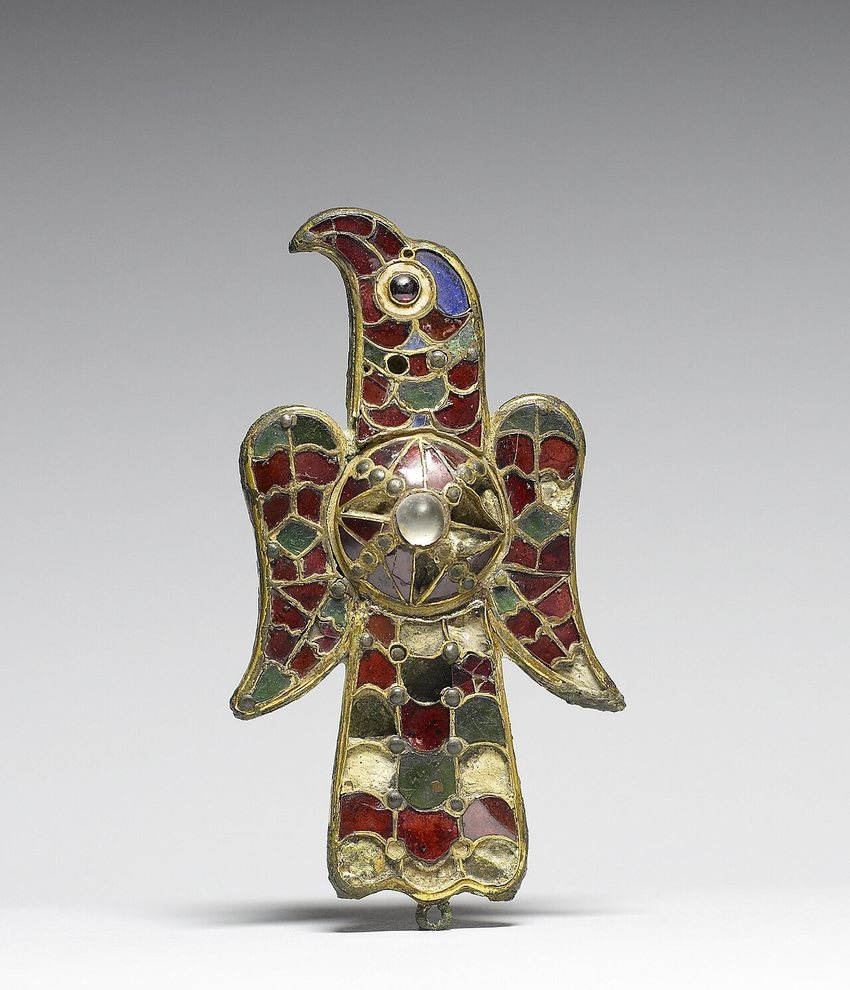
The wandering Goths, Vandals and Burgundians left behind above all magnificent gold jewellery. From the Spanish Visigothic kingdom come the famous eagle fibulae – garment brooches in the shape of eagles, densely set with garnet and coloured glass. Even more mysterious is the treasure of Pietroassa in Romania, with a golden neck-ring (around 400) bearing the runic inscription gutaniowi hailag, regarded as Gothic.