The western neighbours of the Germanic peoples – and why Caesar's tidy Rhine frontier was in truth an interface.
The Celts were not Germanic – and yet the two are more closely interwoven than Caesar's famous Rhine frontier would have us believe. For centuries the highly developed Celtic cultures shaped their northern neighbours: in craftsmanship, warfare and religion. Many Germanic loanwords come from Celtic.
The Celts become archaeologically tangible in the Hallstatt (ca. 8th–6th century BC) and La Tène cultures (ca. 450–50 BC) – the latter with its famous, interlaced ornament. Their territory stretched from Iberia across Gaul and the Alps to Britain and Asia Minor.
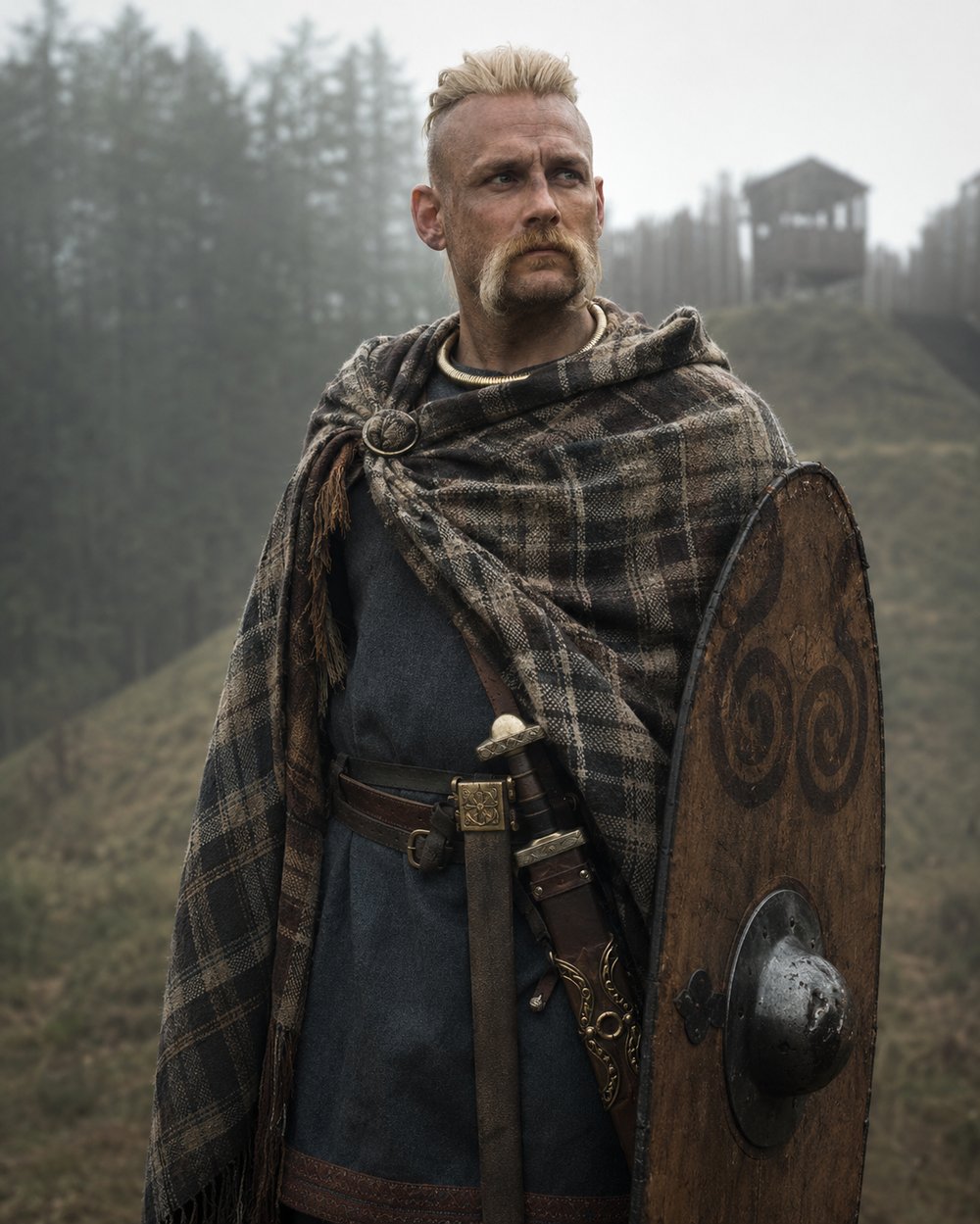
The Helvetii (Swiss plateau; their migration in 58 BC triggered the Gallic War), the Aedui (Burgundy, Rome's „brothers“), the Arverni (Auvergne; home of Vercingetorix), the Senones (who once sacked Rome) and the Carnutes with the sacred centre of Gaul, where the druids gathered every year.
The Treveri (Trier) and Nervii liked to claim Germanic descent, according to Tacitus – though he himself did not count them as such. Here, in the borderland, Celtic and Germanic identity blurred.
The British tribes put up bitter resistance to Rome (Boudicca). In Ireland, never conquered by Rome, Celtic culture and language survived longest – together with a rich world of legend.
Unlike the Germanic peoples, the Celts had a learned priestly caste: the druids, who were judges, teachers and keepers of knowledge all in one. Among the gods were Lugus/Lugh (the „many-skilled one“, present in the name of Lyon/Lugdunum), Taranis (a thunder god with a wheel symbol), Teutates („god of the tribe“) and the horned Cernunnos.
Anyone who thinks spectacular tombs all lie in Egypt has never been to Baden-Württemberg. The princely grave of Hochdorf near Eberdingen is one of archaeology's rare strokes of luck: never robbed, almost completely preserved. When it was excavated in 1978/79 under Jörg Biel, it held a man of about 40, nearly 1.90 m tall – laid out on a bronze couch with little wheels, the like of which has never been found a second time.
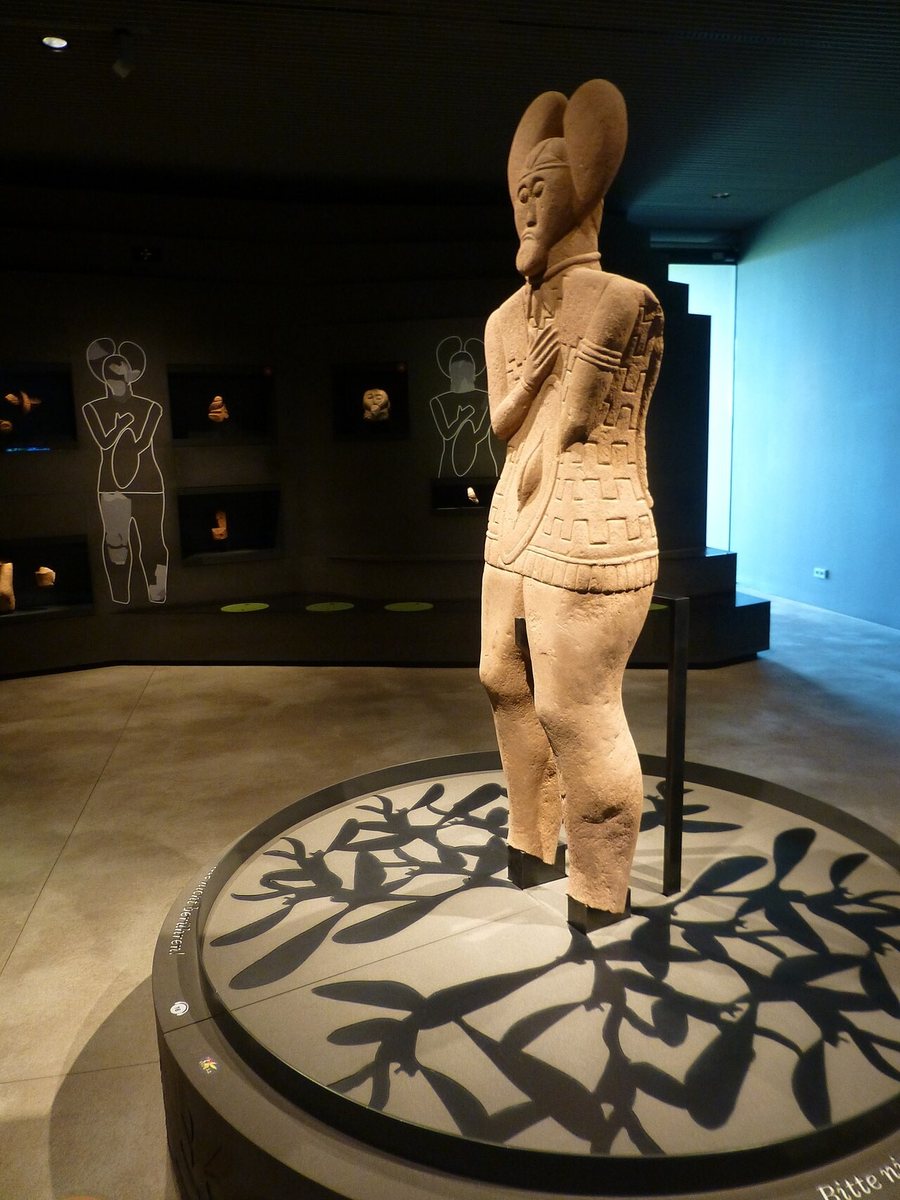
Even more enigmatic is the „Celtic Prince of the Glauberg“ in the Wetterau region of Hesse. In 1996 archaeologists found there a life-size, almost complete sandstone statue of a warrior with armour, sword, shield and neck-ring – without a real counterpart anywhere in the world. Striking is his headgear, the famous „leaf crown“.
Long before the Romans came, thousands of people already lived here packed closely together. The Heuneburg on the upper Danube surprises with a mudbrick wall in the Mediterranean style – building technique from the Greek world, in the middle of the Swabian Jura of the 6th century BC.
A whole size larger was the late-Celtic oppidum of Manching in Bavaria: around 380 hectares, a city wall more than seven kilometres long, plus craft and long-distance trade. In 1999 one of the greatest Celtic gold finds of all came to light here – 483 gold coins.
The Celts had something the Germanic peoples so lacked: a learned class. The druids were priests, judges, teachers and calendar experts all at once. According to Caesar their training lasted up to twenty years – and all knowledge was passed on orally; not a single druidic book has survived. Once a year they gathered in the territory of the Carnutes, which Caesar called „the centre of Gaul“.
The Roman scholar Pliny left us the most famous image: a white-clad priest cutting the sacred mistletoe from an oak with a golden sickle, caught in a white cloth.
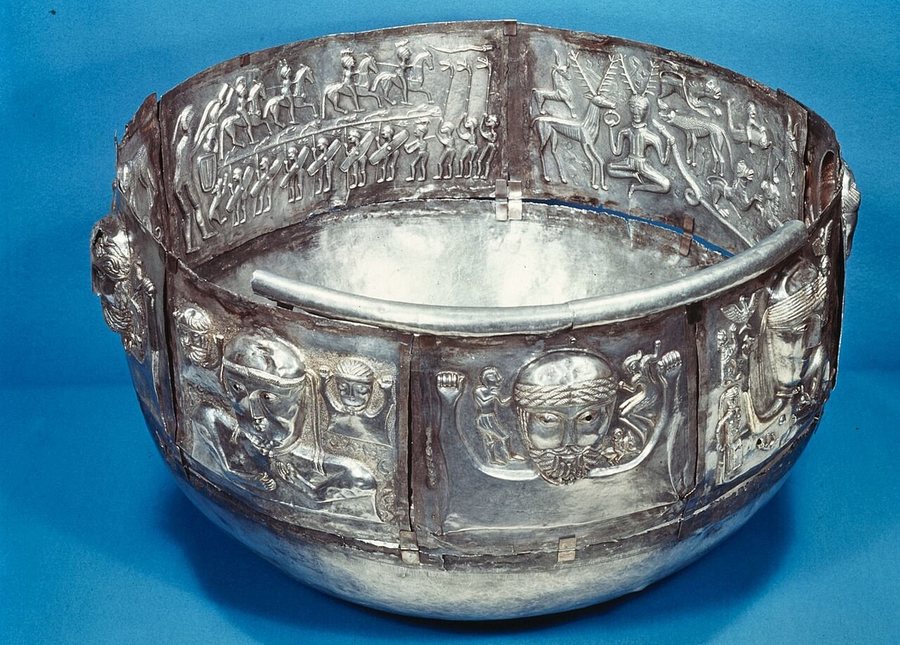
A unified pantheon like that of Olympus never existed – rather hundreds of local gods with countless epithets. A few, however, appear widely: Lugus (lurking in the name of Lyon/Lugdunum), the thunder god Taranis with his wheel, Teutates, the „god of the tribe“, and the antlered Cernunnos, shown on the famous silver cauldron of Gundestrup. The horse goddess Epona was so popular that even Roman cavalrymen adopted her – in the Rhineland too.
Especially beautiful is the belief in sacred springs: at the source of the Seine the Gauls worshipped the goddess Sequana, in Bath in England Sulis – both with healing and bathing complexes full of votive offerings.
You don't have to travel to Ireland to find Celtic traces – they lie right on your doorstep:
| Site | Region | What makes it special |
|---|---|---|
| Heuneburg | Baden-Württemberg, Danube | Princely seat with a Mediterranean mudbrick wall (6th c. BC) |
| Hochdorf | Baden-Württemberg | Undisturbed princely grave with gold, bronze couch & mead cauldron |
| Glauberg | Hesse, Wetterau | World-famous sandstone statue with a „leaf crown“ (5th c. BC) |
| Oppidum Manching | Bavaria | Vast Celtic city (~380 ha) and find-spot of the gold hoard |
| Hunnenring, Otzenhausen | Saarland | Mighty ring rampart of the Treveri (the name deceives: no Huns) |
| Donnersberg | Rhineland-Palatinate | Largest late-Celtic oppidum of the Palatinate |
| Dünsberg | Hesse, near Gießen | Oppidum with several ring ramparts, battles against Rome |
| Steinsburg | Thuringia | Most important oppidum of central Germany |
| Magdalenenberg | Baden-Württemberg | One of the largest burial mounds in Europe, central grave 616 BC |
And the tidy border between Celts and Germanic peoples along the Rhine? It was drawn above all by Caesar, because it suited him politically. In truth the Rhine was a passage, not a wall – Celtic loanwords survive in German to this day: the word „Reich“ (from Celtic rīg-, „king“) and even „Eisen“ (iron) are among them. Neighbours, in other words, who learned from one another.
You'll find detailed individual portraits of tribes, peoples and beliefs in our blog articles:
The Cenomani · The Lexovii · Caesar's Aquitanian List · The Bigerriones · The Garumni · The Ausci · The Anartes · The Segusiavi · The Tarbelli · The Gabali · The Convenae · The Vellavii · The Helvii · The Caleti · The Sotiates · The Veliocasses · The Eburovices · The Mandubii · The Osismii · The Suessiones · The Bellovaci · The Sequani · The Redones · The Vaccaei · The Turones · The Petrocorii · The Ruteni · The Vocontii · The Salluvii · The Eburones (Ambiorix) · The Treveri · The Nervii · The Helvetii · The Boii · Celtic Princely Graves · Celtic Warriors · The Arverni · The Aedui · The Senones · The Carnutes · The Veneti · The Parisii · The Remi · The Allobroges · The Volcae · The Bituriges · The Santones · The Menapii · The Lingones · The Pictones · The Cadurci · The Britons · The Galatians · The Celtiberians · The Insubres · The Morini · The Atrebates · The Britons · The Caledonians · The Silures · The Brigantes · The Ordovices · The Taurisci · The Vindelici · The Scordisci · The Iceni · The Catuvellauni · The Dumnonii · The Lemovices · The Namnetes
Celtic Religion · The Druids · Cernunnos · Belenus · Esus · The Morrígan · Lugh · Taranis · Teutates · Brigid · Epona · Nehalennia · Ogham Script · Nemeton – Sacred Grove · Celtic Festivals · Samhain
