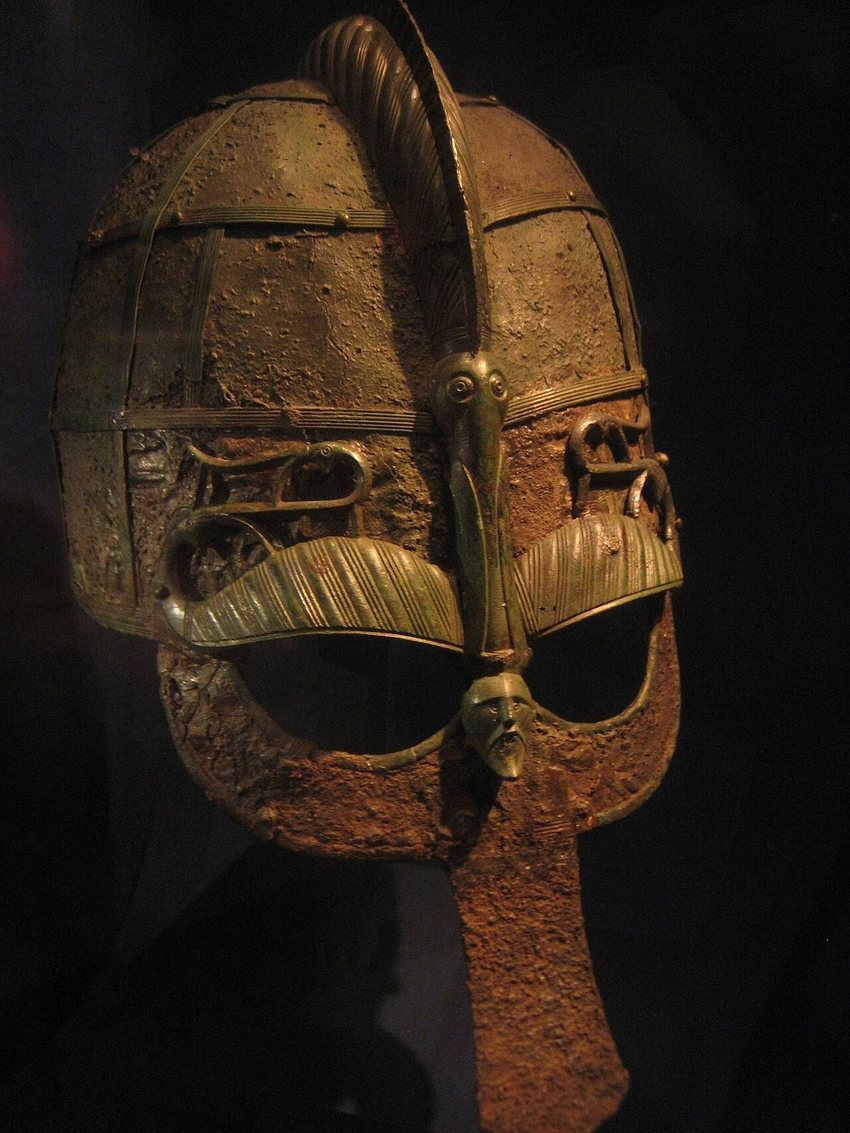
The peoples of the far north – and the one Germanic religion we can really tell stories about.
When people say „Germanic mythology“, they almost always mean the North. That is no coincidence: while on the continent Christianity overwrote the old gods early on, paganism survived in Scandinavia for centuries longer – and was written down there later. The North Germanic peoples are therefore the group we know the most about.
They spoke Old Norse, from which Danish, Swedish, Norwegian, Icelandic and Faroese developed. From the farmers, traders and seafarers of this region the Vikings emerged from the late 8th century onward – not a single people, but a way of life: to set out, trade, settle, and sometimes raid.
From the tribes of Jutland and the Danish islands one of the first Nordic kingdoms took shape. Around 960 Harald Bluetooth united the land and had himself baptised – as recorded on the great Jelling Stone, Denmark's „birth certificate“.
The Svear around Lake Mälaren and the Geats (Götar) further south gradually merged into the Swedish realm. The old sanctuary of Gamla Uppsala, with its temple and the great royal mounds, was their religious heart.
Along the fjords lived small chieftaincies, which Harald Fairhair forced into one realm around 900. From here voyages set out to Iceland, Greenland and as far as Vinland (North America).
On Gotland people told their legends in stone: the famous picture stones show eight-legged horses, longships and gods – centuries before the Edda.
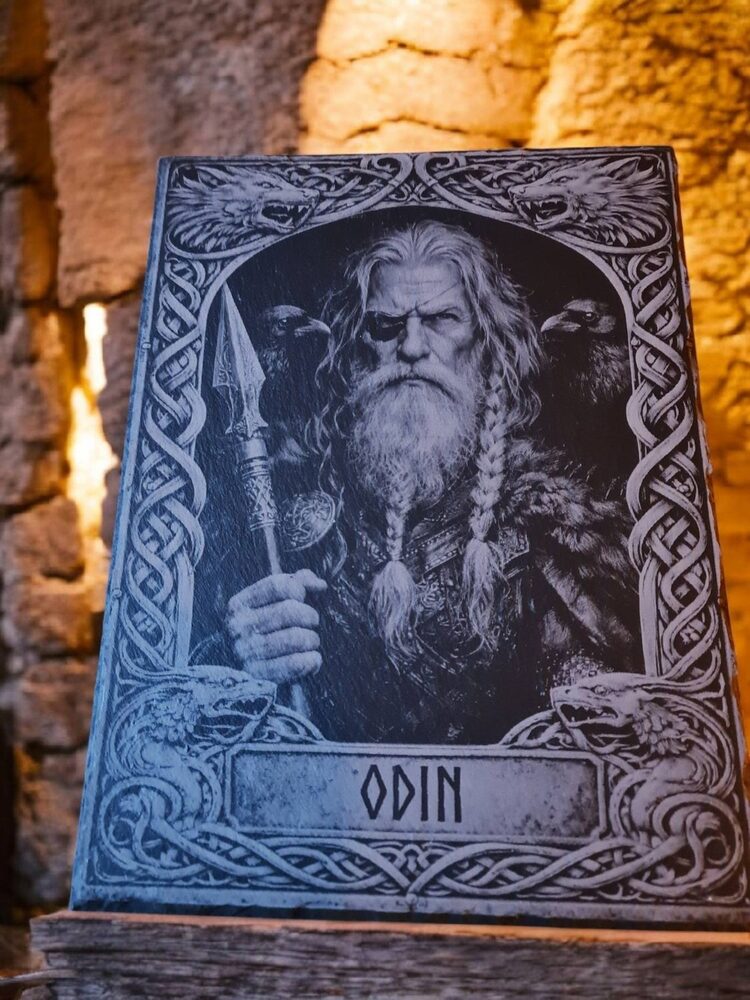
You can find more about the gods and legends of the North in our blog and in the overview of the gods in the library.
In 2020 the largest genetic study of the Viking Age to date appeared: „Population genomics of the Viking world“ (Margaryan et al., Nature 585, 2020). A team led by Eske Willerslev decoded 442 ancient genomes from across the Viking world – and along the way cleared up a few clichés.
The most exciting findings, loosely summarised: first, „the Vikings“ were genetically no pure northern people – even before and during the Viking Age, genetic material flowed into Scandinavia from southern Europe and Asia. Second, the DNA confirms the travel routes of the sagas with astonishing accuracy: Danish Vikings went mainly to England, Swedish ones east into the Baltic and to the Rus, Norwegian ones to Ireland, Iceland and Greenland. Third, „Viking“ was also a culture, not pure descent: on Orkney, people with purely British genes were buried as Vikings – with sword and grave goods. And in the ship grave of Salme (Estonia) four brothers fell on the same day – early raids were often a family affair. Incidentally: many Vikings had brown rather than blond hair.
The most impressive evidence comes from the Vendel period, the immediate prelude to the Vikings. From the boat graves of Vendel and Valsgärde in Sweden came magnificent ceremonial helmets with face masks and embossed-foil scenes – they make the warriors almost tangible. Older and more tragic are the Golden Horns of Gallehus (around 400, with one of the oldest Nordic runic inscriptions): the originals were stolen and melted down in 1802; only drawings and replicas survive.