The Slavs who crossed the Danube into the Balkans – and created kingdoms and churches of their own there.
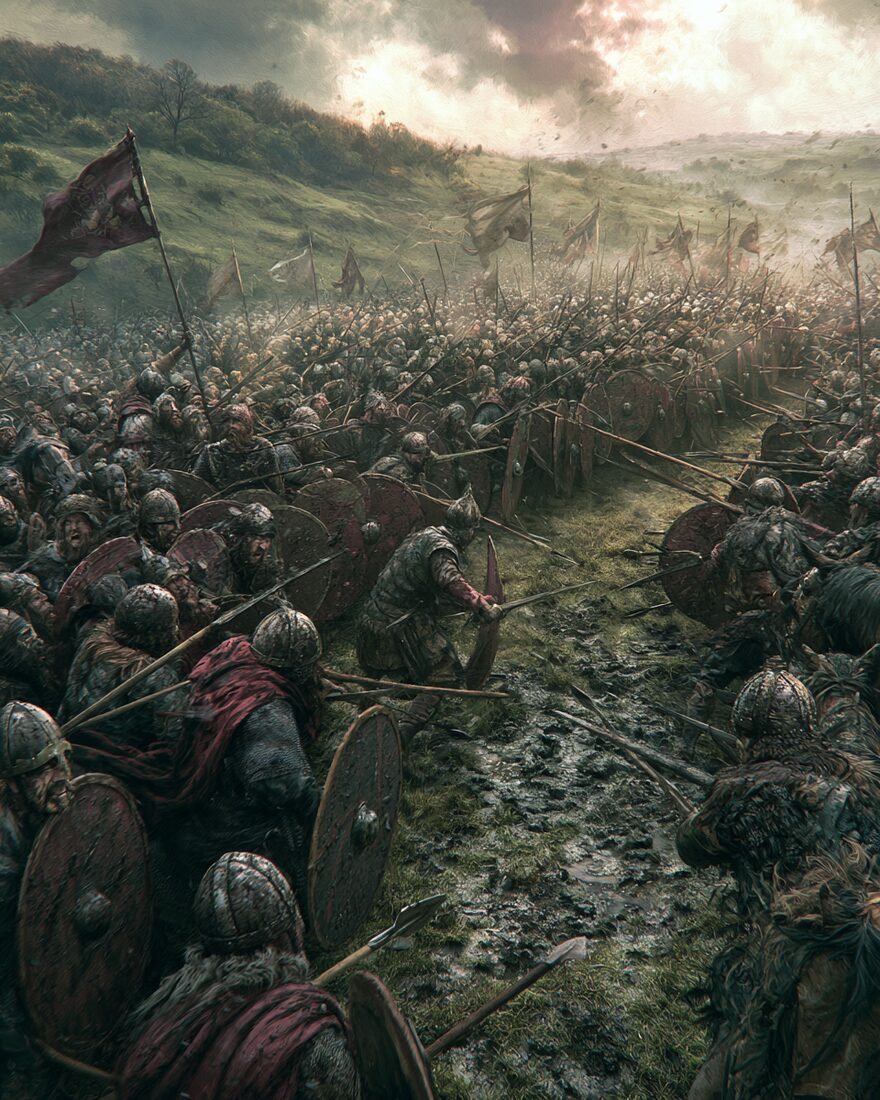
While the West and East Slavs spread across Central Europe and the East European Plain, a third group crossed the Danube and, from the late 6th century, settled the Balkans – partly under pressure from the Avars, partly in the wake of the collapsing East Roman border defences.
Slavic tribe in the Rhodope Mountains, thinly attested in Byzantine sources (837); later absorbed into the Bulgarian realm. Read the article
South Slavic principality beside the Roman city of Doclea, independent under Vojislav in the 11th century, absorbed by Nemanja in 1186. Read the article
A South Slavic tribe on the river Timok. Main source the Royal Frankish Annals (818/819); after 827 they vanish from the sources. Read the article
A South Slavic principality around Trebinje. Main source Constantine VII, ch. 34; ruling line Beloje-Krajina-Hvalimir-Čučimir. Read the article
A South Slavic principality around Zahumlje. Main source Constantine VII; according to the text, prince Michael himself descended from the Litziki on the Vistula, not from the Serbs. Read the article
South Slavic seafarers in Pagania. Sources: Constantine VII and Venetian chronicles; piracy is partly interpretation. Read the article
A second Croatia in the north: Constantine VII and the Primary Chronicle name Croats far from the Adriatic. How the two relate is an open question. Read the article
Of all the Slavic groups in Greece, the Belegezites are the most tangible: they sold grain to a starving Thessalonica, a lead seal names one of their archons, and in 799 their leader Akamiros appears in a conspiracy against the empress Irene. From raider to trading partner to a factor inside imperial politics. Read the article
Named only once – in the catalogue of the Miracles of St Demetrius around 615. Whether their name survives in the coastal region of Vagenetia opposite Corfu is an interpretation, not evidence. Read the article →
The Berzites appear in the list of names in the Miracles of Saint Demetrius – and after that the source falls silent about them. Their region of Berzitia surfaces again only when the Bulgarian ruler Telerig sent an army there in 774 to resettle people; Emperor Constantine V intercepted the march. Two empires contended over Berzitia not for soil, but for population. Read the article
Their archon Perboundos spoke Greek and dressed like a Byzantine. When he was arrested in Thessalonica, recaptured after an escape and executed, the Rhynchinoi rose together with the Strymonites and the Sagudates and blockaded the city. After the siege of 676 to 678 they vanish from the record. Read the article
The Miracles of Saint Demetrius simply call them the Sclavenes from the Strymon. Between 676 and 678 they were among the besiegers of Thessalonica, and in 678 an imperial campaign was directed against them by name. Later a Byzantine administrative district carried the same name: first a kleisoura, then the theme of Strymon. Read the article
A Slavic group of the hinterland that appears twice in the Miracles of Saint Demetrius: around 615 in the attack of Chatzon and in 676-678 during the great siege, both times in connection with boats. By about 904 John Kaminiates names them as villagers who pay their taxes to Thessalonica. Read the article
One of the Slavic groups at the gates of Thessalonica. The Miracles of Saint Demetrius name them as those who brought the siege engines up to the city wall in 677; later they had a bishopric of their own under Thessalonica. Not to be confused with the East Slavic Dregovichs on the Pripyat. Read the article
Two Slavic groups deep in the south of Greece. Emperor Constantine VII records their tribute to the last gold coin; the Melingoi of the Taygetus still appear in the sources of the 13th and 14th centuries. Read the article
The great South Slavic peoples of the western Balkans. Both founded kingdoms and churches of their own in the Middle Ages and became – Serbs Orthodox, Croats Catholic – part of different cultural spheres.
The northwesternmost South Slavs, early within the sphere of the Frankish Empire and the Eastern Alps. Early-medieval Carantania is regarded as one of their origins.
The First Bulgarian Empire (founded 681) began as the rule of the Turkic-speaking Bulgars over a numerous Slavic population. Over time the Bulgars were Slavicised – people and language became Slavic. A prime example that "becoming Slavic" was often linguistic-cultural, not genetic.
Here too the visible Indo-European inheritance is above all the thunder-god type (Perun) – the bracket that links Slavic, Baltic, Germanic and further beliefs.
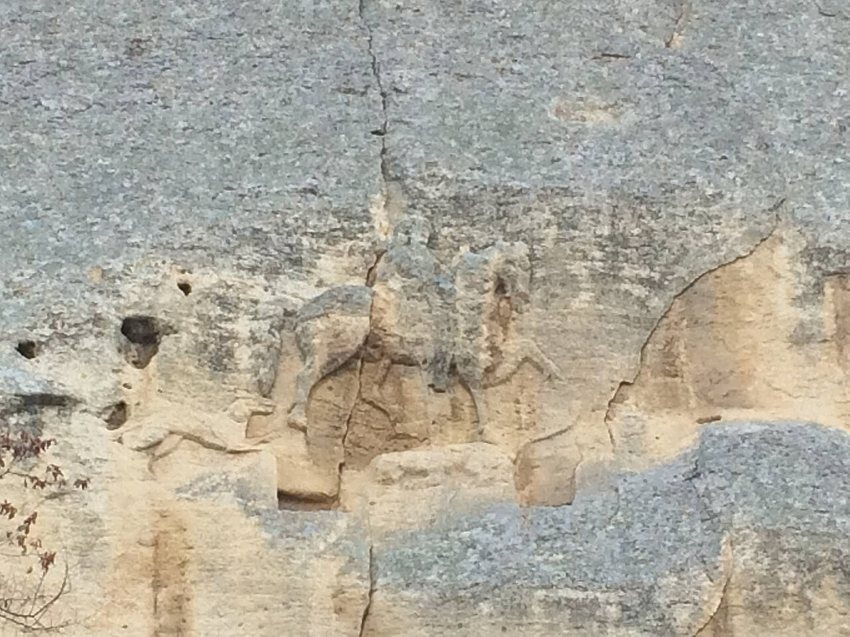
The most impressive monument is the Madara Rider in north-eastern Bulgaria: a monumental rock relief showing a horseman above a slain lion, dated to the early 8th century and today a UNESCO World Heritage Site. It was created in the First Bulgarian Empire, a melting pot of Proto-Bulgarian, Slavic and Byzantine traditions.
You'll find detailed individual portraits of tribes, peoples and beliefs in our blog articles:
The Narentines · The Smolyans · The Baiounitai · The Belegezites · The Berzites · The Rhynchinoi · The Strymonites · The Sagudates · The Drougoubitai · Melingoi and Ezeritai · The Slavs of Bulgaria · The Carantanians · The Croats · The White Croats · The Serbs · The Dukljans · The Zachlumians · The Travunians · The Timočani
