The tribes between Rhine, Elbe and Danube – and the ancestors whose traces reach right to our doorstep.
When people speak of „the Germanic peoples“ of antiquity, they usually mean the West Germanic peoples: that multitude of tribes between Rhine, Elbe and Danube whom Caesar and Tacitus described – and with whom Rome waged war, traded and forged alliances. From them later came the Germans, Dutch, English and Frisians.
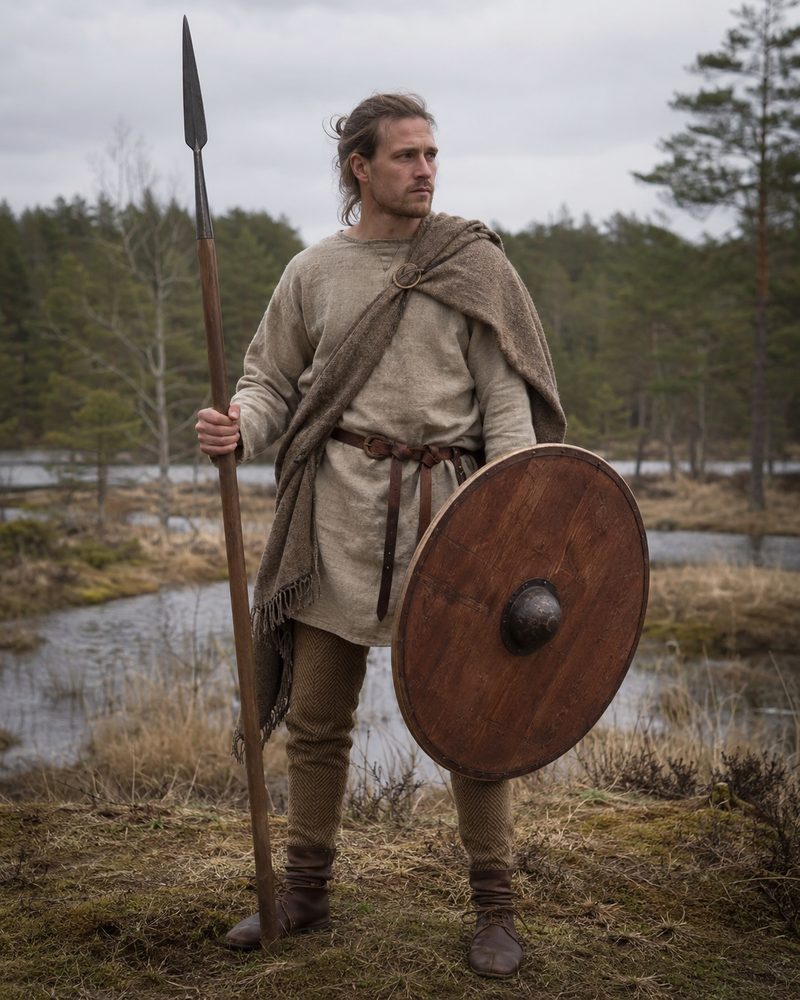
Not a single tribe, but a vast confederation with a common language and common cults, recognisable by the Suebian knot. Their leader Ariovistus was defeated by Caesar in 58 BC. One branch later even founded a kingdom in Galicia. The Suebi merged into the Alemanni and Bavarii – their name lives on in „Swabia“.
An alliance of Rhine tribes that became the true heir of Roman Gaul. Clovis I united the Franks around 500, converted to Christianity and founded the Merovingian dynasty. From the Frankish Empire emerged France and Germany.
Seafarers and farmers, stubbornly pagan – their tribal sanctuary was the Irminsul. Part of them moved to Britain (Anglo-Saxons); the rest were subjugated by Charlemagne in the Saxon Wars (772–804) and forcibly Christianised. Their resistance leader was Widukind.
Tacitus praises them as an unusually disciplined infantry with entrenching tools and provisions. They merged into the Franks; the derivation Chatti → „Hessians“ is well grounded linguistically.
Home of Arminius, who in AD 9 destroyed three Roman legions under Varus (Battle of the Teutoburg Forest) – the end of Roman expansion eastward. Afterwards the tribe ground itself down in internal struggles.
Cattle breeders on terps (dwelling mounds), tribute-paying yet rebellious. During the Migration Period their land emptied as the sea rose.
Suebian peoples. The Marcomanni under Maroboduus built the first Germanic kingdom north of the Danube and later triggered the Marcomannic Wars. The Hermunduri were a favoured Roman trading partner.
The Batavi (Rhine delta) supplied Rome's best auxiliaries and staged a revolt in AD 69. The Rome-friendly Ubii gave rise to Cologne with their chief settlement. The Chauci between Ems and Elbe were praised by Tacitus as „the noblest of the Germanic peoples“ – and they were among the earliest sea raiders.
Here people worshipped Wodan (Mercury), Donar/Thunar (Hercules), Tiw/Ziu (Mars) and Frija (Venus) – the weekdays Tuesday to Friday still bear their names today. Tacitus describes the earth mother Nerthus, whose wagon seven tribes worshipped together.
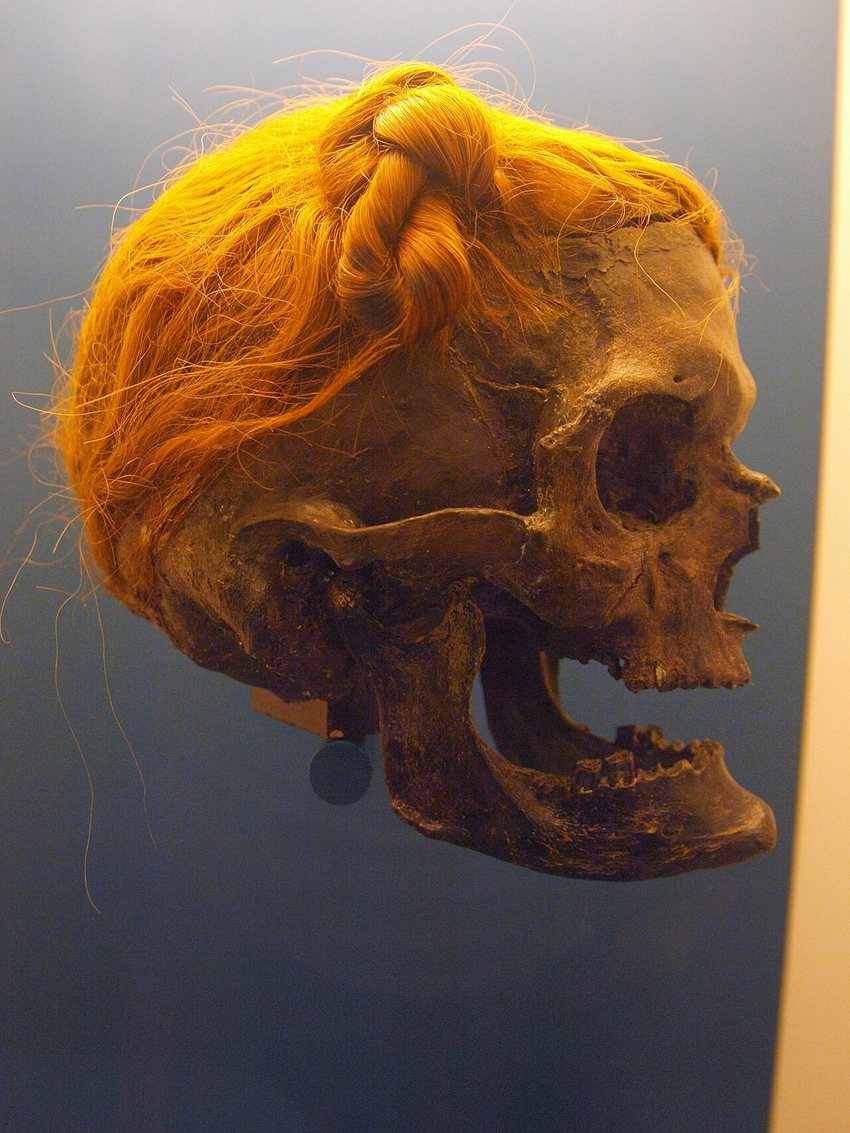
Some finds connect script and spade in astonishing ways. From a bog near Osterby in Schleswig-Holstein comes the „Man of Osterby“ – a bog body whose hair is tied into the famous Suebian knot. It was precisely this side hair-knot that the Roman Tacitus described as the mark of the Suebi; here ancient text and real find confirm one another.
At the battlefield of Kalkriese near Osnabrück, associated with the Battle of the Teutoburg Forest of AD 9, the silvery-gleaming Roman cavalry mask came to light.
