The neighbours in the east – from the Sorbs of Lusatia to the temple of Arkona.
As the Germanic peoples moved west and south during the Migration Period, the Slavs pressed in from the east. By around 600 they had reached the Elbe–Saale line – the frontier between the Germanic-German and Slavic settlement areas, which for centuries ran right through what is today Germany.
West Slavic group on the Bóbr; attested only in Cosmas of Prague (boundary description of 1086) as Boborane/Pobarane. Read the article
West Slavic group with five districts in the Bavarian Geographer; located on the upper Oder and Opava by prevailing scholarship. Read the article
West Slavic tribe on the middle Oder; Diedesisi in Thietmar, Dadosesani with 20 districts in the Bavarian Geographer. Read the article
Inhabitants of the Pyritz castle district; not attested as a tribe, but the setting of Otto of Bamberg's mission baptism in 1124. Read the article
West Slavic tribe; the name is attested only in Helmold of Bosau, tribal affiliation unresolved. Read the article
West Slavic tribe on the Uecker between Pomerania and Brandenburg; pressed by the Saxons in the 10th century, absorbed in the 12th. Read the article
Havelland branch of the Hevellians around Brennaburg. Subdued by Otto I, regained in the revolt of 983, part of the March of Brandenburg from the 12th century. Read the article
Inhabitants of Kuyavia on the Vistula and Lake Gopło. The regional name is first attested in 1136; whether there was an early tribe is open. Read the article
Inhabitants of Masovia on the middle Vistula. The name is attested only from the 1040s (Miecław); whether an early medieval tribe or a later regional label remains open. Read the article
Slavic principality around Nitra, under Pribina in the early 9th century. Expelled by Mojmir, Pribina later received a fief in Pannonia (Moosburg). Read the article
Slavic group at Lake Gopło, presumably the Glopeani of the Bavarian Geographer. Archaeologically traceable mainly at Kruszwica, later absorbed into the Piast realm. Read the article
Principality with the hillfort of Kouřim, in the older reading a rival of the Přemyslids. Only presumably linked to the Slavnikids of Libice, absorbed by Prague in 995. Read the article
Slavic settlers of the Elbe lowland in the Gau Nisan between Bohemia and Meissen. Named in Thietmar for 984, in a charter of 1013, absorbed by the March of Meissen in 1142/43. Read the article
A West Slavic group in Lower Lusatia. Credited with 30 strongholds in the Bavarian Geographer; the hillforts are archaeologically tangible. Read the article
A West Slavic group around Mount Ślęża. Listed with 15 strongholds in the Bavarian Geographer; not to be confused with the Silingi. Read the article
A West Slavic group around Opole. Named only in the Bavarian Geographer; the large rampart on Ostrówek is considerably younger. Read the article
A West Slavic group around Lebus. Attested by name only in Adam of Bremen; Thietmars Liubusua probably lay near Meissen. Read the article
A Slavic group on the eastern edge of the West Slavs. A name in Constantine's list of strongholds, an aside and the Primary Chronicle entry for 981. Read the article
A West Slavic group around Kraków and Wiślica. A few passages, a large iron hoard and much later legend around Krak and Wanda. Read the article
The confederation Charlemagne marched against in 789 with an imperial army that crossed the Elbe and the Havel. Einhard calls them Welatabi and notes that the Franks said Wilzi; the ruler Dragowit submitted in his fortified stronghold, whose location is still disputed. Whether the Liutizi of the tenth century were their successors or a new formation remains open. Read the article →
The Milceni (Upper Lusatia) and Lusici (Lower Lusatia) are the only Polabian Slavs who survive as a people to this day. The Sorbs are a recognised national minority of Germany with their own language (Upper and Lower Sorbian), flag and anthem – a living piece of Slavic heritage right on the doorstep.
Two great tribal confederations. The Obotrites in the northwest, the Lutici (Veleti) in the northeast with their sanctuary of Rethra. In 983 they threw back German rule and Christianity in a great uprising for some 150 years.
One of the last pagan tribes. Their temple at Arkona, with the four-faced god Svantevit, held supra-regional importance – until the Danes under Valdemar I and Bishop Absalon destroyed it in 1168.
The Hevelli around the Havel (Brandenburg) and the Pomeranians along the Baltic. Their land passed into German margraviates during the high-medieval eastern settlement – often with princes who carried on ruling as Christian vassals.
The great West Slavic peoples farther east founded kingdoms of their own (Great Moravia, Poland under the Piasts, Bohemia) and were Christianised early.
The northernmost branch of the Pomeranian language family: Lutheran, separated from the Catholic Kashubians to the east, and linguistically extinct by the early twentieth century. After 1945 most of the population left the region. The Slovincians are the clearest case of a Slavic language island in the north-west disappearing – documented by Friedrich Lorentz, remembered in the open-air museum at Kluki. Read the article →
The leading people of the Liutizian federation and keepers of the sanctuary of Riedegost described by Thietmar of Merseburg. The driving force behind the great Slavic uprising of 983, which set back Ottonian eastern policy for two centuries. A federation without princes: decisions were taken in assembly. In the civil war of 1057 the Redarian side lost to the Circipani – and with it their leadership. Read the article →
One of the four peoples of the Liutizian federation, named after the river Tollense in the Altentreptow–Demmin area. First attested in 955 in the annals of St Gall, last prominent in the Liutizian civil war of 1057. Not to be confused with the Bronze Age battlefield in the Tollense valley – that is some two thousand years older. Read the article →
The advance of the Slavs was followed, from Charlemagne onward, by counter-pressure: the Limes Saxoniae, the margraviates of Gero and Billung, the Wendish Crusade of 1147 and finally the eastern settlement. It was a fluid contact zone of war, mission, trade and merging – not a sharp "eternal struggle of peoples".
The West Slavs are known for their pronounced temple cult – unlike the more grove-worshipping Germanic peoples. Famous are the many-headed idols: Svantevit (four-headed, Arkona), Triglav (three-headed, Stettin) and Svarozhic (Rethra). At Arkona prophecies were made with a sacred white horse.
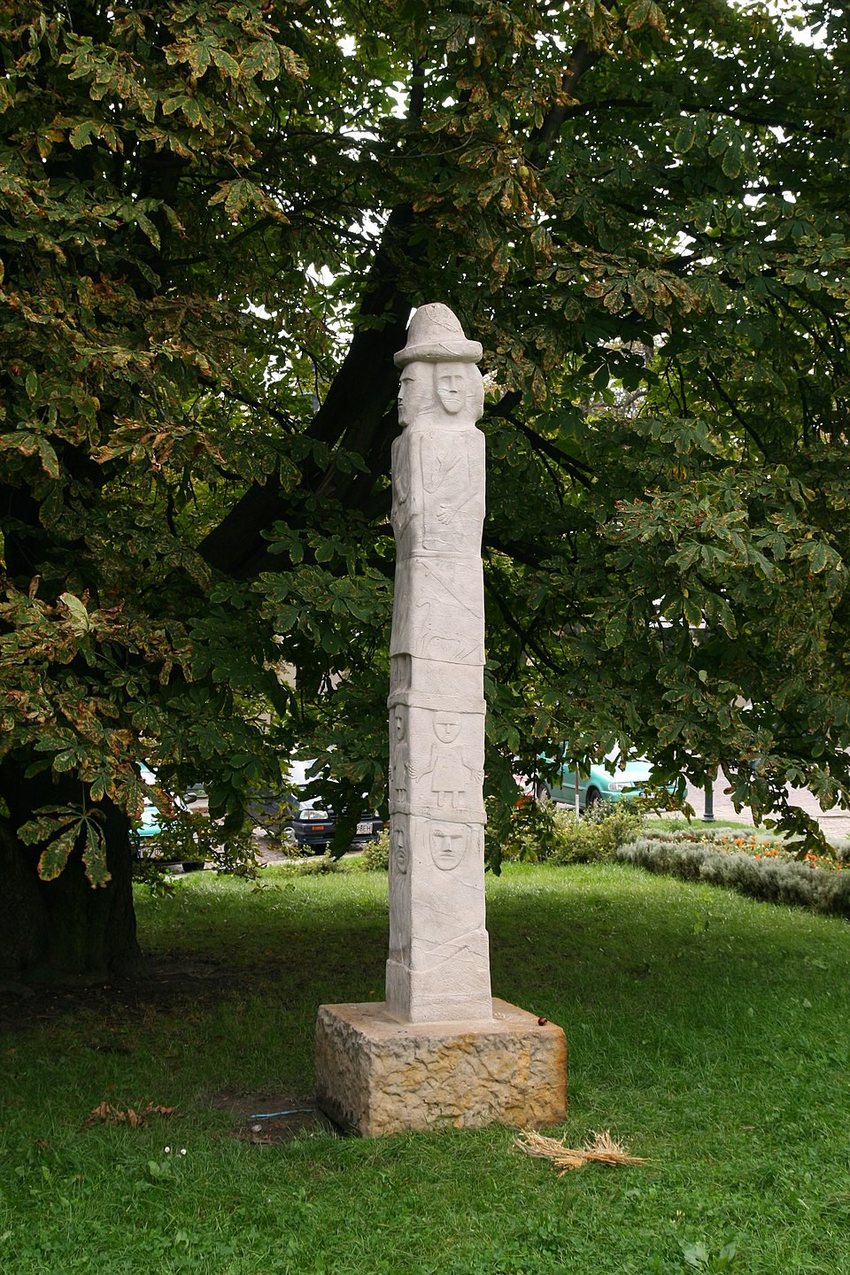
Among the West Slavs the pagan cult stands out. On the island of Rügen, at Arkona, stood a temple of the four-faced god Svantevit, which the Danes destroyed in 1168 (recorded by the chronicler Saxo Grammaticus). Famous too is the Zbruch idol, a stone pillar several metres high with four faces, often associated with Svantevit.
You'll find detailed individual portraits of tribes, peoples and beliefs in our blog articles:
The Nisans · The Goplans · The Nitrans · The Masovians · The Kuyavians · The Stodorans · The Ukranians · The Dziadoszanie · The Golensizi · The Bobrzanie · The Brizani · The Pyritzans · The Zlicans · The Slensanes · The Lusici · The Lendians · The Lebusians · The Opolans · The Wilzi · The Redarii · The Tollensane · The Slovincians · The Kessini · The Moravians · The Milceni · The Polabians · The Abodrites · The Liutizi · The Rani (Rügen) · The Sorbs · The Hevelli · The Pomeranians · The Wagrians · The Sprevane (Spree/Berlin) · The Polans · The Kashubians · The Vistulans · The Czechs (Bohemia) · The Daleminzi · The Circipani