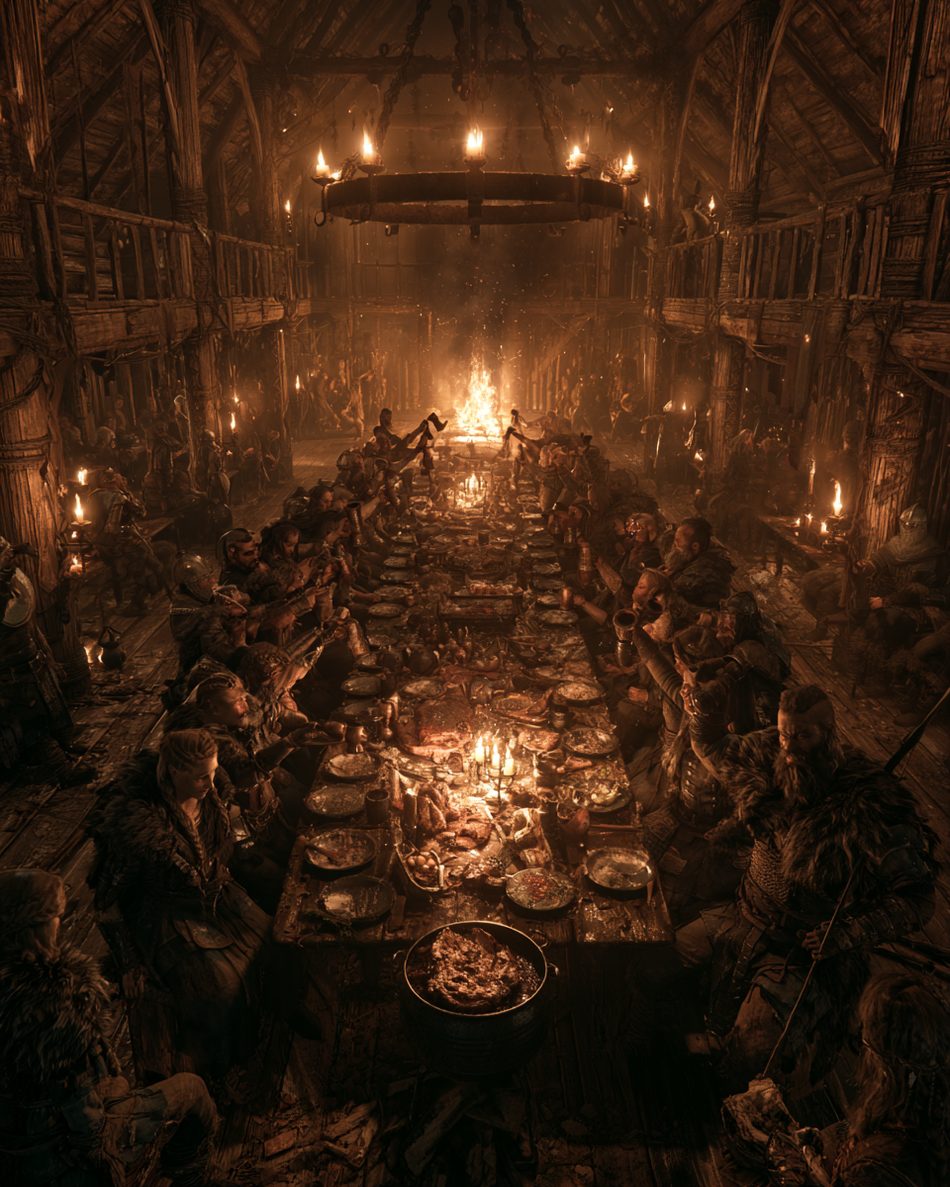
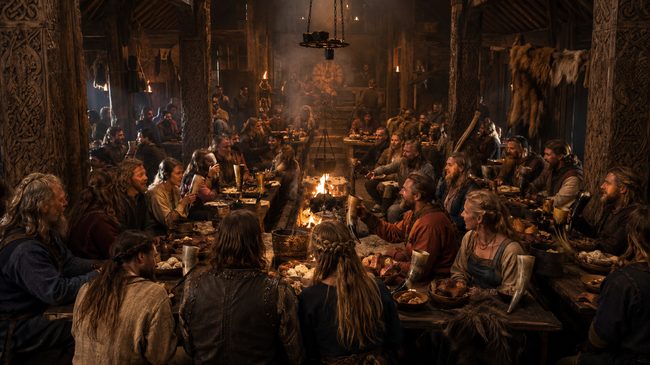
Mead, bread, stew and Yule cakes – just like at the long table in the longhouse. Recipes to cook at home, honestly set between evidence and myth.
Cook It Yourself
The Northmen were not wild mountains of muscle devouring raw haunches of meat. They usually ate twice a day, hearty and down-to-earth: grain, stew from the fire, bread, dairy, fish and meat – and a cup of mead for the feast. Here are eight classics, adapted for the modern stove.
Evidence, not cliché: The staple was grain (barley, oats, rye) as porridge, bread and beer. Added to that were pork, beef, mutton and game, plenty of fish, skyr, cheese and butter, as well as cabbage, onions, leeks, peas, beans and root vegetables. Sweetening was done with honey – there was no sugar. Important to know: potatoes and tomatoes only came to Europe from America after 1492, so a “Viking stew with potatoes” is a myth.
Honestly: Exact recipes with weights in grams have not survived from the Viking Age. The dishes below are oriented on finds, bone and pollen analyses and on the sagas, but adapted for today’s kitchen and taste. The point is enjoyment with a Norse spirit, not museum cooking.
1. Mead – the Drink of the Gods
Mead, the fermented honey wine, is the festive drink of the Norse world par excellence – in the Edda even poetry itself was called “mead.” Real mead is fermented and takes weeks; it is alcoholic and only for adults, enjoyed in moderation. So here you get both: the classic method and a quick, non-alcoholic honey drink for right away.
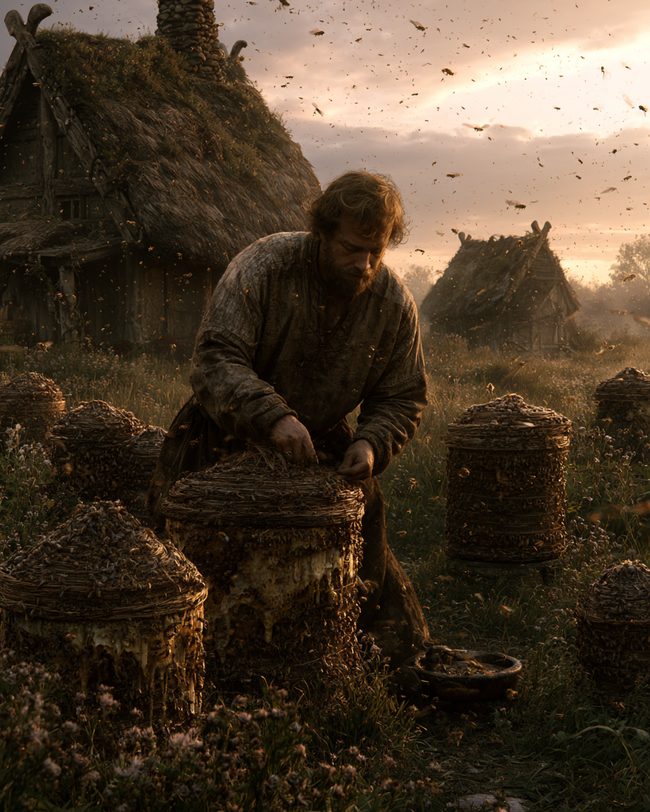
It all begins with honey: at its heart, mead is fermented honey wine. (Mood image)
Classic mead (makes about 3 litres, fermented):
1 kg good honey
3 l water (lukewarm)
juice of one lemon (modern, for balance)
mead or wine yeast (from a specialist shop)
How to do it:
Dissolve the honey completely in the lukewarm (not hot) water, add the lemon juice.
Pour everything into a clean fermentation jug, add the yeast as directed on the packet.
Seal with an airlock and let it ferment in a cool, dark place for 4–6 weeks, until it no longer bubbles.
Rack it off the sediment, bottle it and let it mature for a few more weeks. Hygiene is everything.
Quick spiced honey drink (non-alcoholic, instant): gently warm cloudy apple juice with plenty of honey, a cinnamon stick, two cloves and a little ginger (do not boil) and serve hot. “Cups up and Skål!”
Goes well with: a good drinking cup turns the sip into a ritual.
2. Stick Bread & Barley Flatbread
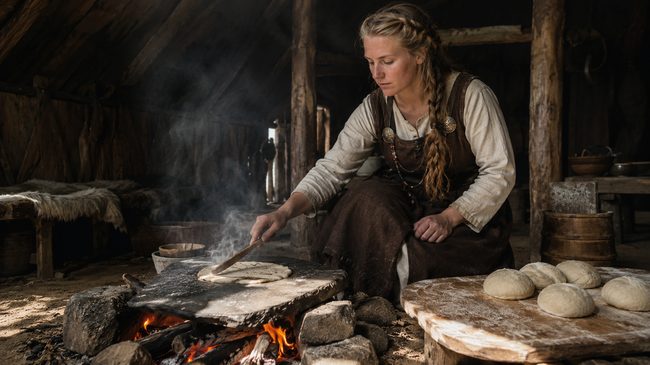
Bread in the North was mostly flat and hearty, made of barley, rye or a grain mixture, often even without a raising agent. It was baked on hot stones, in the pan or wrapped around a stick over the embers. The famous charred loaf from Birka shows that linseed or pea flour sometimes went in too.
Baked over the fire: stick bread is essentially what the Northmen knew over the embers. (Mood image)
Ingredients (for 4 sticks or flatbreads):
250 g rye or spelt flour (gladly part barley flour)
about 150 ml water
1 tsp salt
optional: 1 tbsp linseed, 1 tsp honey
How to do it:
Knead the flour, salt (and optionally linseed/honey) with water into a firm, smooth dough. Let it rest briefly.
Roll the dough into strands and wrap around moistened sticks – or shape into flat rounds.
Bake slowly to golden brown over the embers (not in the open flame), turning again and again. In the pan: bake dry over medium heat on both sides.
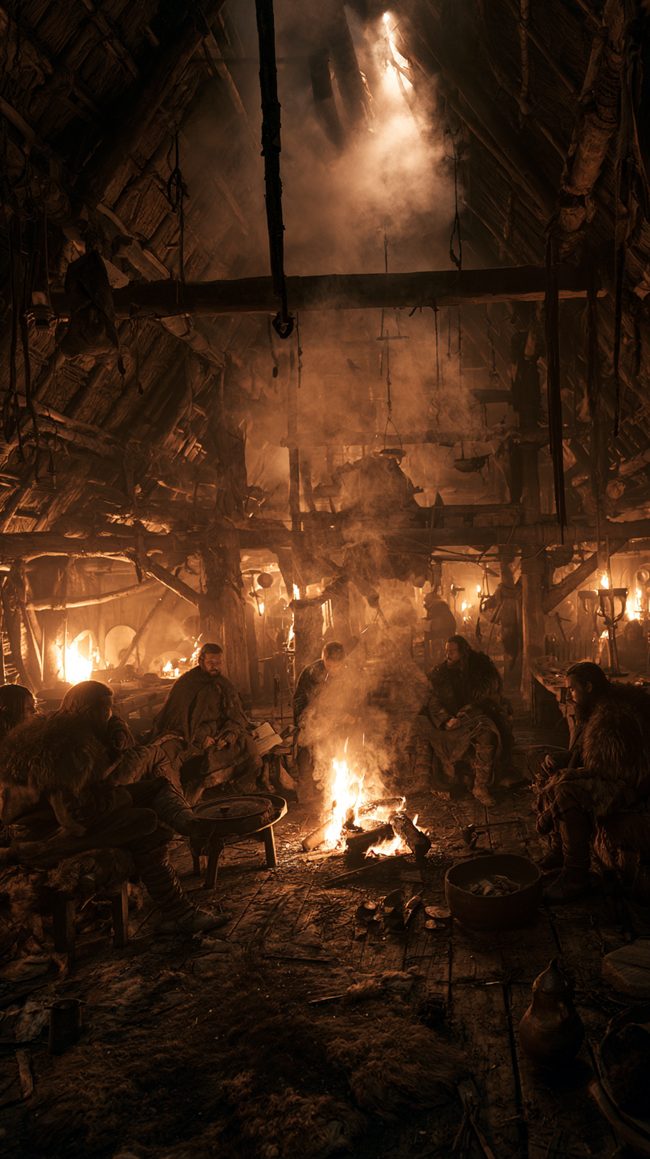
The cauldron over the hearth fire was the heart of the longhouse. In it, day in and day out, a hearty stew simmered: meat or bacon with root vegetables, cabbage, peas and barley, cooked long and slow. It is exactly this everyday dish that fills you up and still tastes good today.
Day and night over the fire: the stew was the staple food of the longhouse. (Mood image)
Ingredients (for 4 people):
500 g lamb, beef or pork goulash (or smoked bacon)
1 large onion or a stalk of leek
2 carrots, 2 parsnips or a piece of swede
a handful of barley or pearl barley
a quarter of white or pointed cabbage
about 1 l meat or vegetable stock
a few juniper berries, thyme, salt
How to do it:
Sear the meat well in a little fat, add the onion/leek and sweat.
Add the root vegetables, cabbage and barley, pour in the stock.
Add the juniper and thyme, season with salt and let it simmer gently, covered, for 1.5–2 hours, until everything is tender.
Goes well with: the stick bread for dunking – and the cup stays within reach.
4. Yule Honey Cakes – Honey Cake for the Solstice
For the Yule feast, the winter solstice, whatever the pantry and field could offer was served up. Sweetness came from honey alone; seasoning was done with native seeds such as caraway or anise, and later, thanks to the far-reaching trade routes, with expensive imported spices too. This honey cake is a modern greeting to those feasts.
At the solstice a great feast was laid out – honey cakes were part of the celebration. (Mood image)
Ingredients (one tray):
300 g flour (rye or spelt)
150 g honey
80 g butter
1 egg
1 tsp baking soda
spices to taste: cinnamon, cardamom, anise, a little caraway
pinch of salt
How to do it:
Gently warm the honey and butter until they are liquid, let them cool briefly.
Knead with flour, egg, baking soda, spices and salt into a smooth dough. Chill briefly.
Roll out about a finger thick, shape or cut out and bake at 180 °C for around 12 minutes until golden brown.
Goes well with: arrange the cakes on the slate plate, add a lantern – and the mead stands ready.
5. Skyr with Berries & Honey
Dairy farming was vital for survival in the North. From soured milk came skyr, a thick, protein-rich fresh-milk product that still exists in Iceland today. With wild berries and honey it becomes a dessert that tastes surprisingly modern.
Ingredients (for 4):
500 g skyr (or low-fat quark as a substitute)
200 g berries (blueberries, blackberries, lingonberries)
2 tbsp honey
optional: toasted oats or hazelnuts
How to do it:
Stir the skyr smooth with part of the honey.
Lightly press the berries with the rest of the honey so that the juice runs out.
Layer alternately, sprinkle with oats or nuts.
6. Porridge & Gruel
The porridge of barley or oats was the true staple – morning and evening, in the cauldron over the fire. Simple, filling and, with honey and fruit, anything but boring.
Ingredients (for 2):
80 g oat or barley flakes
400 ml water or milk
pinch of salt
honey plus berries or apple to serve
How to do it:
Bring the flakes to the boil with water or milk and salt.
Simmer over low heat for around 10 minutes until creamy, stirring as you go.
Sweeten with honey and serve with fruit.
7. Cured Salmon (“Graflax”)
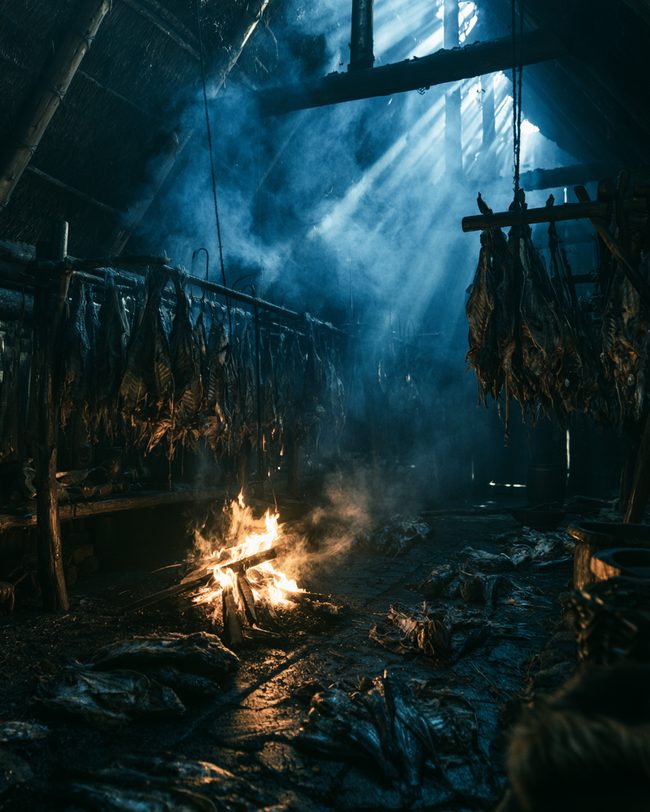
Fish was everywhere in the North – and because there was no refrigeration, it was salted, smoked and cured. The Scandinavian “graflax” (literally “buried salmon”) lives off this tradition. The salting is ancient; the fine cure with honey and dill is the modern, safe form.
Salting, smoking, curing: that is how fish was preserved in the North. (Mood image)
Ingredients:
500 g very fresh salmon fillet with skin
2 tbsp coarse salt
1 tbsp honey (instead of sugar)
1 bunch of dill, a little crushed juniper and pepper
How to do it:
Mix the salt, honey, juniper and pepper, rub the salmon with it and cover thickly with dill.
Wrap tightly in foil, weigh down and let it draw in the fridge for 24–48 hours, turning daily.
Pour off the liquid, pat the salmon dry and slice thinly.
Important: Raw fish is being prepared here – please use only very fresh, sushi-grade fish. Anyone who wants to be on the safe side (pregnant women, children, sensitive stomachs) should cook the salmon through or smoke it.
Goes well with: thinly sliced on a slate plate, a real eye-catcher.
8. Apple-Honey Compote
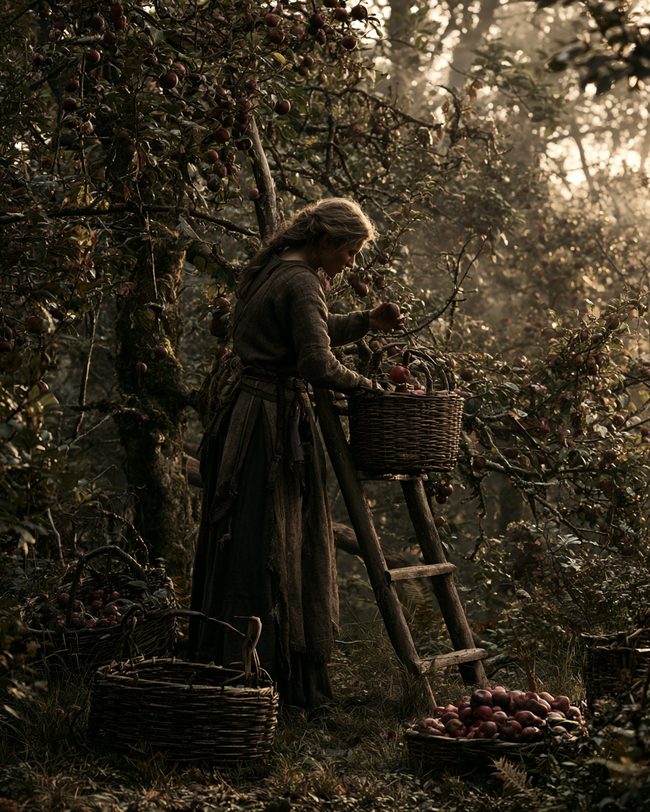
Besides honey, apples and berries were the sweetness of the Northmen – small, tart wild apples. Even mythology knows of their power: the goddess Idun guards the apples that grant the gods eternal youth. This compote goes with skyr, porridge and cakes.
Apples and berries were, alongside honey, the most important sweetness. (Mood image)
Ingredients:
4 apples
2 tbsp honey
a little water
optional a pinch of cinnamon or a handful of berries
How to do it:
Peel and dice the apples.
Simmer soft with honey and a little water for 10–15 minutes.
Serve warm or cold with skyr, porridge or Yule cakes.
Atmosphere makes the evening: our laser-engraved lanterns and slate plates bring the long table home to you. View →