From the tribes of the forest-steppe to the Kievan Rus – and their gods Perun and Veles.
East of the West Slavs, in the vast forests and steppes between the Bug, the Dnieper and the Black Sea, the East Slavs settled. From their tribal confederations – Polans, Drevlians, Krivichs, Vyatichs and others – a mighty realm grew from the 9th century onward: the Kievan Rus.
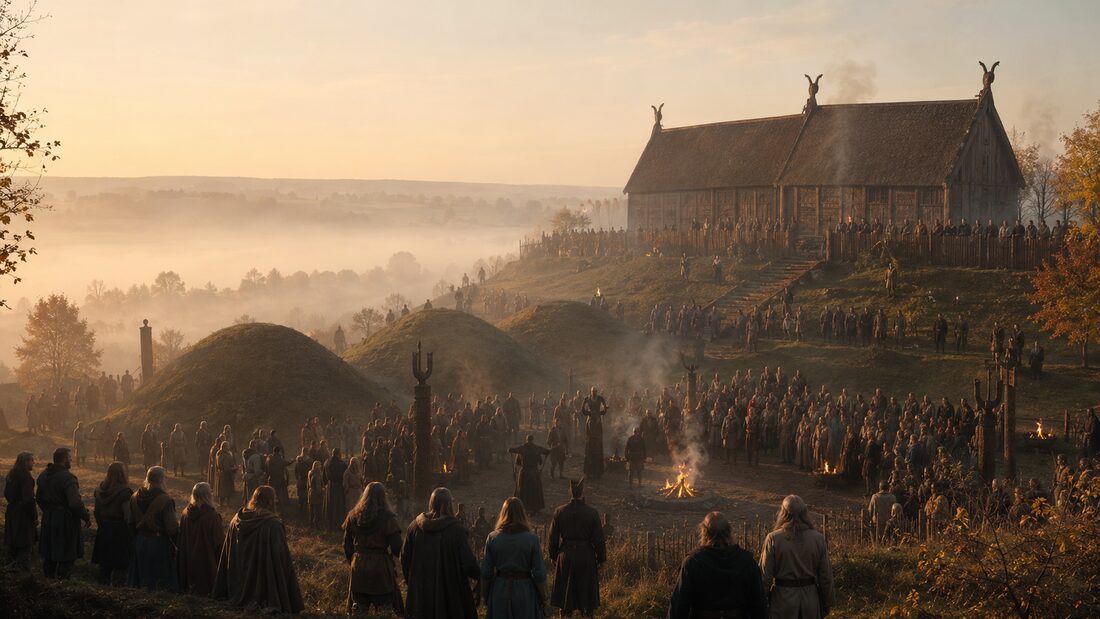
A place name became a group name, and the group name became a region. The chronicle gives it as the later name of the Buzhans. Read the article
The Primary Chronicle knows them in a single sentence: first Buzhans, later Volhynians. Their relation to the Dulebs is a matter of scholarly debate. Read the article
Around a dozen tribal unions settled the river systems of the East European Plain. They are the common ancestors of today's Russians, Ukrainians and Belarusians.
A realm on the great trade routes "from the Varangians to the Greeks". Scandinavian Varangians (Rus) and Slavs merged here. Prince Vladimir I had the realm Christianised in 988 (Orthodox, following Constantinople) – the end of Slavic paganism as a state cult.
In 988, shortly before his baptism, Vladimir – according to the Primary Chronicle (Nestor Chronicle) – had a pantheon set up in Kiev: at its head Perun, the god of thunder and war (with a silver head and golden moustache), together with Dazhbog (sun), Stribog (wind), Khors, Simargl and the only goddess, Mokosh (women, spinning, fate). In the oaths of the Rus treaties with Byzantium one swore by Perun and Veles (the god of cattle and oaths).
The strongest real parallel to the North is the thunder god: Perun corresponds to the Baltic Perkūnas and the Germanic Donar/Thor – an ancient Indo-European inheritance.
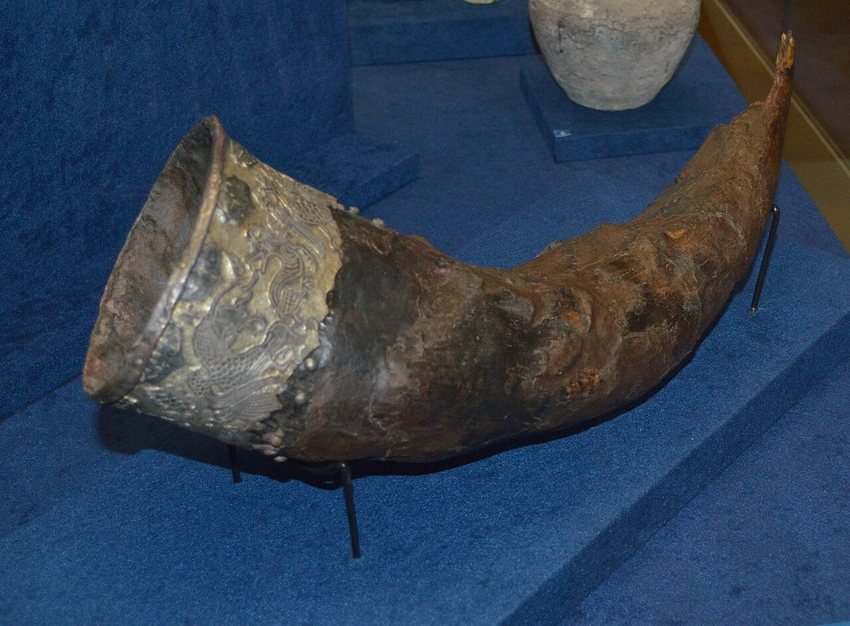
The centre of the early East Slavs was the Kievan Rus. Prince Vladimir first had an idol of the thunder god Perun erected and then, at the baptism of the Rus in 988, demonstratively cast into the Dnieper (recorded in the Primary Chronicle). Rich princely graves were yielded by the "Black Mounds" near Chernihiv – among them lavishly gilded drinking horns.
You'll find detailed individual portraits of tribes, peoples and beliefs in our blog articles:
The Ulichi · The Tivertsi · The Polans · The Radimichs · The Vyatichi · The Severians · The Drevlians · The Krivichs · The Ilmen Slavs · The Rus (Novgorod/Kiev) · The Dulebs · The Dregovichi · The Buzhans · The Volhynians