Few terms are as popular and as misunderstood as the "place of power". People make pilgrimages to stone circles, springs and rock formations and claim to feel "energy" there. But what did a sacred place actually mean to the Germanic peoples and the Norse? This overview sorts the real cult sites - groves, springs, bogs, burial mounds, assembly places - by what the sources and archaeology actually show, and clearly separates them from the modern belief in "earth energy". Because the true sacred places are fascinating enough without any invented rays.
Anyone who pictures a Germanic cult site like a temple - with a roof, an altar and a priesthood - is usually wrong. Roman observers of the early imperial period even remarked on it explicitly. Tacitus writes in the "Germania" that the Germanic peoples considered it incompatible with the greatness of the gods to enclose them within walls or to depict them in human form. The sacred place was first of all a space, not a building: a bounded piece of landscape lifted out of everyday life.
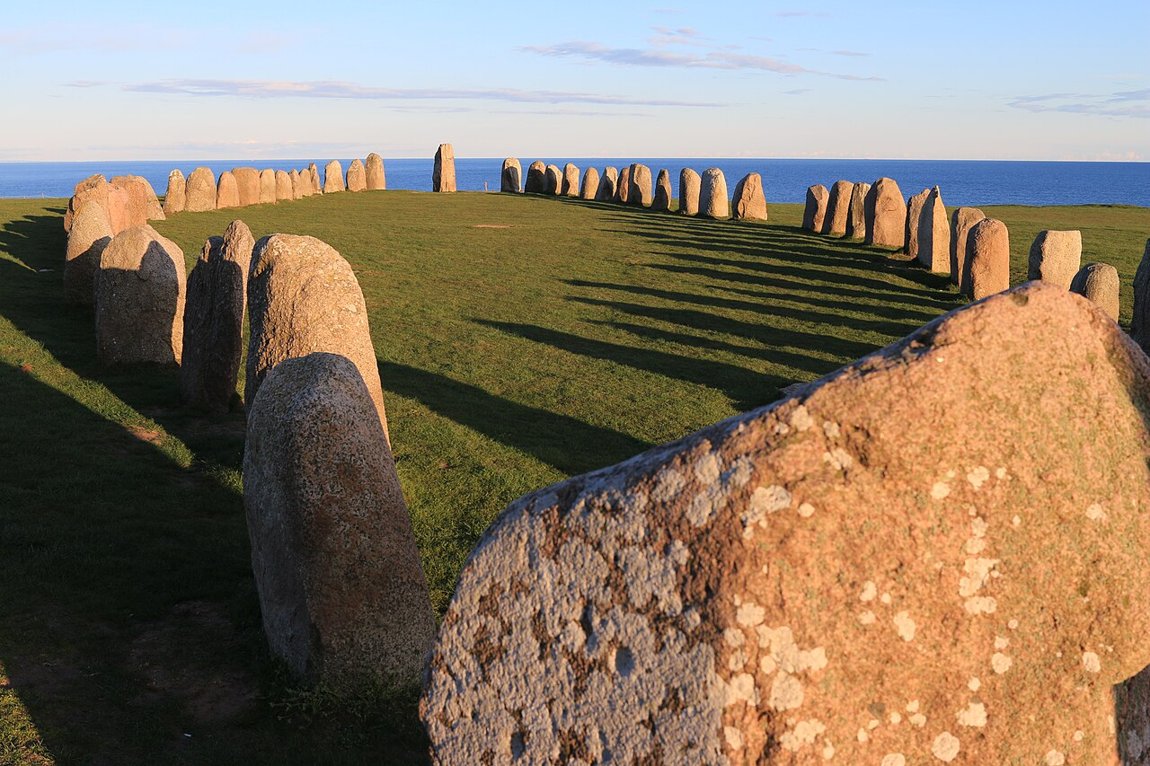
Old Norse has several words for it. A ve was a consecrated precinct, often marked only by stakes, ropes or a line of stones. A hörgr was originally probably a heap of stones or a stone altar under the open sky. Only later, towards the end of the pagan era, did the hof appear as a roofed cult building - usually a multipurpose hall belonging to a great farmer, where people sacrificed and feasted, not a pure "temple". The ground itself, the spring, the tree, the grove: that was the holy thing. This basic fact explains why so few "ruins" survive - people simply built almost nothing.
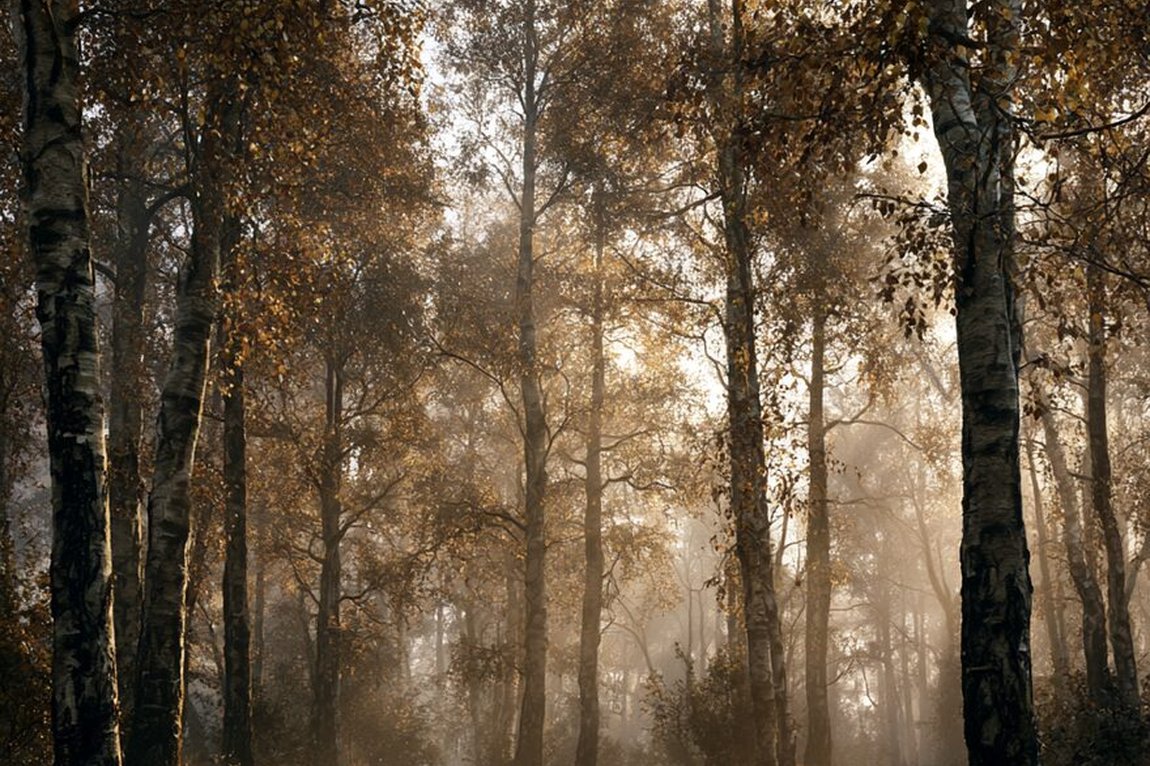
The most important form of Germanic sanctuary was the sacred grove, a patch of woodland that must not be cleared. Tacitus describes several. The most famous is the grove of the Semnones, which he depicts in the "Germania": all the tribes of the same blood sent envoys, one entered only in bonds, and whoever fell was not allowed to get up but had to be rolled out. Here, Tacitus says, dwelt "the god who rules over all".
At a set time the peoples of the same blood gather by their embassies in a wood hallowed by the auguries of their fathers and by ancient awe. No one enters it except bound, thereby acknowledging his subjection and the power of the deity.Tacitus, Germania 39 (paraphrased translation)
The sacred grove was a place of rules, not of free-flowing "energy": a space where other rules of behaviour applied than outside. Nerthus too, the earth goddess of the coastal tribes, had a sacred grove on an island according to Tacitus (Germania 40), from which her wagon was drawn in procession through the land. And the Naharvali worshipped the divine twins, the Alcis, in their grove. A grove leaves almost nothing archaeologically - trees rot. That is precisely what makes this, the most important form of cult, so hard to grasp today. There is more on this in our article on the Semnones' grove.
Water was deeply holy to the old cultures of the North. In Norse mythology the most important wells lie at the roots of the world tree: the Well of Urd, where the Norns spin fate, and Mimir's Well, where Odin gave an eye for a draught of wisdom. These mythical springs have their counterparts in real cult sites: for centuries, offerings were laid down in bogs and at springs.
In the Rhineland - our own home region - there is a particularly fine example: the site near Nettersheim in the Eifel, where offerings and dedications were made to the Matronae (mother goddesses) at a spring. The countless Celtic-Roman votive stones along the Rhine and Meuse show how closely springs, fertility and worship belonged together. Water was a threshold: a boundary between the human world and what lies beneath. Anyone standing today at an old healing spring is often indeed standing at a place used since antiquity - but not because of "earth rays", rather because springs were vital, rare and therefore treated with reverence. More on this in our article on sacred springs.
Striking rocks and mountains drew the eye and became reference points of belief. In the Norse worldview there is the conceptual realm of Jotunheim, the domain of the giants in mountains and cliffs; individual sagas tell of "holy mountains" into which families pass after death - such as Helgafell in Iceland. Such places were not holy because a field of force pulsed there, but because they were woven into sight lines, sagas and family traditions.
Here caution is especially needed: the most spectacular rock formations still attract the boldest interpretations. A rock is impressive - but evidence of cult only arises through finds, inscriptions or written records, not through the mere feeling that "there is something here".
No place has given research more than the bog. For centuries offerings were sunk into the bogs of northern and central Europe: entire weapon assemblages of defeated armies (Nydam, Illerup Adal, Ejsboel), precious cauldrons such as the one from Gundestrup, wooden idols and - most hauntingly - people, the "bog bodies". The bog preserves organic material that would have decayed long ago elsewhere; this is why we know more about bog offerings than about any other cult site.
A bog was a threshold between solid and liquid, between earth and the underworld - a place where one handed something over to the other side and did not expect it back. The army offerings of the imperial period show that whole fields of spoils were dedicated to the gods and rendered useless. This is no "wellness place of power" but a serious, at times cruel ritual space. We treat the bog army offerings in a separate article.
Burial mounds were more than construction sites for the dead. They were visible signs of ownership, origin and connection to the ancestors. People sat "on the mound" (Old Norse haugr) to pass judgement, seek visions or emphasise the bond with an ancestor. In some sagas a hero sits on the mound and composes verse; in others a dead person is consulted for advice at the mound.
The great mound fields of Old Uppsala in Sweden or the royal mounds of Jelling in Denmark show that such monuments shaped whole landscapes and served for generations as gathering and cult places. The burial mound linked the living with the dead - a social and religious function that needs no measurable "energy" to be powerful.
Another type of sacred place is often overlooked: the assembly and court site, the thing. To pass judgement was not a dry administrative act but a sacrally framed event. The site was consecrated, a peace held for its duration, and whoever broke it committed a grave offence. Many assembly sites were deliberately placed by striking stones, mounds or trees.
The most famous example is Thingvellir in Iceland, where the Althing gathered from 930 onwards - in a dramatic rift in the rock that was at once a stage and a natural sounding board. Such places show that holiness in the North was often a matter of function and social order, not of some invisible emanation from the ground.
Archaeology of recent decades has revealed a new type of site: the "central place". Sites such as Gudme on Funen ("Home of the Gods"), Tisso on Zealand ("Tyr's Lake") or Uppakra in Scania combined rulership, trade, craft and cult in one spot over centuries. At Gudme enormous amounts of gold were found, at Tisso a royal manor with a special building and a massive gold neck-ring, at Uppakra a cult house used for around a thousand years, with thousands of metal finds.
These sites prove that holiness and power belonged together: whoever sacrificed and hosted feasts also ruled. In Germany this circle includes the ring sanctuary of Pommelte in Saxony-Anhalt (a Bronze Age "German Stonehenge") as well as the cult sites of Oberdorla in Thuringia, where wooden idols and sacrificial pits are documented over long periods. Such sites are the gold standard: hard evidence instead of gut feeling.
When Christianity arrived, the old cult sites did not simply vanish - many continued in use. In the year 601 Pope Gregory the Great issued the explicit instruction not to destroy pagan sanctuaries but to consecrate and rededicate them, so that the people would keep gathering "at the accustomed places". Thus churches still stand on or beside old sacred places, springs became saints' wells, and festivals were absorbed into the Christian calendar.
This continuity is real and archaeologically tangible - for instance when an older cult building lies beneath a church. But beware: not every church on a hill proves a pagan predecessor cult. Continuity must be demonstrated case by case, otherwise a plausible assumption quickly turns into a legend.
And so to the core: the term "place of power" in today's sense - a spot where you charge up measurable or perceptible "earth energy" - is not an old Germanic idea. It is a child of the late 19th and the 20th century. In 1921 the English businessman and amateur antiquarian Alfred Watkins introduced the idea of "ley lines": he claimed that old landscape features - hills, churches, stones - lay along straight lines. In his book "The Old Straight Track" (1925) he developed it further. For Watkins ley lines were at first only old trackways, not energy channels; the "earth energy" interpretation was added only later, in the esoteric movement from the 1960s onward.
Almost simultaneously, in Germany the pastor Wilhelm Teudt proposed "holy lines" in the 1920s, said to connect stones, churches and crosses. His model object was the Externsteine in the Teutoburg Forest. Both ideas share the same basic statistical problem: with enough points in a landscape you will ALWAYS find straight lines - which proves nothing. The dowsing rod, "earth rays" and the notion of a global energy grid are all modern additions, scientifically undemonstrable.
The Externsteine are the classic teaching case. The natural sandstone formation is undoubtedly impressive, and its use as a site is real: there is a medieval upper chamber with a round window through which light falls at the summer solstice, and a magnificent Christian Descent-from-the-Cross relief from the 12th century. In the 1920s and 1930s Wilhelm Teudt turned it into a "Germanic solar observatory" and a supposedly destroyed Irminsul sanctuary - interpretations eagerly taken up under National Socialism and inflated into Aryan myth.
Myth check: "Places of power", "energy places" and "ley lines" are NOT Germanic-Norse concepts but modern esoteric ideas of the 20th century (Watkins 1921, Teudt 1920s, "earth energy" reading from the 1960s). There is no scientific evidence for measurable earth rays or an energy grid. The Externsteine are the textbook case: the often-shown "bent column" relief depicts a Christian Descent from the Cross, and the "Germanic observatory" and Irminsul sanctuary are Teudt's 20th-century invention, ideologically charged in the Nazi context. So be wary when a site is advertised as having "ancient power" - usually the story is young, even if the stone is old.
Evidence: Archaeologically secured are holy groves (Tacitus, Germania 39/40), bog offerings with preserved weapons and idols (Nydam, Illerup, Oberdorla), spring and well offerings (Matronae in the Rhineland), burial-mound cult (Old Uppsala, Jelling), assembly sites (Thingvellir) and central places with cult houses and gold finds (Gudme, Tisso, Uppakra, Pommelte). These sites are attested by finds, inscriptions or near-contemporary sources - and fascinating enough without any invented "energy".
You do not need the place-of-power romance to feel something at an old sacred site. Anyone standing at the edge of a bog into which an army was sunk, or at a burial mound raised by people a thousand years ago, feels something real: awe before time, loss and memory. That is a cultural and personal effect, not a physical one. That is the honest core of "places of power" - and it needs no dowsing rod.
Our advice when you encounter a site: ask about finds, inscriptions and sources. A grove, a spring, a mound with attested history is a genuine sacred place. A rock with a legend invented only in the 20th century is a lovely story - but a story nonetheless. We at Glanz und Gravur believe the truth is more thrilling than any myth added to it. If you want to dig deeper, you will find our own articles on the Externsteine, on the Semnones' grove and on sacred springs.

.
All Festivals & Belief articles →
Before a Viking ship glided toward home, the crew took the carved dragon-heads down from the prow. Not out of modesty …
Read more →