Lugh (Irish Lug, Welsh Lleu, Gaulish Lugus) was one of the most significant gods of the Celtic world. His bynames Lámfada ("of the long arm") and Samildánach ("master of all arts") describe him aptly: in the Irish sagas he is admitted to Tara only because he masters not one but all skills at once.
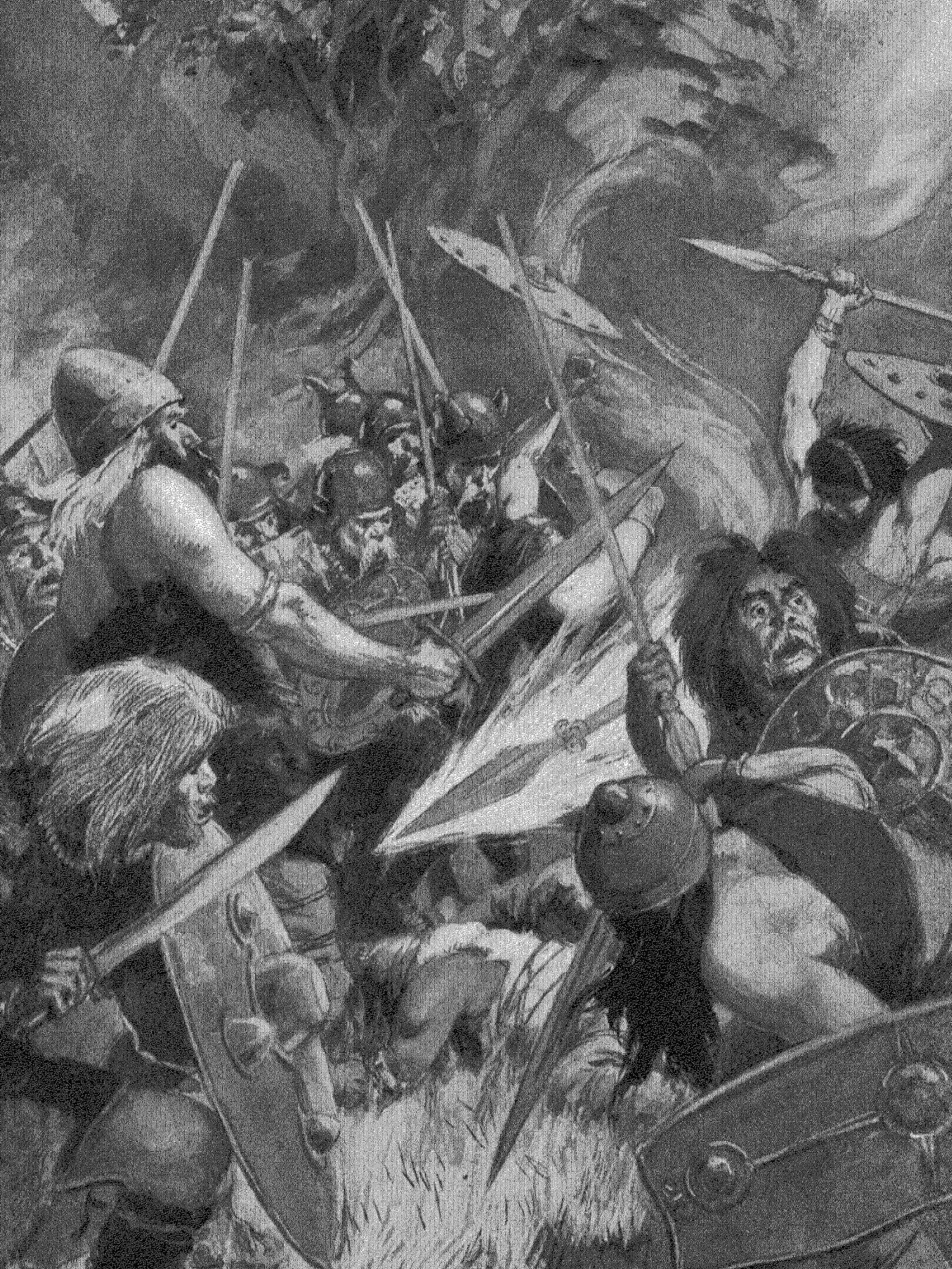
Lugh unites what other gods divide: craft, war, poetry, healing, magic. In the Irish tale of the Battle of Mag Tuired he leads the Túatha Dé Danann against the demonic Fomorians and slays his own grandfather Balor with the deadly eye. He is a figure of light and a war lord at once.
On the continent Lugus was so important that Caesar's Celtic "Mercury" – whom he names as the most worshipped god of Gaul – probably referred to him. His name is embedded in many place names: Lugdunum ("fortress of Lugus") became Lyon, as did Leiden, Laon and others. A god whose traces lead right across Europe.
One of the four great Celtic festivals is named after him: Lughnasadh (early August), the harvest and assembly festival. Lugh himself is said to have founded it in honour of his foster-mother Tailtiu. So he belongs also to the Celtic year's cycle.
"Wits must he have who wanders wide, but all is easy at home."Hávamál 5, after Henry A. Bellows 1923 (public domain)
Lugh is one of the greatest gods of Irish-Celtic mythology. His by-name Samildánach means "the one skilled in many arts" – he is warrior, craftsman, poet, magician and leader at once, a god of unsurpassed versatility.
In the great saga Cath Maige Tuired Lugh leads the gods (Túatha Dé Danann) into battle against the demonic Fomori. Their king is his own grandfather Balor with the deadly gaze – whom Lugh defeats with a sling-stone.
Lugh corresponds to the continental Celtic god Lugus, worshipped throughout Gaul. Cities like Lyon (Lugdunum, "fortress of Lugus") and Laon bear his name – a god who linked the whole Celtic world.
After Lugh the harvest festival Lughnasadh (1 August) is named, which he according to legend founded in honour of his foster-mother Tailtiu. It was a time of markets, contests and the first grain.
Lugh is the shining all-rounder of the Celtic world of gods – a god whose name reaches from Ireland to Lyon. More in the overview Celtic Religion.
Celtic Religion · Taranis · Teutates · The Druids · Cernunnos.
All Festivals & Belief articles →
Between the years lies a time that ticks differently: the Rauhnächte, the Twelve Nights around the winter solstice. The …
Read more →Emperor Barbarossa sits in the Kyffhäuser, his head propped on the table, his beard grown through the stone slab …
Read more →