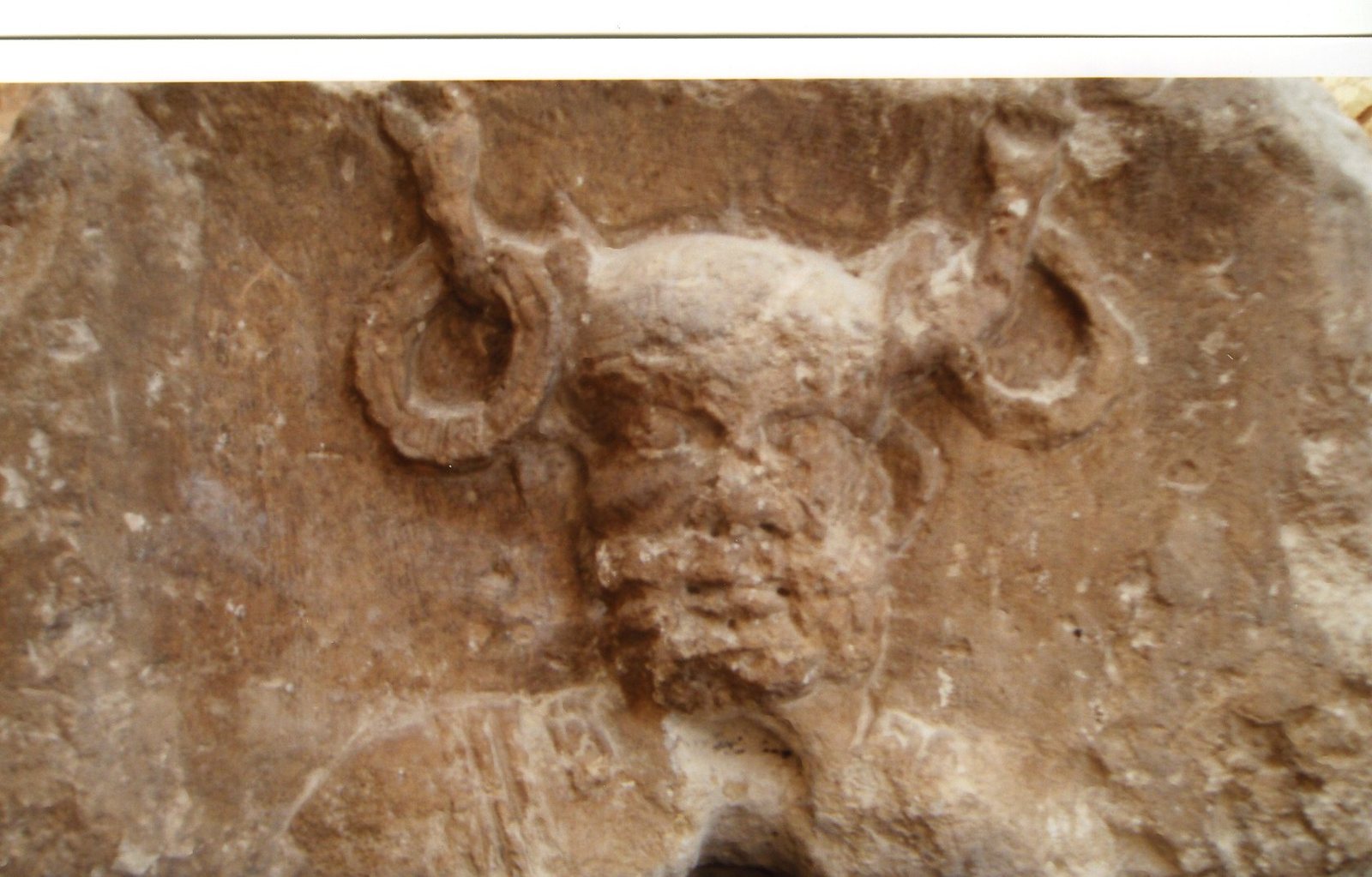
Cernunnos is the antlered god of the Celts, often interpreted as "lord of the animals". His name is actually attested – on the Pillar of the Boatmen in Paris (1st c. AD) "_ernunnos" stands above a horned deity. Otherwise we know him almost only from images, hardly from texts.
Because texts are lacking, Cernunnos is interpreted from his images: as a god of wild animals, of fertility, of the forest and perhaps of the threshold between the worlds. The antlers – which the stag sheds and regrows each year – fit well with a god of growth and renewal. But this is not certain.
"Wits must he have who wanders wide, but all is easy at home."Hávamál 5, after Henry A. Bellows 1923 (public domain)
Cernunnos is one of the most mysterious gods of the Celtic world – a god with stag's antlers, often depicted cross-legged, surrounded by animals. He is regarded as "lord of the animals", god of the wilderness, of fertility and wealth.
His most famous image is found on the cauldron of Gundestrup: a horned figure sitting cross-legged, holding a torque and a ram-headed serpent, ringed by animals. An iconic image of Celtic religion.
The name "Cernunnos" we know from a single monument: the Pillar of the Boatmen in Paris from the 1st century. There the horned god stands with his name – the only certain written evidence.
Cernunnos seems to mediate between human, animal and otherworld. As an antler-bearer he links the power of the forest with the world of humans – one of the most impressive conceptions of a god among the Celts.
Cernunnos is the quiet, powerful face of Celtic nature religion – a god we see but barely hear. More in the overview Celtic Religion.

Celtic Religion · The Druids · Tiwaz · Germanic Religion · Nehalennia.
All Festivals & Belief articles →
They appear almost in passing in the old texts, yet they are everywhere: the disir, female spirits who watch over a …
Read more →Forget the translucent veil-ghost. The draugr of the Old Norse sagas comes back in the flesh – heavy as an ox, darkly …
Read more →In the sagas of the North, no one sleeps harmlessly. A dream there is rarely a mere echo of the day, but a messenger …
Read more →