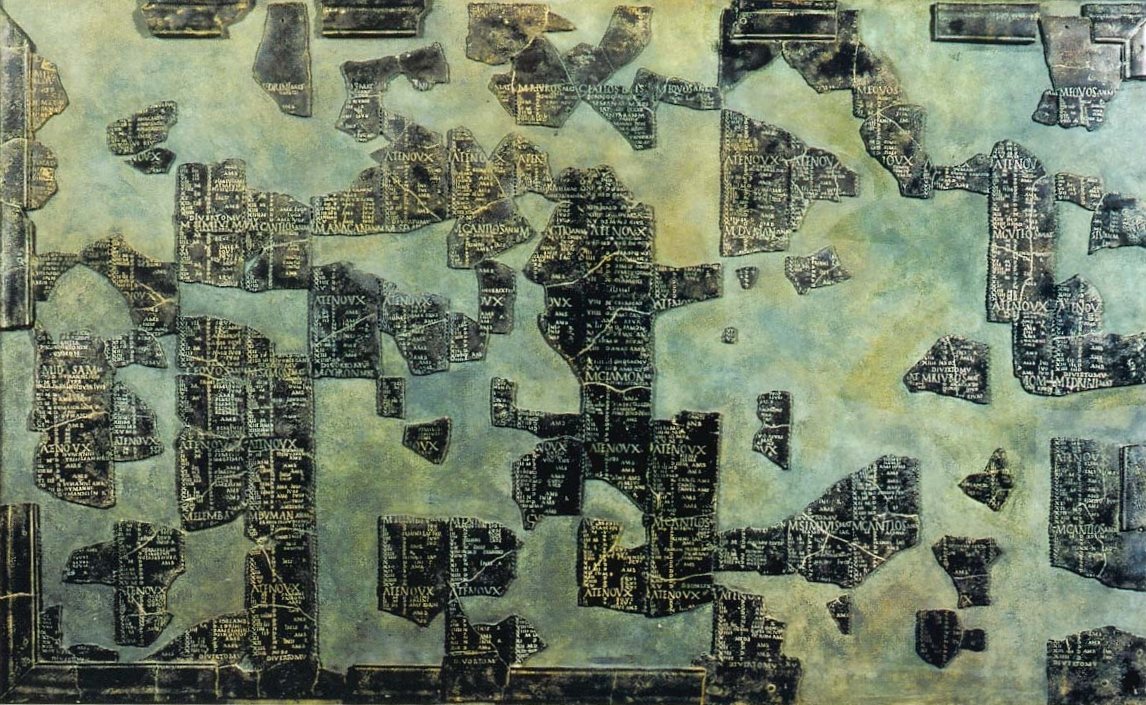
Celtic religion was the belief of the Celtic peoples of central and western Europe – from Gaul via Britain into the Alps. As with the Germanic peoples, their own written sources are almost entirely lacking; we depend on Caesar, other ancient authors and archaeology. And as with the Germanic peoples: it was no uniform dogma, but regionally varied belief.
The best-known figures are the Druids – priests, judges and scholars in one. Caesar describes them as a powerful elite class that watched over law and cult, learned by heart for years (nothing might be written down) and led sacrifices. Their knowledge they passed on orally – which is why we barely know it.
The Celtic world of gods was large and regionally varied. Well known are Lugh (light/craft), Taranis (thunder, with a wheel symbol), Teutates ("god of the tribe", from toutā = people) and Cernunnos, the antlered "lord of the animals" – famous from the silver cauldron of Gundestrup. Caesar simply assigned them to Roman gods: Mercury, Apollo, Mars, Jupiter, Minerva.
"Wits must he have who wanders wide, but all is easy at home."Hávamál 5, after Henry A. Bellows 1923 (public domain)
The closeness to Germanic belief is striking: sacred groves (Celtic nemeton) instead of temples, worship at springs and in forests, a war god of the Mars type. Especially fine is the linguistic bridge: Celtic Teutates (from toutā, "people") and Germanic *þeudō ("people", cf. German "deutsch") go back to the same Indo-European root – a "god of the people" on both sides of the Rhine. The Rhine was, after all, a border of the Romans, not a wall between two utterly foreign worlds.
Celtic religion knew no holy scripture and no great temples like Greeks and Romans. Its knowledge lived in the memory of the Druids and in the sacred places of nature. Therefore it is hard to grasp – a mosaic of images, names and reports.
The Celts worshipped countless gods, often varying regionally. Known are Lugh, the master of all arts, the thunder god Taranis with the wheel, the tribal god Teutates and the horned Cernunnos.
Worship took place above all in nature: in sacred groves (nemeton), at springs, lakes and trees. Such places were regarded as the boundary to the otherworld. Only under Roman influence did built sanctuaries arise.
Celtic faith revolved around the year's cycle with the four fire festivals and around the idea of a near otherworld into which the souls passed. The belief in the transmigration of souls made the Celts, according to Caesar, fearless in battle.
Celtic religion is the great neighbour of the Germanic – related in grove, wealth of gods and sense of the world. More on the Roman renaming of Germanic gods in the article Interpretatio Romana.
Tiwaz · Interpretatio Romana · Germanic Religion · Nerthus – the earth goddess · The Matronae.
All Festivals & Belief articles →
Before a Viking ship glided toward home, the crew took the carved dragon-heads down from the prow. Not out of modesty …
Read more →Between the years lies a time that ticks differently: the Rauhnächte, the Twelve Nights around the winter solstice. The …
Read more →Emperor Barbarossa sits in the Kyffhäuser, his head propped on the table, his beard grown through the stone slab …
Read more →