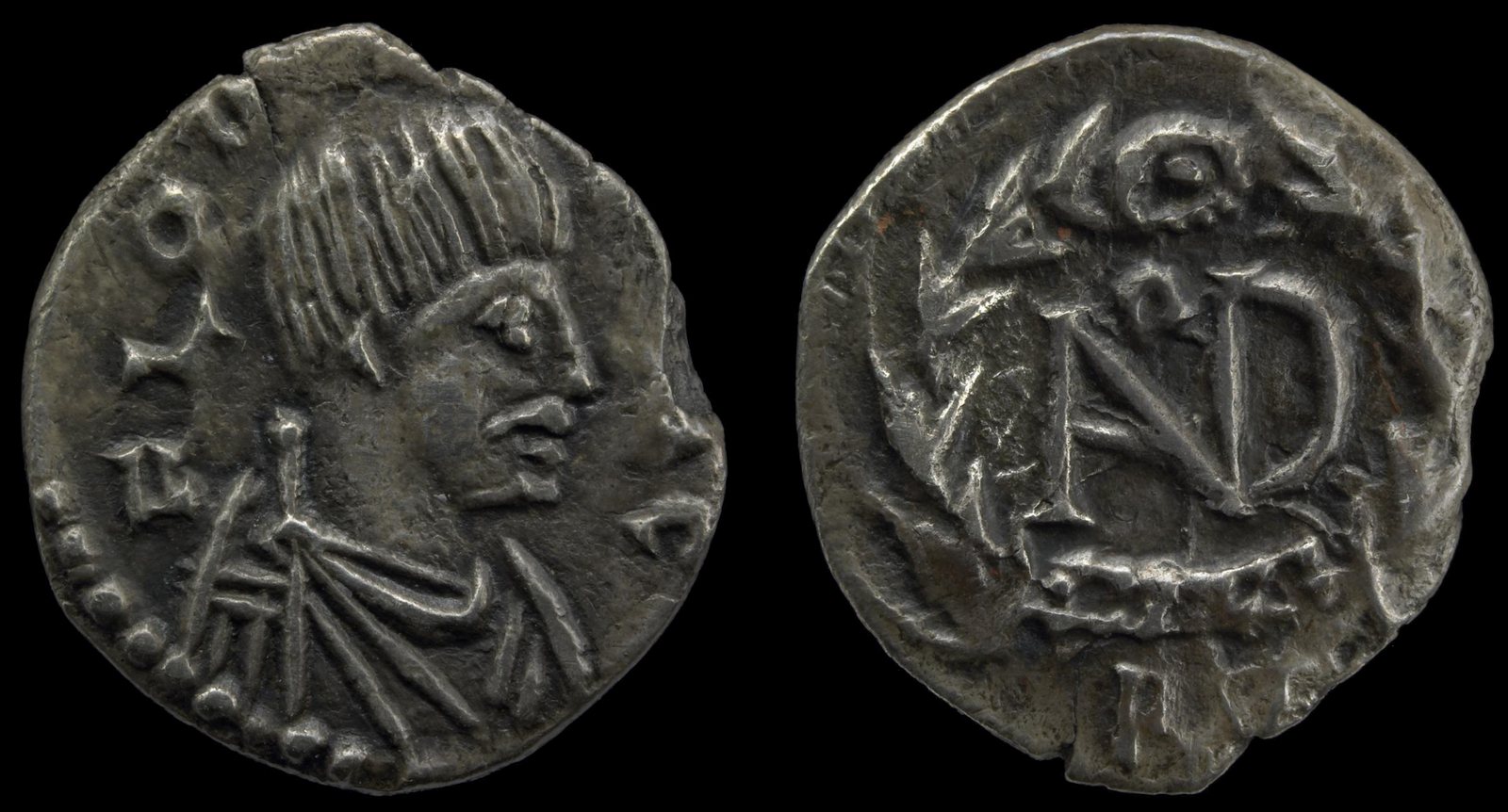
The Sciri were an East Germanic people already named in antiquity alongside the Bastarnae and Goths. In the Migration Period they were at times under Hunnic rule.
After the collapse of the Hunnic empire the Sciri fought for independence, but were heavily beaten by the Ostrogoths. Many entered Roman service in Italy as mercenaries.
Their most famous son was Odoacer: in 476 he deposed the last Western Roman emperor Romulus Augustulus and became king in Italy – a turning point later called the "end of the Western Roman Empire". In 493 he was defeated and killed by the Ostrogoth Theoderic.
"Odoacer, of the people of the Sciri, seized the rule over Italy."after late-antique tradition (public domain, own translation)
The Sciri were a smaller East Germanic people who lived in south-eastern Central Europe and played a surprisingly large role in the turmoil of the Migration Period. Like many peoples of this time they came for a while under Hun overlordship.
A Scirian named Edeco belonged to Attila's innermost circle and appeared as an envoy at the East Roman imperial court. His name links the small people with one of the most dramatic chapters of late antiquity.
His son became world-famous: Odoacer, a leader from the milieu of the Sciri, deposed the last West Roman emperor Romulus Augustulus in AD 476. Many regard this year as the end of the Western Roman Empire – a turning point of world history.
Odoacer ruled Italy as king until he was defeated by the Ostrogoth Theoderic. The Sciri themselves soon merged into other confederations – but their name remains linked with the symbolic fall of Rome.
The Sciri show how a small people could stand at the hinge of history. At GLANZ & GRAVUR we tell such stories from the sources, because they prove that the "small ones" too moved world history.
The Sciri belong to the East Germanic wandering peoples. Continue with the Goths and Gepids.

The Goths · The Heruli · The Rugii · The Gepids · The Vandals.
All History & Finds articles →
A horse, a golden disc, six little spoked wheels: the Trundholm Sun Chariot is one of the most beautiful images the …
Read more →One late-summer day in 1066, a Norwegian army marched through northern England certain of victory – and a few hours …
Read more →