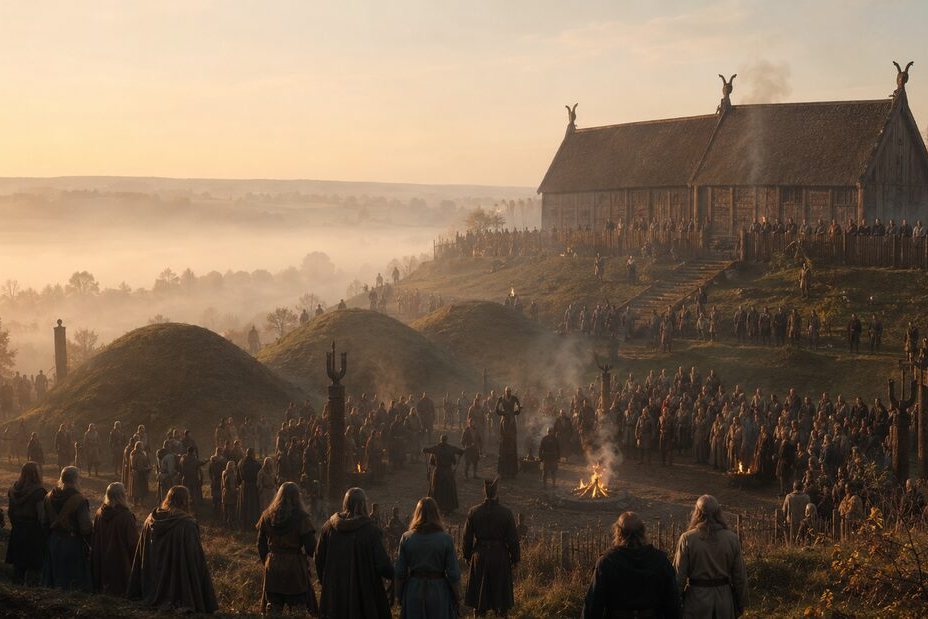
The Goths were an East Germanic people whose origin tradition (Jordanes) places in Scandza – the north. From the lower Vistula they moved in the 2nd/3rd century to the Black Sea and split into Visigoths and Ostrogoths.
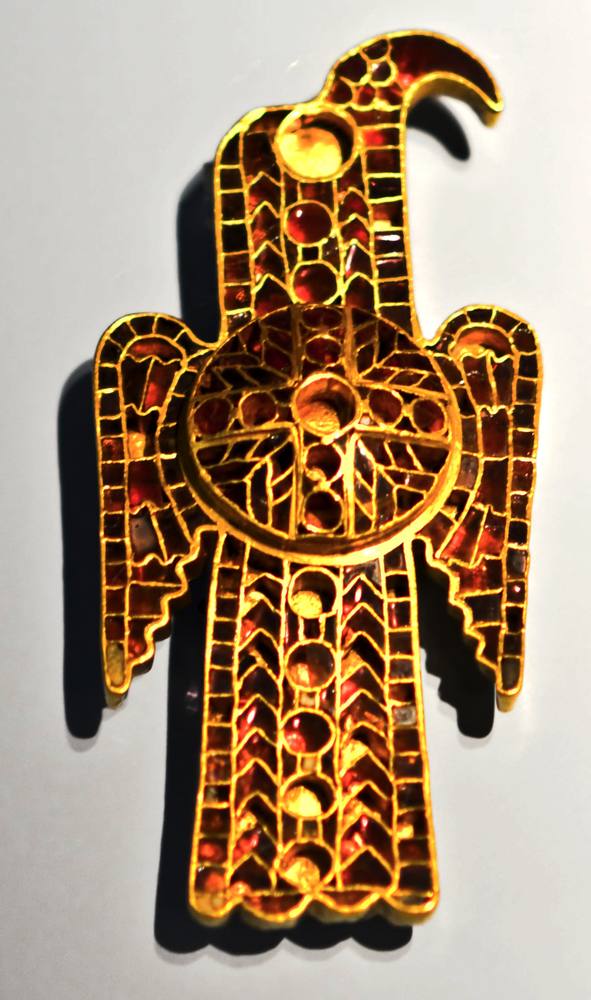
In AD 410 the Visigoth Alaric sacked Rome – a shock to the ancient world. The Visigoths founded a kingdom in Spain, the Ostrogoths under Theoderic one in Italy. Thus a migrating people became at once the heirs and destroyers of Rome.
"From this island of Scandza … the Goths are said once to have set out."after Jordanes, Getica (public domain, own translation)
The Goths were one of the most powerful East Germanic peoples of late antiquity. The Gothic historian Jordanes has them migrate from the island of Scandza across the Vistula and finally move as far as the Black Sea, where they built a great kingdom.
A milestone was the Gothic Bible of Bishop Wulfila in the 4th century. For his translation he created a Gothic script especially. The surviving Codex Argenteus is one of the most precious testimonies of a Germanic language at all.
In AD 410 the Visigothic king Alaric conquered the city of Rome – a shock that shook the whole ancient world. The "eternal city" was for the first time in 800 years again in enemy hands.
The Goths split into two great branches: the Visigoths, who founded a kingdom in Spain, and the Ostrogoths, who under Theoderic the Great ruled Italy. Both shaped the Europe after the fall of Western Rome.
The Goths belong to the great East Germanic wandering peoples – like the Heruli and Rugii. Continue with them.
The Heruli · The Rugii · The Lombards · The Marcomanni · Germanic Religion.
All History & Finds articles →
In 865 an army landed in England that did not want to raid and sail home, but to stay: the „Great Heathen Army". Two …
Read more →The name says it all: Gudme means „home of the gods". On the Danish island of Funen lay one of the richest cult and …
Read more →They are so small and so thin that you can barely hold one without creasing it: the guldgubber, “gold men,” tiny …
Read more →In 1891 peat-cutters in a bog near Gundestrup in Jutland struck something metallic: a dismantled cauldron of pure …
Read more →