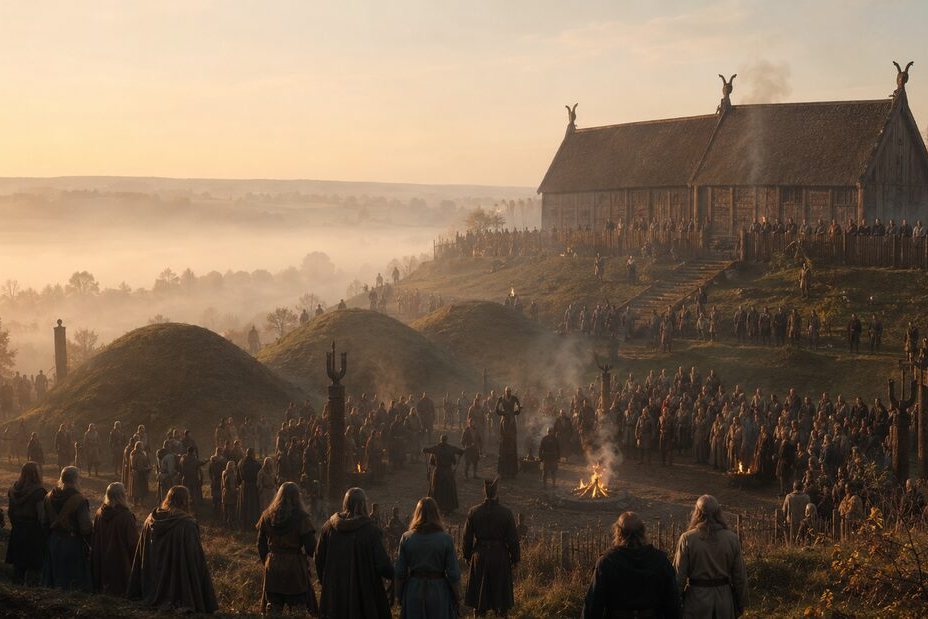
The Marcomanni ("border-land men") were a Germanic tribe with Suebic roots. Around the turn of the era they moved to Bohemia and there, under King Marbod (Maroboduus), built an astonishingly tightly organised kingdom – with a standing army and diplomatic relations as far as Rome.
"Wits must he have who wanders wide, but all is easy at home."Hávamál 5, after Henry A. Bellows 1923 (public domain)
The Marcomanni (the "border men") were one of the most powerful Germanic tribes, originally in the Main region, later in Bohemia. Their name reveals their role: a people on the border with the Roman world, always in the tension between war and trade.
Around the turn of the era their king Marbod created a great kingdom in Bohemia that united many tribes under it. Rome saw in it a serious threat – but Marbod's power finally broke on internal rivalries and on Arminius.
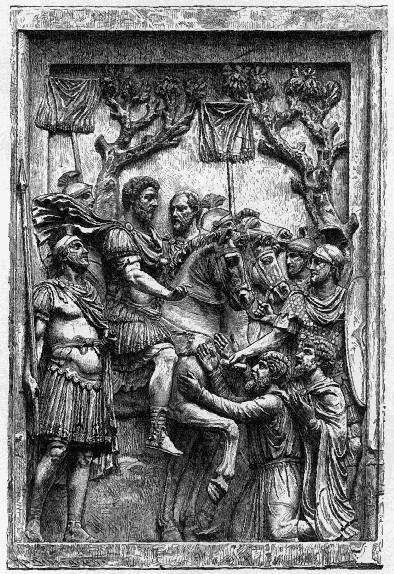
The history of the Marcomanni reached its climax in the Marcomannic Wars (AD 166–180). Germanic peoples broke through the Danube frontier and pushed as far as northern Italy. Emperor Marcus Aurelius personally led the defensive struggle for years.
These wars shook the empire deeply and foreshadowed the later Migration Period. Marcus Aurelius died in 180 in the camp on the Danube. The Marcomanni remained a power until they later merged into other confederations.
The Marcomanni show that Germanic peoples did not only live in loose tribes but could also build kingdoms that taught Rome to fear. They are related to the Suebi.

The Suebi · The Cherusci & Arminius · The Hermunduri · The Alemanni · Germanic Religion.
All History & Finds articles →
To a farmer from Uppland, „the great city" was as unimaginable as another planet. Constantinople had walls that fire …
Read more →Whoever won did not always keep the spoils. In the Roman Iron Age, Germanic victors sank the entire equipment of …
Read more →