
The Alemanni appeared from the 3rd century AD on the Roman frontier – as a confederation of several groups, probably with Suebic roots. Their name is often interpreted as "all men": not a single tribe but an alliance. Their settlement area lay on the Upper Rhine, in Alsace, Switzerland and south-western Germany.
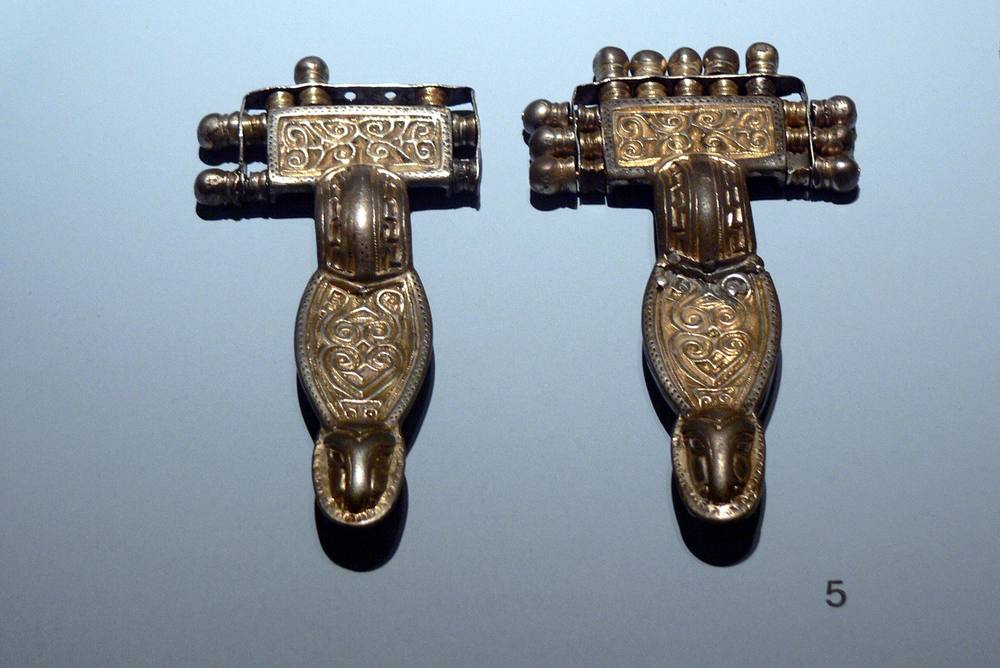
The Alemanni repeatedly broke through the Roman limes and pushed deep into the empire; after the fall of the limes (around 260) they settled the abandoned land, today's "Decumate Fields". For centuries they were Rome's restless neighbours – now raiding, now as allies or mercenaries.
Their independence ended through the Franks: around 496/497 the Frankish king Clovis defeated the Alemanni in a great battle (traditionally linked with Zülpich). The Alemanni were incorporated into the Frankish realm – but their name remained.
The most remarkable thing is their afterlife: in several languages Germany is named after the Alemanni to this day – French Allemagne, Spanish Alemania, Portuguese Alemanha. A border people on the Upper Rhine thus gave a whole nation its name – at least from the view of the western neighbours.
"Wits must he have who wanders wide, but all is easy at home."Hávamál 5, after Henry A. Bellows 1923 (public domain)
The Alemanni were a Germanic tribal confederation on the Upper Rhine and the upper Danube. Their name probably means "all men" – a sign that here many smaller groups (among them Suebi and Juthungi) joined into a new confederation.
From the 3rd century the Alemanni became dangerous opponents of Rome. They broke through the Limes and repeatedly penetrated Roman territory. Rome finally had to withdraw the frontier behind Rhine and Danube.
Around 500 the Alemanni clashed with the Franks. Their defeat against Clovis (traditionally at Zülpich) sealed the rise of the Frankish kingdom and bound the Alemannic land to the Frankish world.
The name of the Alemanni lives on to this day: in French Germany is called Allemagne, in Spanish Alemania. A single Germanic tribal confederation thus gave whole languages the word for "Germany".
The Alemanni are proof of how a Germanic border confederation makes history – right into the name by which half of Europe calls "Germany". They are related to the Suebi.

The Suebi · The Cherusci & Arminius · The Chatti · Germanic Religion · Tiwaz.
All History & Finds articles →
High above the world of humans, beyond the burning rainbow bridge, lies Asgard – the fortified home of the Æsir. It is …
Read more →Almost 1,500 years before the first Germanic peoples entered Roman history books, a highly developed Early Bronze Age …
Read more →Between the world of humans and the world of the gods a bridge of light is stretched: Bifröst, the rainbow. It is the …
Read more →