The Juthungi were a Germanic people north of the Danube who in the 3rd century AD appeared as feared cavalry warriors. They are reckoned close to the Suebian sphere and to the prehistory of the Alemanni.
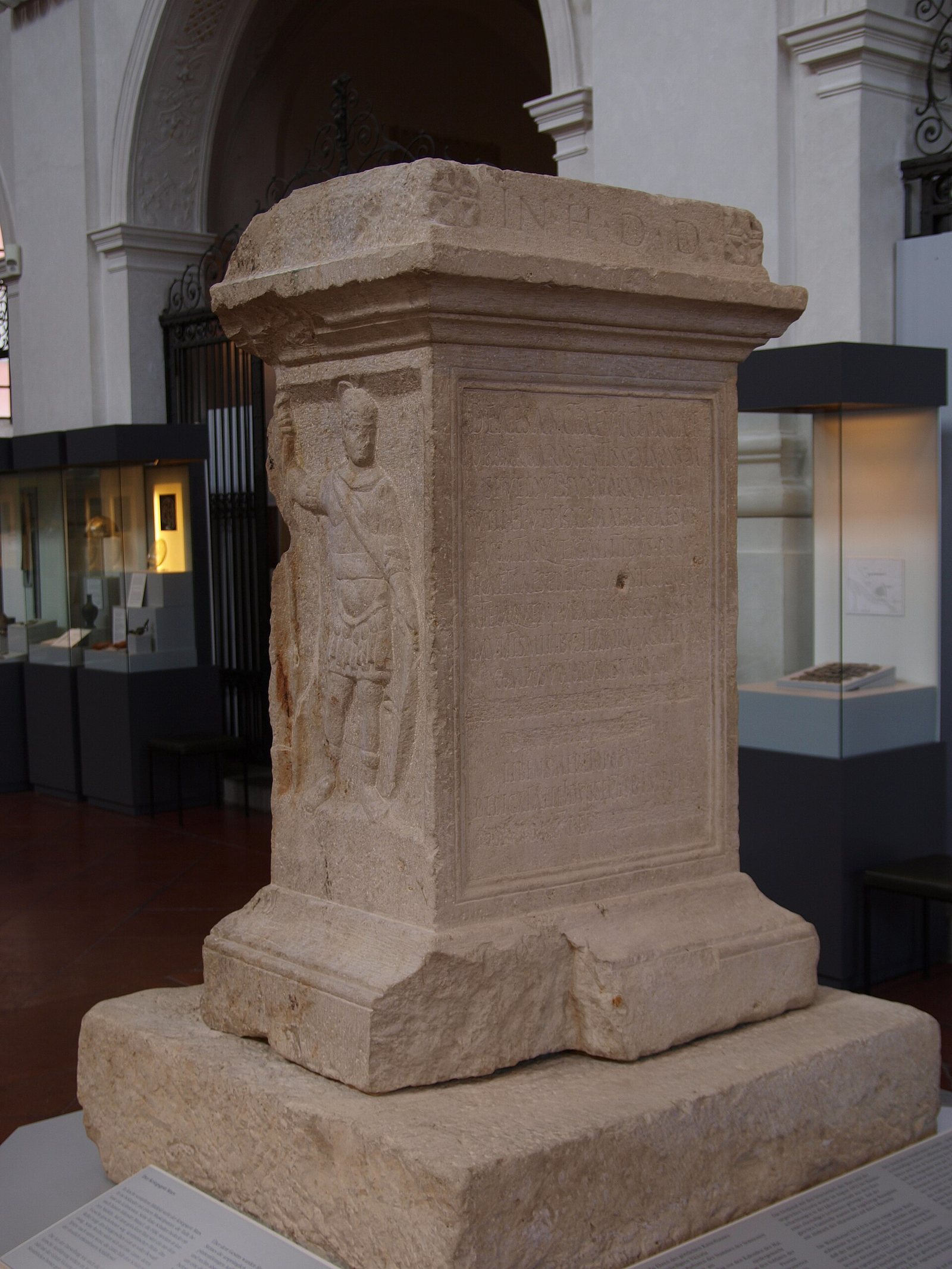
"… after the victory over the Juthungi and the freeing of many thousands of captives."after the Augsburg victory altar (public domain, own translation)
The Juthungi were a Germanic people who appeared on the upper Danube in the 3rd century. They were famous for their fast cavalry, with which they pushed deep into Roman territory. Some researchers see in them descendants or neighbours of the old Semnones.
Around AD 259/260 the Juthungi set out from Italy back towards home with great booty and thousands of captives. They exploited the weakness of the empire in the time of the soldier-emperors, when Rome fought on many fronts at once.
A unique testimony illuminates these events: the Augsburg victory altar, found in 1992. Its inscription reports how Roman troops defeated the returning Juthungi in AD 260 and freed thousands of Italian captives. It is the earliest certain mention of the Juthungi – and at the same time of the Semnones in this context.
The Juthungi remained a stubborn enemy. As late as AD 271 Emperor Aurelian had to wage hard battles against them, and later too they appear in the sources as a threat to the Danube frontier. Their cavalry armies were among the most feared of the Migration Period.
In the course of the 4th century the Juthungi merged into the great confederation of the Alemanni, which formed on the Upper Rhine and the upper Danube. Thus their warlike heritage lived on in one of the most important Germanic peoples.
The Juthungi stand for the dramatic age in which the Roman Empire began to totter and new Germanic confederations arose. The Augsburg altar makes this distant era tangible – and it is precisely such attested finds from which we at GLANZ & GRAVUR draw our stories.
The Juthungi belong to the prehistory of the Alemanni. Continue with the Alemanni and Semnones.

The Alemanni · The Semnones · The Marcomanni · The Suebi · The Hermunduri.
All History & Finds articles →
Long before the Vikings they settled between the Eifel and the Danube, leaving behind gold hoards and princely graves …
Read more →