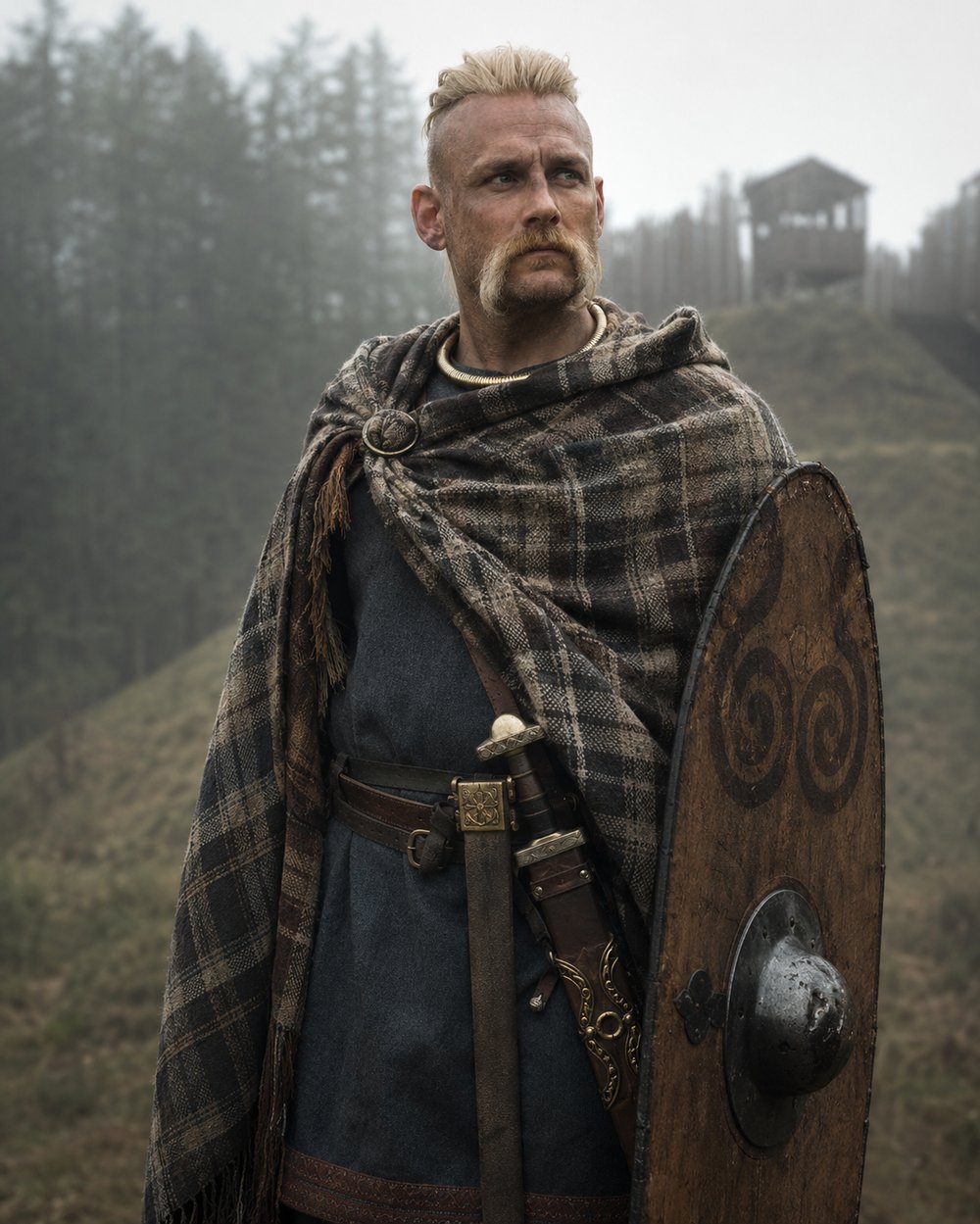
Long before the Viking Age, in the Hallstatt and Early La Tène period (roughly 8th–5th c. BC), mighty princely seats and rich lavish graves arose in Celtic central Europe. They show an elite that amassed enormous wealth through long-distance trade, metal and prestige – and lie largely in today's southern and central Germany.
The most famous is the prince of Hochdorf (near Stuttgart, c. 530 BC): discovered unrobbed, the dead man lay on a bronze couch with wheels, surrounded by gold jewellery, a huge bronze cauldron for mead and a four-wheeled wagon. A princely grave that shows the wealth of Celtic elites in full splendour.
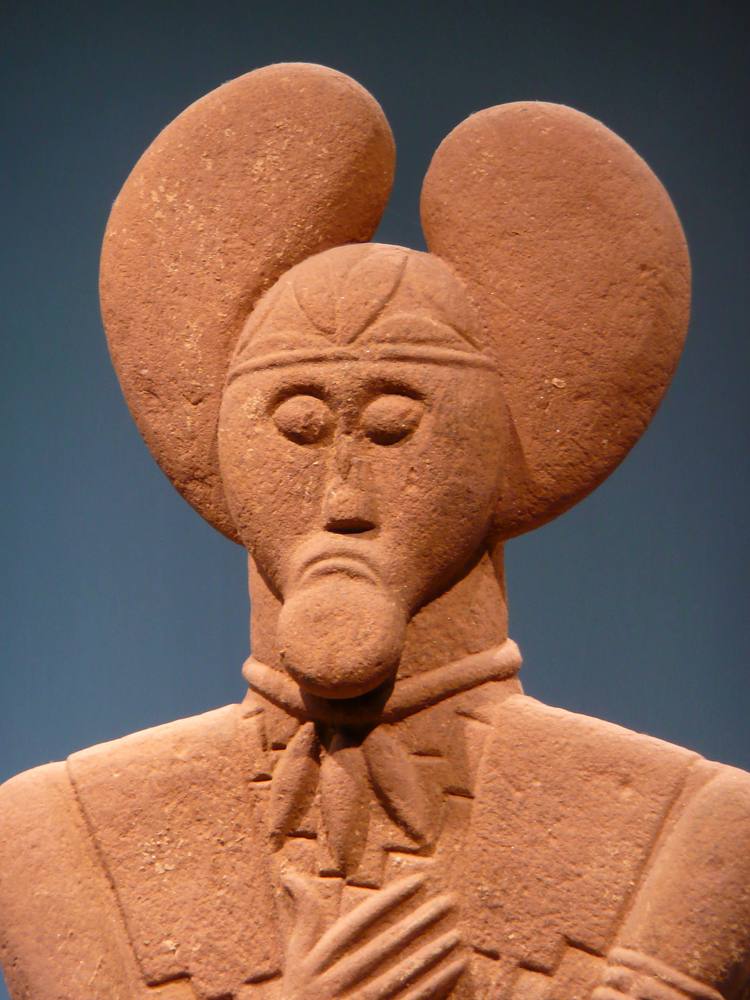
At the Glauberg in Hesse not only lavish graves were found but also an almost complete life-sized stone statue of a Celtic "prince" with a leaf crown – a unique image of a Celt. The Heuneburg on the upper Danube, in turn, was an early fortified large settlement with a mudbrick wall on a Mediterranean model – called by some the oldest "town" north of the Alps.
"Wits must he have who wanders wide, but all is easy at home."Hávamál 5, after Henry A. Bellows 1923 (public domain)
The Celtic princely graves of the Hallstatt and early La Tène period are among the most splendid finds of pre-Roman Europe. In them powerful persons were buried with incredible wealth – gold, bronze, weapons and imported luxury from the Mediterranean.
The most famous is the grave of Hochdorf near Stuttgart (around 530 BC). The dead man lay on a bronze couch (kline), with golden shoe fittings, a golden neck-ring and a huge bronze cauldron for mead – a prince in full splendour.
From the Glauberg in Hesse comes a life-size stone statue of a Celtic warrior with a "leaf crown" – one of the most impressive Celtic depictions of a human at all. It shows how the elite wanted to portray themselves.
Near the Heuneburg on the upper Danube lay one of the earliest cities north of the Alps, with a wall on a Mediterranean model. The princely graves around it attest a power that traded with the Mediterranean world.
The Celtic princely graves show: long before the Vikings there were brilliant high cultures in Germany. More on the belief and gods of the Celts in the overview Celtic Religion.
Celtic Religion · The Celtic Warriors · The Druids · Cernunnos · Lugh.
All History & Finds articles →
Without their ships the Vikings would never have become Vikings. The longship was the high technology of its time …
Read more →