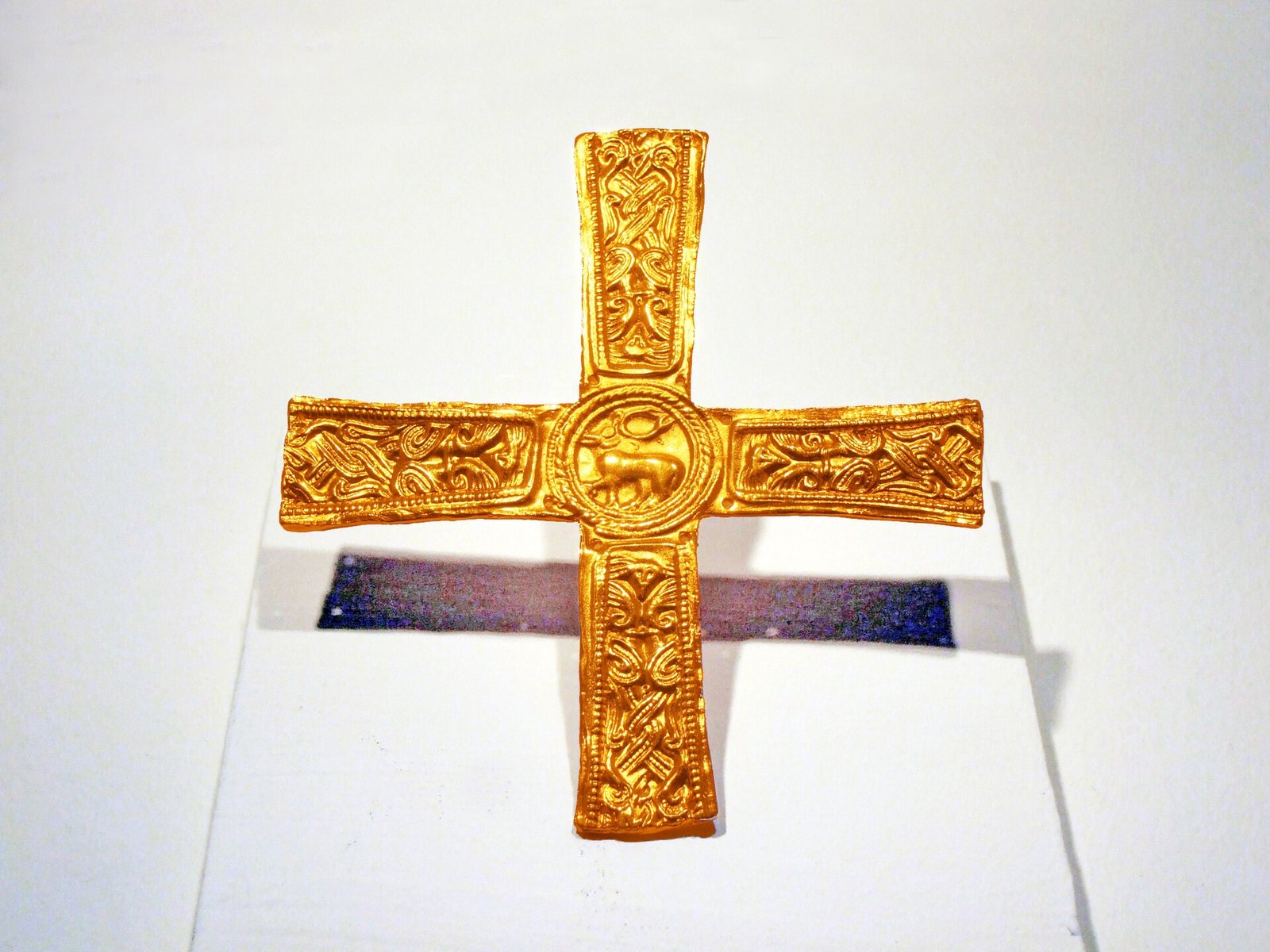
The Lombards (Langobards, "long-beards") were originally a small Germanic tribe on the lower Elbe (in today's northern Germany). Over centuries they migrated south and finally, in 568 AD, founded a kingdom in Italy that lasted until 774 – their name lives on to this day in "Lombardy".
Their origin legend is a rare treasure: it preserves a genuine continental god's name. Before a battle, according to the Origo gentis Langobardorum, the Winnili asked the goddess Frea for help. She advised their women to tie their long hair like a beard in front of their faces. When Godan (Wodan) awoke in the morning and saw the "long-beards", he gave them victory and the new name.
"Who are these long-beards?" – and Godan gave them the name and the victory.after the Origo gentis Langobardorum / Paulus Diaconus (public domain, own translation)
This legend is more than a pretty story: it is evidence of the Wodan cult on the continent – Godan and Frea are clearly Wodan and Frija/Frigg. Paul the Deacon, who wrote the legend down in the 8th century, calls it "ridiculous" himself – but precisely thereby he preserved a piece of pagan belief.
The Lombards were a Germanic people who originally sat on the lower Elbe. In one of the longest migrations of the Migration Period they moved south over centuries until they invaded Italy in 568 and founded a mighty kingdom there.
Their kingdom covered wide parts of Italy; after them Lombardy is named to this day. For two centuries the Lombards shaped the history of the peninsula, until Charlemagne conquered their kingdom in 774.
The historian Paul the Deacon transmits their origin legend: the goddess Frea outwits her husband Godan (Wodan) so that he gives the people victory and the name "long-beards". This legend is a precious testimony to the continental cult of Wodan.
The Lombards left a law book of their own (the Edictus Rothari) and a rich art – the "Lombard" interlace art shaped the art of Italy. From an Elbe tribe to the namesake of an Italian region: an astonishing journey.
The Lombards combine Germanic migration, the founding of a kingdom and one of the few continental god-attestations in one. More on their gods in the article Wodan, Donar & Ziu.

Germanic Religion · Wodan, Donar & Ziu · The Suebi · The Marcomanni · Interpretatio Romana.
All History & Finds articles →
Without their ships the Vikings would never have become Vikings. The longship was the high technology of its time …
Read more →It is not two centimetres tall and weighs nine grams – and yet it set off one of the most exciting debates in Norse …
Read more →