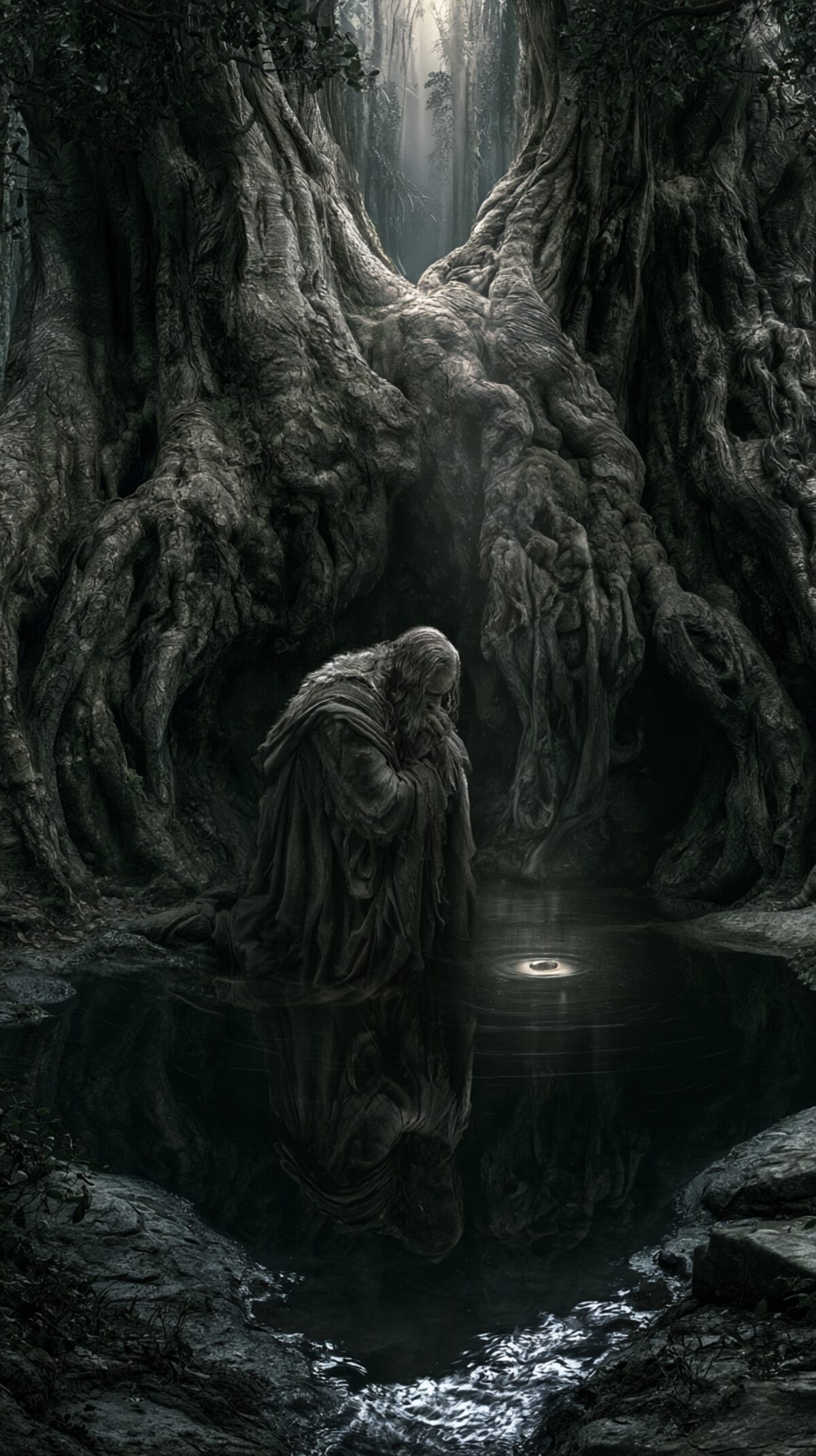
The Norse mythology of the Edda is richly transmitted – the divine world of the continental Germanic peoples, by contrast, only in fragments. We know them almost only from Roman reports, from votive inscriptions, from two surviving charms, from place names and from the weekdays. And yet it is clear: these are the same gods as in the North, only under older names.
When we say "Germanic gods", most people think of Odin, Thor and Tyr – the Norse names. Yet on the European mainland, in the land of our ancestors on the Rhine, the same gods bore different names: Wodan, Donar and Ziu. Their traces are older than the Vikings and often lie right on our doorstep.
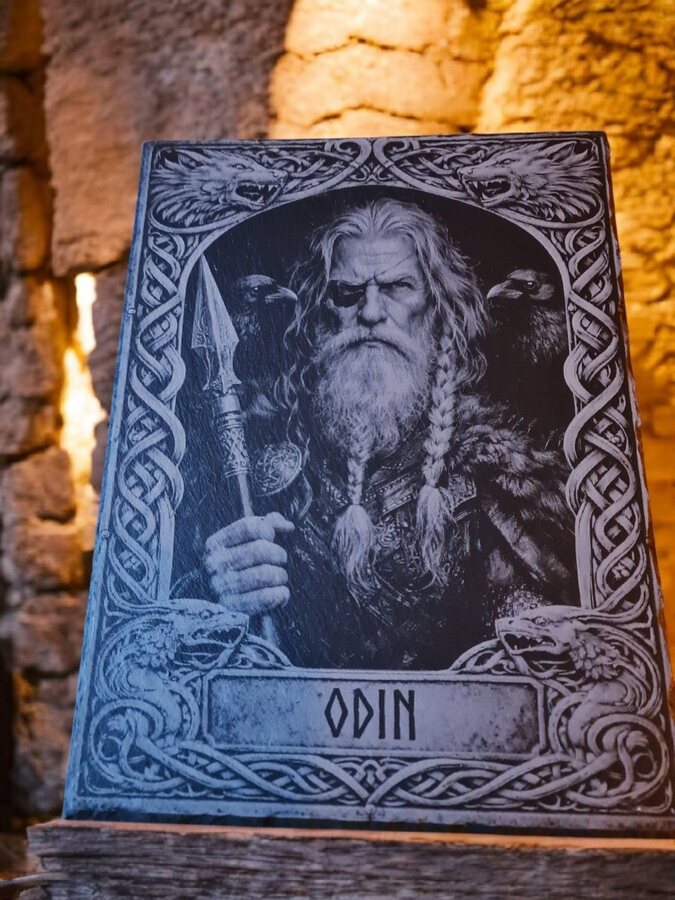
The name Wodan (Old Norse Óðinn, Old English Wōden) goes back to Proto-Germanic *Wōðanaz, from a root meaning "fury, frenzy, ecstasy, inspiration". Wodan is no mere war god but the god of ecstasy: of poetry, magic, the leading of the dead and frenzied battle. The Romans equated him not with Mars but with Mercury – the guide of souls and god of travellers. Tacitus writes that the Germani worshipped "Mercury" as their highest god.
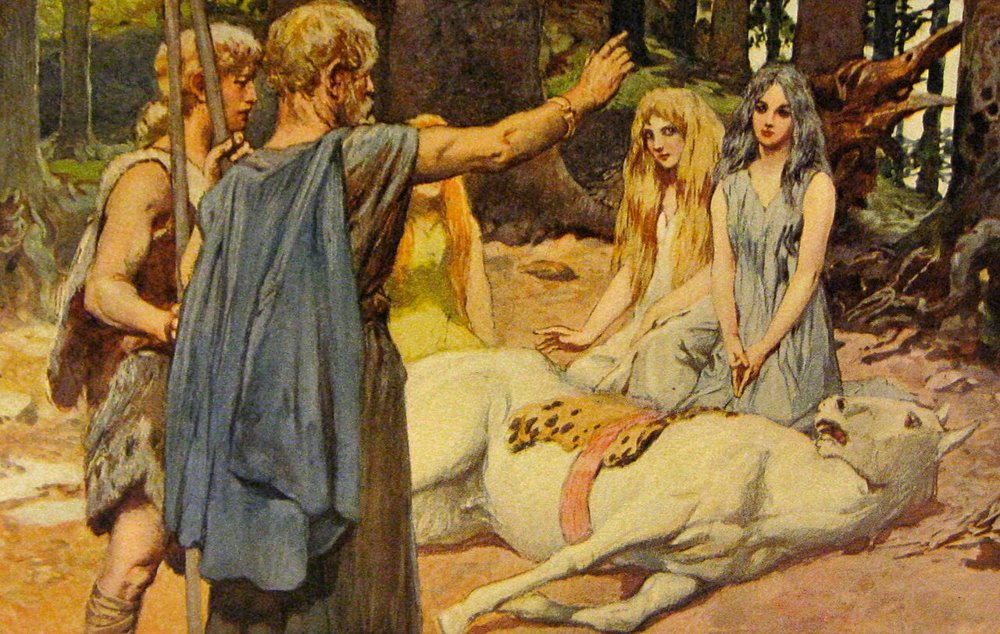
On the mainland Wodan meets us above all in language: in the weekday Wednesday ("Wodan's day"), in place names like Godesberg near Bonn (earlier Wodenesberg) and Gudensberg in Hesse, and in the Wild Hunt, the ghostly host of the dead that roars through the Yule nights. His most important written testimony is the Second Merseburg Charm: there "Uuodan" heals the sprained leg of Balder's horse – the oldest evidence of a continental Wodan cult in the German tongue.
A further continental testimony is the origin legend of the Lombards (Paul the Deacon, 8th c.): there Godan (Wodan) grants the Lombards victory, his wife Frea cleverly steering his gaze – proof that Wodan was known as giver of fate and victory among the southern Germani too. His Norse form Odin carries the same traits to the extreme: the one-eyed god who sacrifices his eye at Mímir's well for wisdom and hangs himself on the world tree to win the runes – tales, to be sure, that only the much later Edda gives us.
Donar (Old Norse Þórr/Thor, Old English Þunor) is the thunder god whose name simply means "thunder" (Proto-Germanic *Þunraz). He is the protector of farm and kin, who with his hammer holds the giants and chaos at bay. The Romans recognised in him their Hercules (because of the club/hammer) or Jupiter (because of the thunder).
On the Lower Rhine he was worshipped as Hercules Magusanus – with numerous votive stones in the Batavian land. Famous is the Donar Oak near Geismar in Hesse, which the missionary Boniface felled in 723 to break the power of the old god. Thursday ("Thunor's day") and place names like the Donnersberg bear his name. His hammer lives on in the Viking-Age Thor's-hammer amulets – the wide arc from Donar to Thor.
Besides oaks and hammer, Donar is drawn by two goats that pull his wagon and make the thunder roll. In the Bronze and Iron Ages, ancient stone axes ("thunderbolts") were kept as protection against lightning – a folk belief that accompanied the thunder god for thousands of years, reaching into modern times.
Ziu (also Tîwaz, Old Norse Týr) is the oldest of the three – perhaps originally the highest god of all, before Wodan displaced him. His name is cognate with Latin deus and Greek Zeus. The Romans equated him with Mars; on Hadrian's Wall Germanic soldiers worshipped him as Mars Thingsus, the god of the Thing and of law. His day is Tuesday. More in our large article on Tiwaz.
Unlike in the distant north, the continental gods are graspable above all archaeologically and epigraphically. On hundreds of Roman-era votive stones in the Rhineland, Germanic gods appear under Roman names – "Mercurius", "Hercules Magusanus", "Mars" with Germanic bynames – often dedicated by Germanic soldiers and traders. Add to these the Rhenish Matronae, the mother goddesses with the baskets of fruit. This cult on our doorstep is the best proof: the "Norse" gods are in truth common-Germanic – a piece of forgotten homeland.
"Among the gods they worship Mercury most … Hercules and Mars they appease with permitted sacrificial animals."Tacitus, Germania 9, after a public-domain translation
Our knowledge rests on three pillars: the ancient authors (above all Tacitus's Germania and the interpretatio Romana), the finds (votive stones, amulets, place names, the weekdays) and the much later Norse tradition (Edda), used cautiously in hindsight. Where continental and Norse testimony agree (e.g. Wodan/Odin as god of ecstasy and the dead), the reconstruction is secure; where only the Edda speaks, caution is due.
Wodan, Donar and Ziu show: the Viking pantheon has firm, ancient roots here on the Rhine. Whoever knows them engraves no distant fantasy motif, but a piece of their own origin.
Interpretatio Romana · The Merseburg Charms · Nerthus – the earth goddess · The Donar oak & Boniface · The Matronae.
All Gods & Goddesses articles →
For a seafaring people the sea was both: lifeline and maw. No wonder the North gave it a divine couple. Ægir, the vast …
Read more →For a seafaring people the sea was both at once: road and grave, riches and death. In the North this double nature took …
Read more →She appears rarely and never speaks a single recorded word – yet the greatest catastrophe of Norse myth springs from …
Read more →He was the fairest, the gentlest, the purest – and yet it was he whom death struck. The legend of Balder is the most …
Read more →