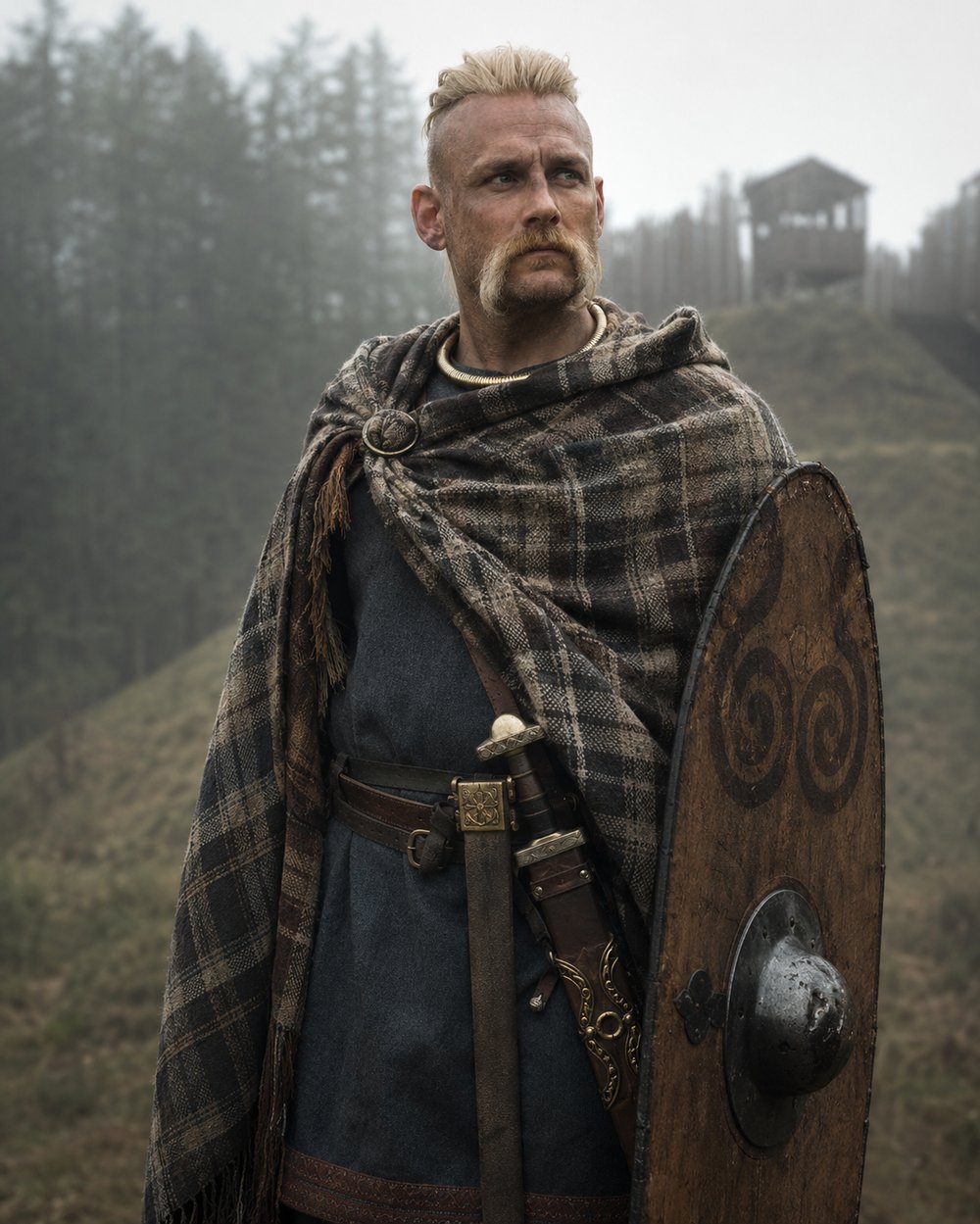
 When Caesar marched against the Belgae in 57 BC, he met a tribe whose fame had crossed the borders of Gaul: the Suessiones. Their king Diviciacus, Caesar reports, had only a generation earlier been the mightiest ruler in all Gaul – and had even held sway over part of Britain. Their name lives on to this day: in the French city of Soissons.
In northern Gaul, where the flat grain plains of Champagne give way to the woods and river valleys of Picardy, a tribe sat in the late Iron Age whom the Romans called Suessiones. They belonged to the Belgae – that league of north Gaulish peoples whom Caesar held to be the bravest of all the Gauls, because they lived furthest from the "softening" civilisation of Rome and fought constantly against Germanic neighbours beyond the Rhine. Among the Belgae, however, the Suessiones stood out through something the others lacked: the memory of a former great realm.
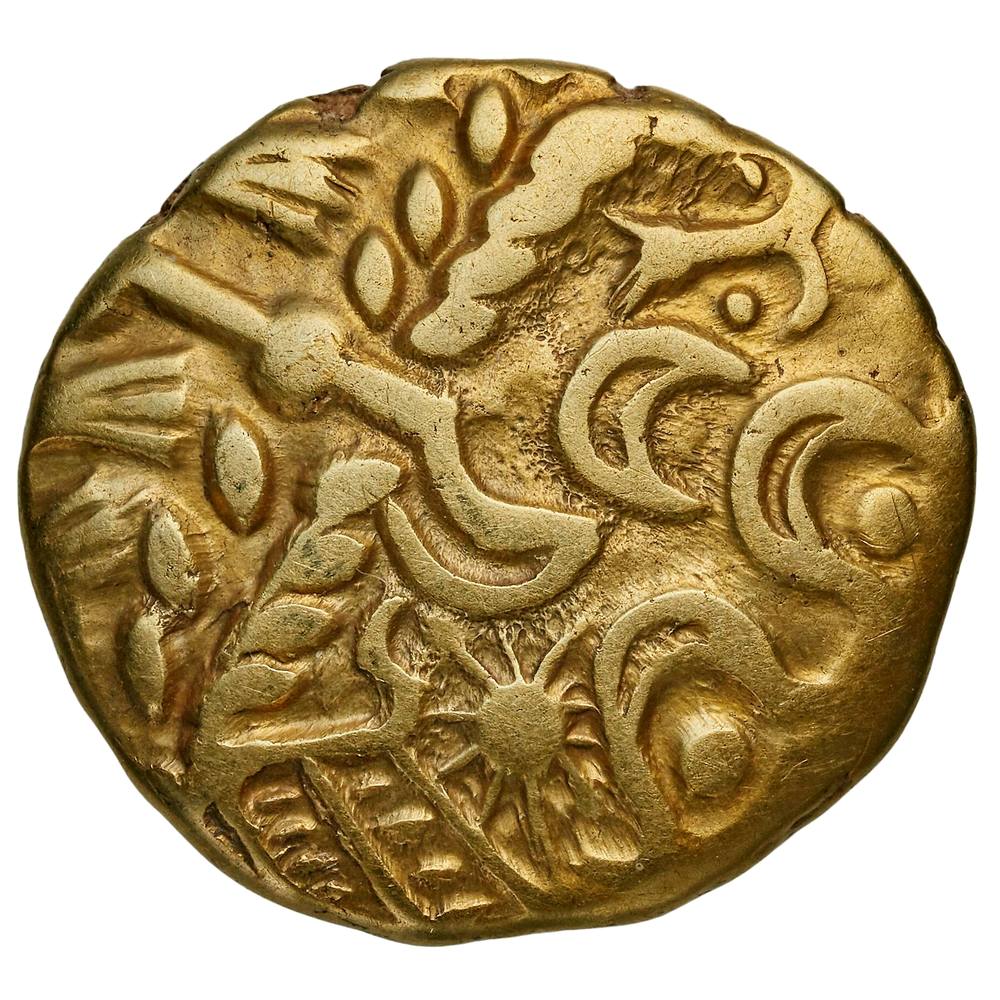
Caesar himself hands down the most astonishing report about the Suessiones. When he marched against the Belgae in 57 BC, he learned that "within our memory" the Suessiones had had a king named Diviciacus – not to be confused with the like-named druid of the Aedui – who had been the mightiest ruler in all Gaul. His power had extended over a great part of these regions, and beyond that even over part of Britain.
Among them, within our memory, Diviciacus had ruled, the mightiest in all Gaul, who held power over a great part of these regions and even over Britain.Caesar, De bello Gallico II,4 (paraphrased)
This is a remarkable statement. It shows that pre-Roman Gaul could indeed have great, supra-regional kingdoms – and that the Channel coast was no impassable border but a route along which rule, trade and kinship reached into Britain. By Caesar's time, of course, this realm was already past; the Suessiones were now led by a king named Galba, to whom the other Belgae even gave supreme command in the joint war against Rome, for his justice and prudence.
Caesar quantifies the power of the Suessiones with concrete figures. They possessed a very wide and fertile land and – so they let it be known – twelve fortified places (oppida). For the joint Belgic uprising they promised 50,000 armed men. Whether this number was real or rounded-up boasting cannot be checked – ancient army figures are almost always to be treated with caution. But the picture of a large, densely settled tribe with many fortified centres fits the archaeological reality of northern Gaul well, where mighty oppida shaped the landscape.
The most important of these oppida was Noviodunum – probably to be sought at today's Pommiers near Soissons. When Caesar appeared before it, the Suessiones were at first determined to defend themselves. But the sight of Roman siege technology – towers, rams, mantlets pushed forward – broke their will. A people that had never seen such machines took them for the work of superhuman powers. The Suessiones surrendered.
The submission of the Suessiones in 57 BC belongs to the early stages of Caesar's conquest of Gaul. Their king Galba gave hostages, including his own sons, and the tribe was incorporated into Caesar's ordering of Gaul. Unlike some neighbours, the Suessiones did not afterwards rise again in a great, hopeless struggle of despair. This mixture of initial pride and later political shrewdness is typical of many Gaulish tribes who grasped that against Rome, in the long run, only accommodation secured survival.
In the great rising of Vercingetorix in 52 BC the Suessiones were among the Belgae who promised contingents to the Gaulish league – but their great time as an independent power was over. After the conquest they became part of the Roman province and, like all Gaul, were gradually Romanised.
Rome did with the Suessiones what it did with many Gaulish tribes: it made their name the name of a city and an administrative unit. From the tribal territory came the civitas Suessionum, and its chief town soon bore the name Augusta Suessionum – "the imperial (city) of the Suessiones". From this Latin name came, over the centuries, the French Soissons.
With this the Suessiones belong to the many Celtic peoples whose name still shapes the map of France – just as the Parisii live on in Paris, the Remi in Reims, or the Bellovaci in Beauvais. The tribe has vanished, its language extinct, its gods forgotten – but its name stands on station signs, town boards and addresses.
Soissons was to enter great history once more – centuries after the tribe's fall. In 486 AD the Frankish king Clovis defeated the Roman governor Syagrius at Soissons, ending the last Roman sphere of power in northern Gaul. The famous anecdote of the "Vase of Soissons", in which Clovis later repaid a warrior's disregard of the royal share of the booty with deadly severity, is set precisely here. And in the 8th century Soissons became one of the coronation places of the early Frankish kings.
So the name of the Suessiones links two worlds: the Celtic Iron Age, in which a king ruled from here over Gaul and part of Britain, and the Frankish early Middle Ages, in which at the same place the heritage of Rome was decided. Few tribes have left a name to which so much European history can be attached.
The Suessiones are a model case of how rich the Celtic world already was before Rome: with great kingdoms, fortified towns, long-distance links across the sea and a political memory that preserved its own past as a great power. At the same time they show how this world, though it fell politically under Rome, lived on in the name. The pride of a Belgic tribe, the boldness of a king who reached across the Channel – all of it still sits in the plain name of a French city.
For us at GLANZ & GRAVUR precisely such stories are precious: they remind us that the old European peoples were no faceless mass but had names, kings and landscapes – and that one honours them best by telling their history accurately, rather than transfiguring it into fantasy. Thus the Suessiones unite Celtic pride, Belgic bravery and a long afterlife in the name: from Caesar's mightiest king of Gaul, through the Roman city of Augusta Suessionum, to today's Soissons with its great history.
The Parisii · The Remi · The Bellovaci.
All History & Finds articles →
A whole royal ship, buried beneath a mound, full of gold and weapons – and a helmet that became the face of an entire …
Read more →Some Vikings raided, others had Danegeld paid to them – Sweyn Forkbeard did both and then reached for the crown itself …
Read more →