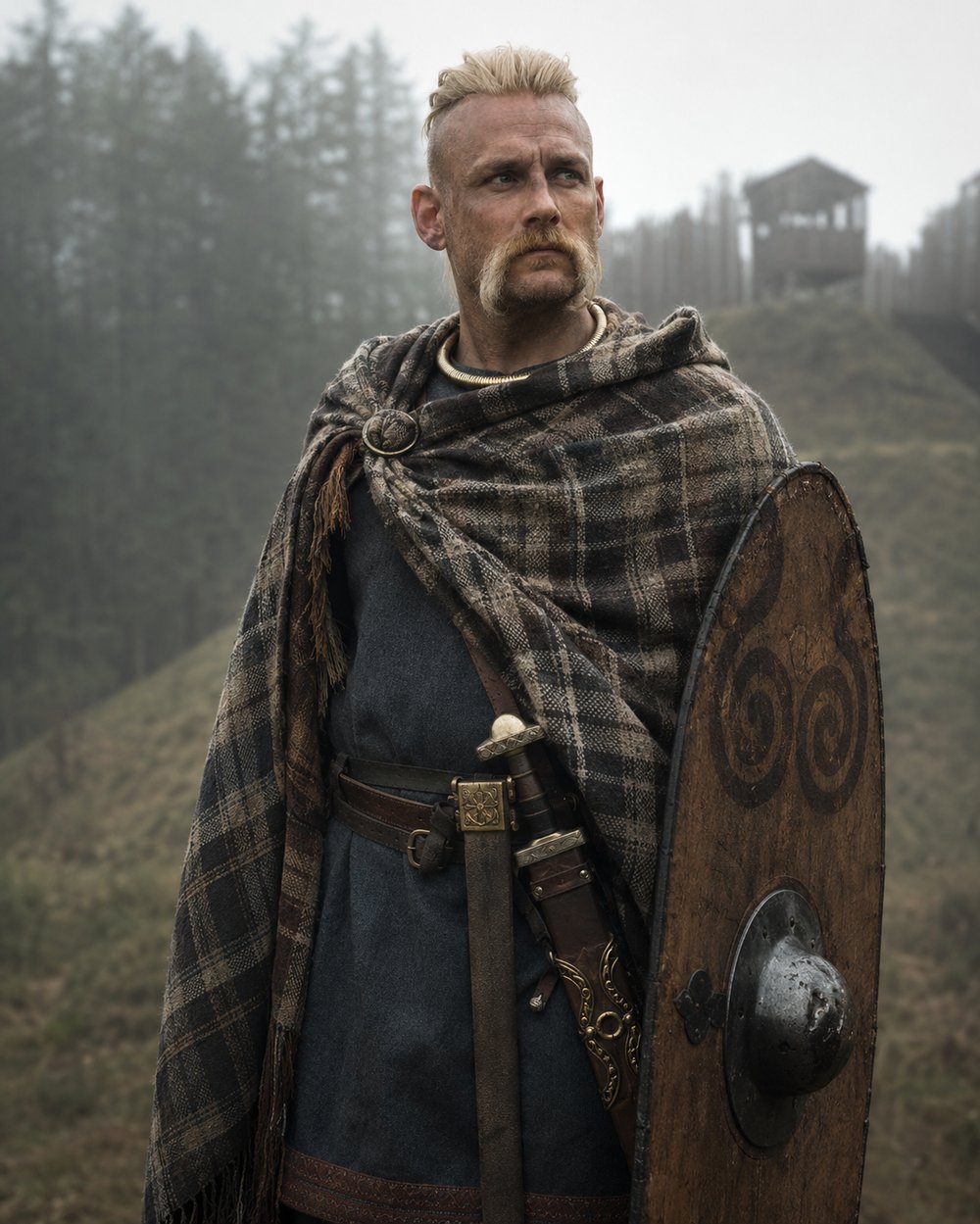
 When Caesar described the Belgae, one tribe counted to him as the mightiest and bravest of all: the Bellovaci. Out of their land grew today's Beauvais.
The Bellovaci were a Celtic tribe in the north of Gaul, in the land of the Belgae, in the area of today's Beauvais (Oise department). Caesar himself calls them the mightiest and bravest tribe among the Belgae – a remarkable praise from the mouth of their conqueror. Their history is that of a proud, combative people that faced Rome twice.
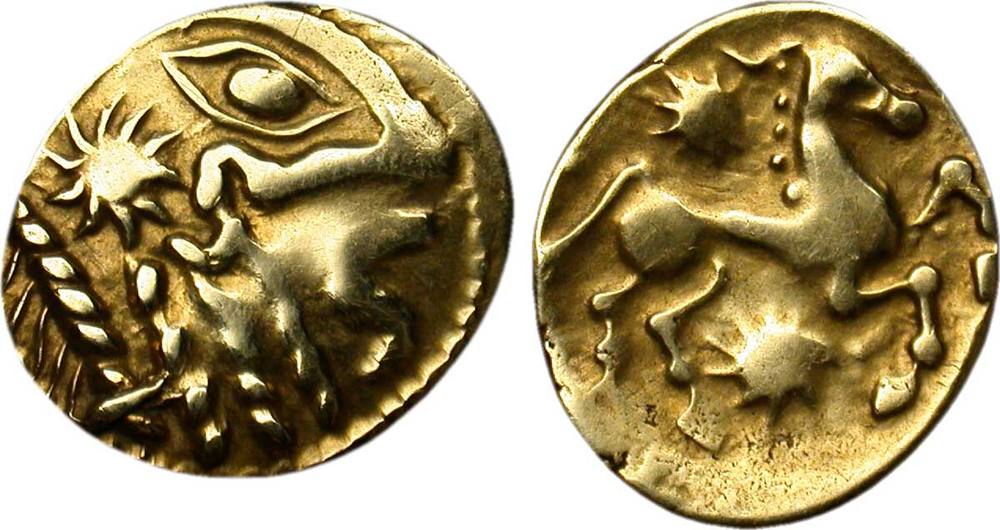
The Belgae were that group of tribes in the north of Gaul whom Caesar held to be the bravest – "because they are farthest from the civilisation and culture of the province" and dealt most often with the warlike Germani beyond the Rhine. Among these Belgae the Bellovaci stood out: they could, according to Caesar, raise the largest army and counted as the leaders of the Belgic world. Their land was fertile and densely settled, their warriors feared.
When the Belgae rose against Caesar in 57 BC, the Bellovaci supplied the largest contingent. Caesar reports that they promised 60,000 armed men – the strongest force of the whole alliance. But the great Belgic revolt fell apart: after the battle on the Aisne and the collapse of the coalition, the Bellovaci too had to submit. Caesar treated them comparatively mildly, at the intercession of the Rome-allied Aedui, with whom the Bellovaci had old connections.
The chief town of the Bellovaci was the oppidum Bratuspantium, whose exact location is disputed to this day (candidates lie in the Beauvais area). Caesar describes how, during the Belgic revolt, the population withdrew into their fortresses. The oppida of the Belgae were no mere refuges but fortified centres with crafts, trade and administration. Later the chief town of the Bellovaci became the Gallo-Roman city of Caesaromagus – and from the tribal name came today's Beauvais.
The Bellovaci did not consider themselves beaten. As late as 51 BC, after the fall of Alesia, they rose again – as one of the last tribes to defy Rome openly. Under their leader Correus they waged a tenacious, skilful guerrilla war against Caesar, with ambushes and mobile warfare, rather than let themselves be forced into an open battle. Only after heavy fighting and the death of Correus was this last resistance too broken. The Bellovaci thus belong to the tribes that fought Rome's conquest of Gaul longest.
After the conquest the land of the Bellovaci became part of Roman Gaul. Their chief town, now called Caesaromagus, developed into a Gallo-Roman city. As with so many Gaulish cities, over the centuries the tribal name prevailed over the Roman name: "civitas Bellovacorum" became Beauvais. The city became famous in the Middle Ages for its vast cathedral with the highest Gothic choir in the world – on the soil of a Celtic tribe.
The name of the Bellovaci lives on twice over: in the city of Beauvais and in the region of Beauvaisis. As with the Parisii (Paris), the Remi (Reims) and the Atrebates (Arras), the great pattern of Gaulish name-inheritance shows itself here: the ancient tribal name survived Rome, the Middle Ages and the modern era and shapes the French map to this day.
The Bellovaci are the model case of the brave Belgic tribe: mighty, proud and resistant to the last. Twice they faced Caesar – in 57 and again in 51 BC – and their guerrilla war under Correus shows a clever, mobile warfare beyond the cliché of the "wild barbarian". For an honest picture of the Celts they belong among the most impressive opponents of Rome in Gaul – right beside Vercingetorix and the Nervii.
The main source is Caesar (De bello Gallico II and VIII, the latter continued by his officer Hirtius), who describes the Bellovaci, the revolt and Correus' guerrilla war at length – though as perpetrator and chronicler at once, with his own interest. Strabo supplements this. The picture is completed by the archaeology of the Belgic oppida and of Beauvais. We keep evidence and interpretation apart: power, revolts and name-survival are well attested; the figure of 60,000 warriors is propagandistically coloured, and the location of Bratuspantium remains uncertain.
The second revolt of the Bellovaci in 51 BC is a lesson in clever warfare. Their leader Correus avoided the open field battle in which Rome's legions were superior and instead relied on ambushes, mobile cavalry and control of difficult terrain. Caesar's officer Hirtius, who wrote the eighth book of the war account, describes at length how hard it was for the Romans to catch the Bellovaci. Only when Correus fell in an ambush did the resistance break. The Bellovaci thus show that Gaulish leaders knew Rome's strengths very well – and sought to meet them with tactics.
The chief town of the Bellovaci became Caesaromagus under Rome, later Beauvais. In the Middle Ages the city gained world fame through its Cathedral of Saint-Pierre, whose Gothic choir, at over 48 metres, is the highest in the world – a building of such bold ambition that parts of it collapsed and the nave was never completed. That this venture of medieval architecture arose of all places on the soil of the bravest Belgic tribe is a fine coincidence of history: the courage of the Bellovaci found an echo in the boldness of their late descendants.
The Bellovaci lead right into the question of the Belgae. Caesar treats them as one of the three great groups of Gaul, beside Celts and Aquitanians. Many Belgic tribes boasted of Germanic descent; their area lay in the borderland between the Celtic and the Germanic world, and the transitions were fluid. Whether the Belgae were "Celtic" or "Germanic" is a modern question alien to the people of antiquity. The Bellovaci, with their proud self-assurance and their proximity to Germani and Aedui, show how blurred these borders really were.
"Among the Belgae the Bellovaci are the mightiest in valour, prestige and numbers."after Caesar, De bello Gallico II (public domain, own translation)
The Nervii · The Atrebates · The Eburones.
All History & Finds articles →
Between the world of humans and the world of the gods a bridge of light is stretched: Bifröst, the rainbow. It is the …
Read more →Long before the Edda was written down, the people of Gotland told their stories in stone – in images that still puzzle …
Read more →Since 1878, Birka’s grave Bj 581 had been the textbook example of a high-status Viking warrior – the „ultimate Viking" …
Read more →