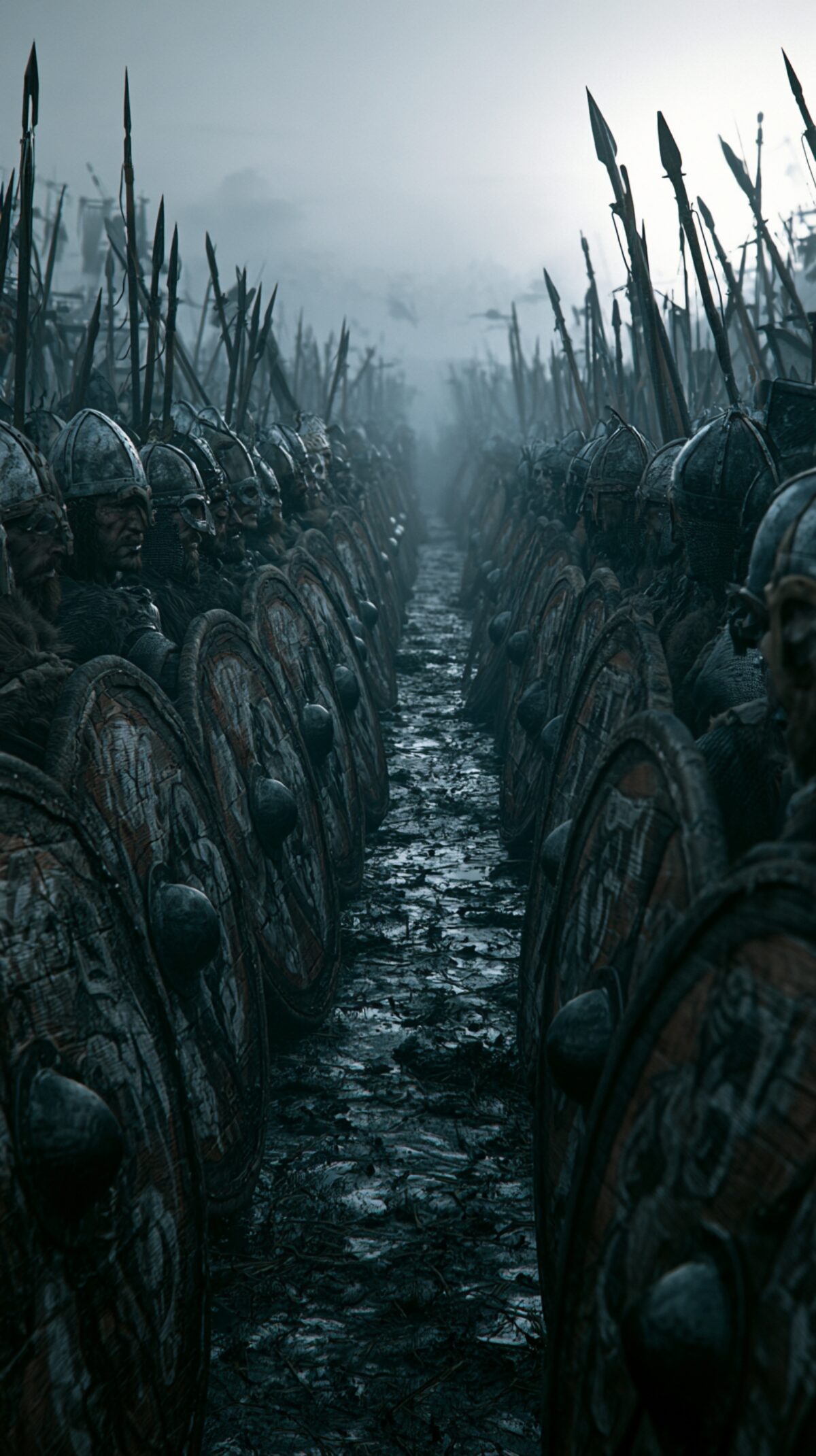
The Eburones were a tribe between the Rhine and the Meuse, in the area of today's Eifel, the Ardennes and the Aachen region. Caesar counted them among the Germani cisrhenani – the Germani settling "on this side of the Rhine" – yet their culture was strongly Celtic. They stand right on the border where the Germanic and Celtic worlds met: in the heart of our home region.
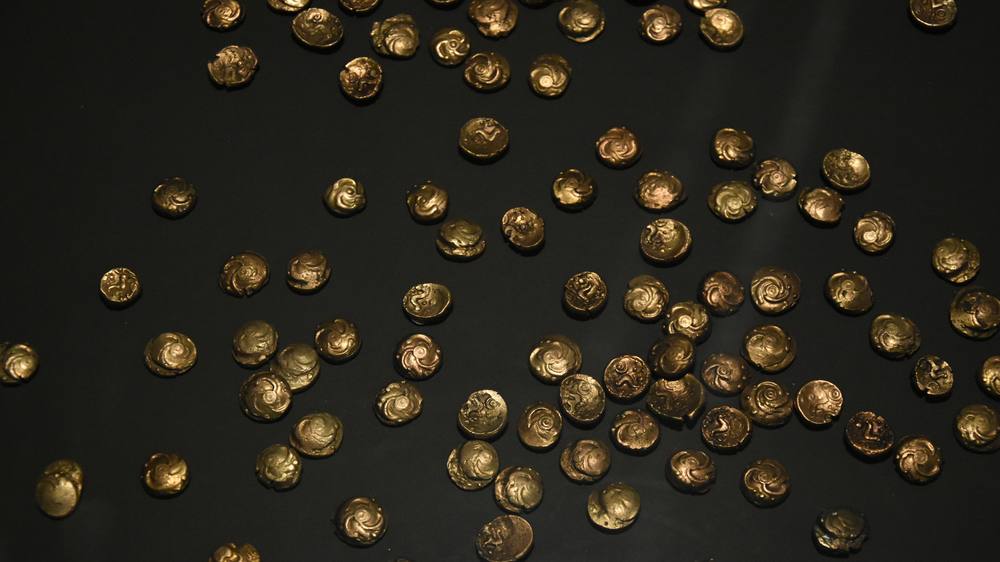
In the winter of 54 BC a Roman force under the legates Sabinus and Cotta was quartered in Eburone land. Their prince Ambiorix lured the Romans out of their camp by a ruse – and crushed them in an ambush. Around a legion and a half was destroyed. It was one of the heaviest defeats Caesar suffered in the entire Gallic War.
Caesar answered with a war of annihilation. He wanted, as he himself writes, "to wipe out the tribe and the name of the people". The Eburones were shattered, their land laid waste, survivors absorbed into other peoples. Ambiorix himself escaped across the Rhine and vanished from history – he was never captured.
"He resolved to wipe out the tribe and the name of this people."after Caesar, The Gallic War VI (public domain, own translation)
The Eburones are a model case of how blurred the line between "Germani" and "Celts" really was. Caesar counts them among the Germani cisrhenani, the Germani on this side of the Rhine who had crossed the river long ago. Yet their names – Ambiorix, Catuvolcus – are Celtic, and their way of life resembled that of their Gaulish neighbours. The truth is: Rhine and Meuse separated no clean "blocks of peoples" but were zones of passage and mixture. Here lived people one could call Celtic or Germanic depending on the viewpoint – early proof that our home region was always a borderland of cultures.
The blow of 54 BC struck a Roman winter camp in the land of the Eburones, often linked with Atuatuca. Ambiorix persuaded the Roman legates Sabinus and Cotta by a ruse to leave the safe camp: he hypocritically warned them of a great Germanic attack and offered free passage. Hardly was the column on the march when the Eburones struck in the narrow wooded valley. Sabinus fell during a feigned parley, Cotta in the fighting; only a few Romans escaped. Ambiorix then moved on and also attacked the camp of Quintus Cicero – which was held only with difficulty until Caesar himself hurried to the rescue.
Caesar's revenge was a war of annihilation – yet the Eifel and the Ardennes made it hard going. In dense forests, marshes and rugged valleys the Eburones could keep slipping away. Caesar resorted to a cruel means: he invited the neighbouring peoples to plunder the land of the Eburones freely, to spare his own army and let the tribe be wiped out by foreign hands. In exactly this landscape – between the Aachen country, the Eifel and the Meuse – one of the harshest chapters of the Gallic War was played out.
The tribe vanished as an independent force. Into the depopulated land Rome later settled the Tungri, whose chief town Atuatuca Tungrorum – today's Tongeren in Belgium – became an important Roman city. Further up the Rhine the Ubii settled around the later Cologne. The region was Romanised, crossed by roads and incorporated into the province. But the name of the Eburones died out – a people that dealt Rome one of its heaviest defeats and was wiped out for it.
For us in Alsdorf the story of the Eburones is no distant chapter: it played out between Aachen, the Eifel and the Meuse, in the middle of our home. In Belgium Ambiorix is still regarded as an early hero of freedom; in the Eifel and the Rhineland much recalls the Celtic-Germanic past. At GLANZ & GRAVUR we tell such stories with respect for the sources – and with pride that our region was the scene of great events two thousand years ago.
The Eburones remind us that the great battles of antiquity raged right on our doorstep – in the land between Eifel, Meuse and Rhine. Continue with the neighbours: the Treveri on the Moselle and the Ubii on the Rhine.

The Treveri · The Nervii · The Boii · The Helvetii · The Celtic Warriors.
All History & Finds articles →
Some 1,700 years ago a man from the Near East settled in a Germanic village in present-day Thuringia – and rose into …
Read more →Two horns of heavy gold, covered all over with puzzling figures, and on one of them a line of runes in which, for the …
Read more →