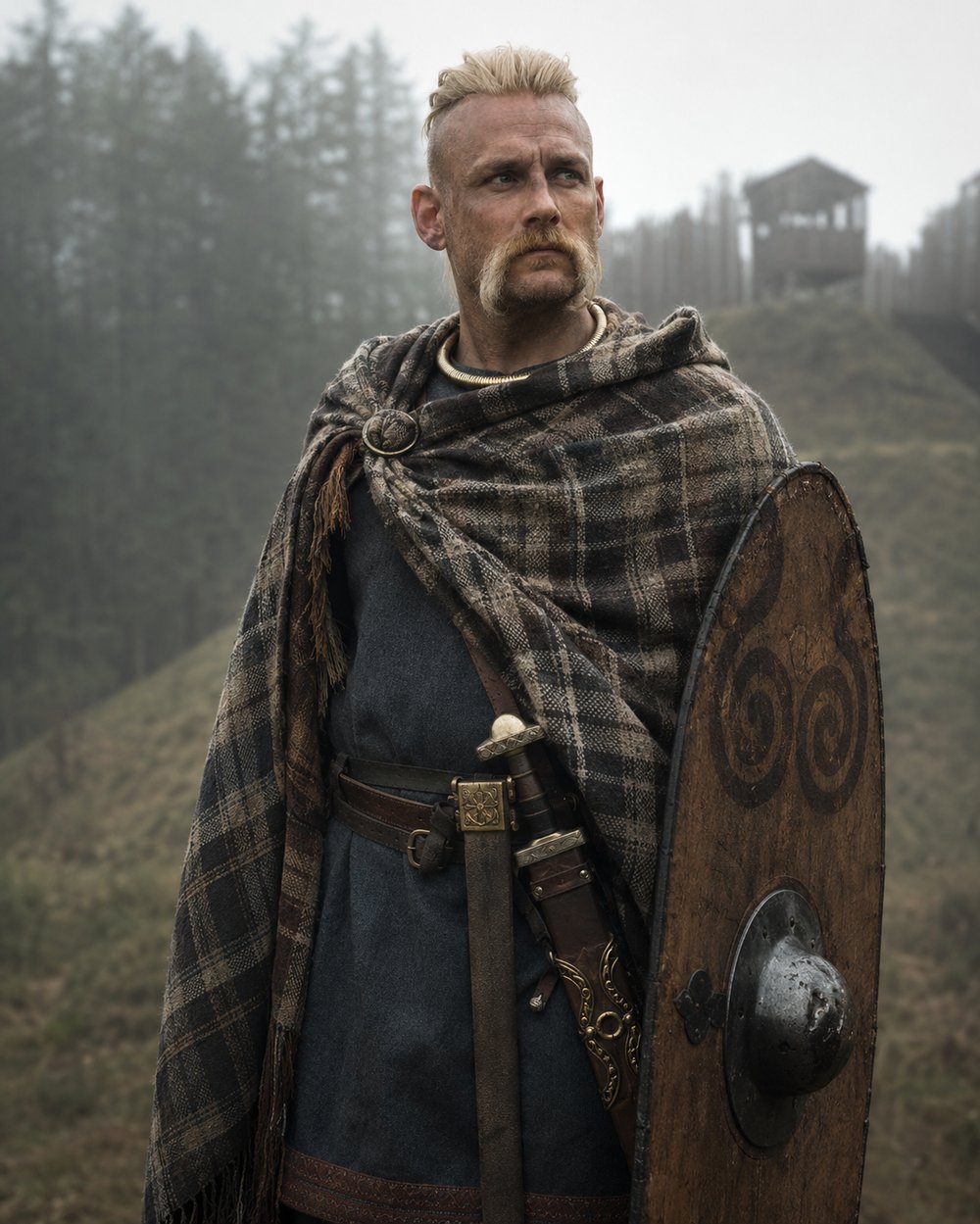
The Treveri lived on the Moselle, Saar and Middle Rhine – in the area of today's Trier, Luxembourg and the Eifel. They were a wealthy, Celtic-influenced people with far-reaching trade links. Their name lives on in Trier (Roman Augusta Treverorum) to this day.
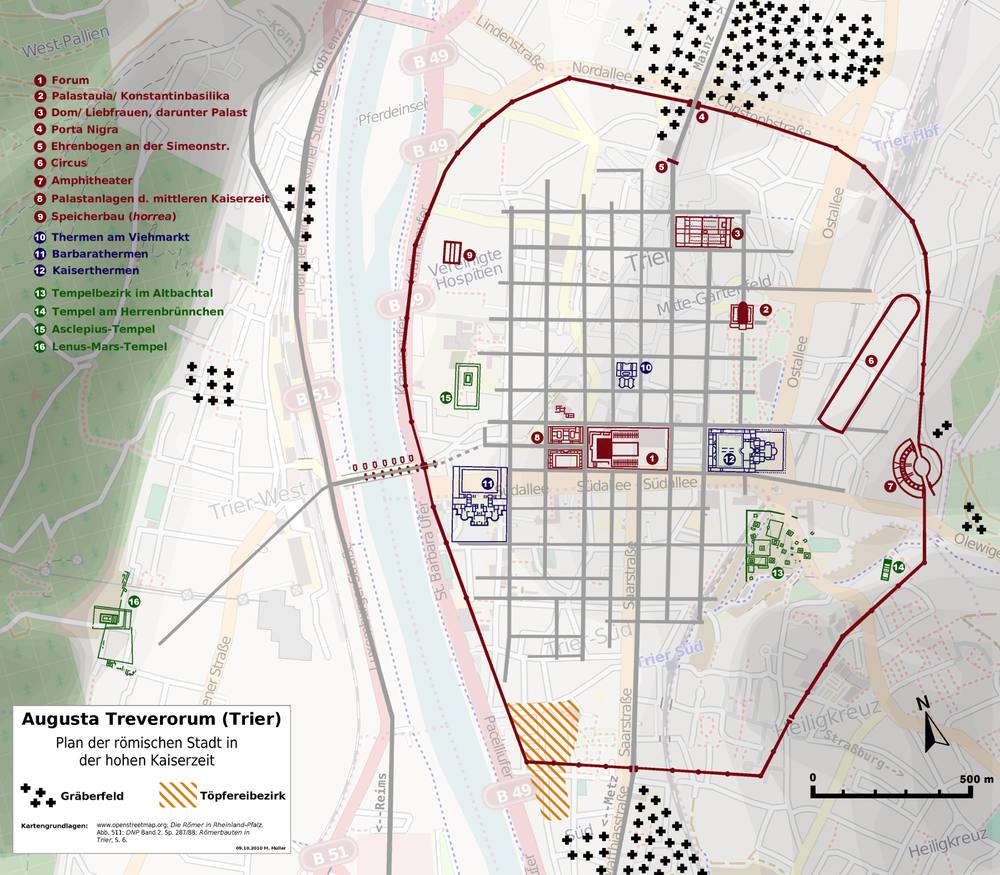
Caesar praised the Treveri cavalry as the strongest in all of Gaul. In the turmoil of the Gallic War they stood sometimes on the Roman, sometimes on the opposing side; their prince Indutiomarus led a revolt against Rome. After the conquest their land became Roman – and Trier later rose to be one of the most important cities of the Empire north of the Alps.
Tacitus reports that the Treveri and Nervii boasted of a Germanic descent to set themselves apart from the "peaceful" Gauls. Archaeologically they belong clearly to the Celtic La Tène world. They are a prime example of how fluid the boundary between "Celtic" and "Germanic" really was on the Rhine.
"The Treveri and Nervii are even eager for the glory of Germanic descent."after Tacitus, Germania 28 (public domain, own translation)
After the Roman conquest the land of the Treveri became one of the richest regions of Gaul. Their chief town Augusta Treverorum – today's Trier – grew into a metropolis and later even an imperial residence. Buildings like the Porta Nigra, the imperial baths and the basilica still bear witness to this. Yet long before Rome the Treveri sat here, a powerful tribe on the Moselle, the Saar and in the Eifel, whose cavalry was feared throughout Gaul. For us in the Rhineland and the Eifel the land of the Treveri is the immediate southern neighbour of our home.
As closely as the Treveri were later bound to Rome, they were also rebellious. In the Batavian revolt of AD 69/70 Treveran nobles such as Iulius Classicus and Iulius Tutor played a leading role and, with others, proclaimed a "Gallic Empire" (Imperium Galliarum). The dream of independence broke on Rome's counterstroke, but it shows how self-confident the tribes on the Rhine and Moselle were. Tacitus described these events in detail in his Histories.
The religion of the Treveri fused Celtic and Roman features. Their most important god was Lenus Mars, a god of healing and protection to whom a great sanctuary near Trier was dedicated. The goddess Ritona and the tribal god Intarabus were also worshipped. As everywhere in the Rhineland and the Eifel, votive stones survive that show native deities under Roman names – a window into the faith of our ancestors.
Wealth came to the Treveri from the river: the Moselle was trade route and wine road in one. Already in Roman times vines were grown on its slopes, splendid country estates (villae) lined the valley, and Trier became the hub between Gaul, the Rhine and the Alps. The famous Neumagen wine ship, a Roman funerary monument, still shows how proud people were of this trade.
Trier, the Moselle and the Eifel lie directly south of us – the land of the Treveri was always closely tied to the Aachen area and the Rhineland. At GLANZ & GRAVUR we like to tell this story because it shows how deeply the Celtic-Germanic and Roman past is rooted in our region.
The Treveri show: on the Moselle and Rhine, the Celtic and Germanic worlds always merged. Continue with the Eburones and the Ubii.

The Eburones · The Nervii · The Helvetii · Celtic Princely Graves · Celtic Religion.
All History & Finds articles →
On a field south of Lund, where today only a small church stands, lay for almost a thousand years one of the largest …
Read more →No place stands more for the pagan cult of the North than Gamla Uppsala: the golden temple, the great sacrifice every …
Read more →In December 2020 a metal detector beeped in a field near Vindelev, only a few kilometres from Jelling. What came to …
Read more →A rare genetic trace in Iceland tells a story that sounds almost unbelievable: some Icelanders carry a maternal DNA …
Read more →