 On the upper Douro in Spain lived a Celtiberian people who amazed the ancient authors: the Vaccaei redistributed their farmland anew among all every year – a unique system in old Europe.
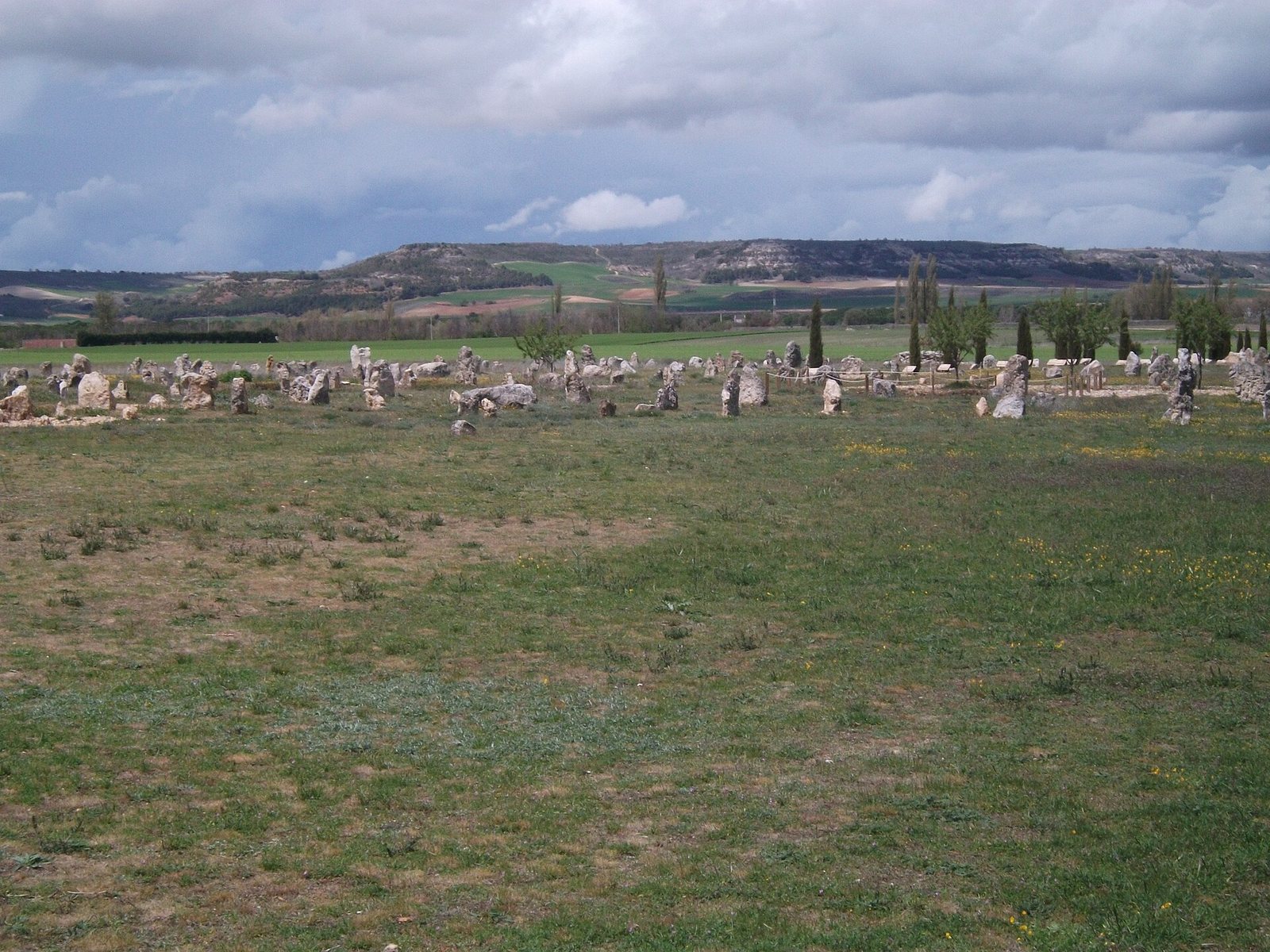
The Vaccaei were a Celtiberian people in the northern Meseta of Spain, on the upper and middle course of the Douro – in the area of today's provinces of Valladolid, Palencia and Zamora. They belong to the Celtiberians, that mixture of Celtic and Iberian peoples who gave Rome the toughest fights on the Iberian peninsula. The Vaccaei are known above all for an astonishing social peculiarity.
The land of the Vaccaei was a fertile grain plain – the granary of the northern Meseta. They were a farming people with fortified towns (oppida) such as Pallantia (Palencia), Intercatia and Cauca. Their grain wealth made them prosperous – and interesting to Rome, for an army marches on its stomach. Again and again Roman generals tried to seize the Vaccaean grain.
The most famous thing about the Vaccaei is reported by the Greek author Diodorus: they are said to have redistributed their farmland anew among all every year, brought in the harvest together and then measured out to each his share – whoever kept something for himself was punished with death. Whether this system of annual redistribution existed exactly so is disputed; it could be an idealised or misunderstood picture. But it is one of the earliest descriptions of a communal land order in Europe and has made the Vaccaei famous.
In the 2nd century BC the Vaccaei repeatedly stood against Rome. They supported their neighbours, the Celtiberians of Numantia, in the great Numantine War. Roman campaigns against the Vaccaei were notorious for their harshness: the consul Lucullus attacked the town of Cauca in 151 BC, although it had surrendered, and had its inhabitants massacred – a breach of faith that even Roman authors branded as shameful. Such episodes show the brutal reality of the Roman conquest of Iberia.
The resistance of the Celtiberians and Vaccaei culminated in the siege of Numantia (133 BC), one of the most famous chapters of ancient history. Although Numantia was the town of the neighbouring Arevaci, the Vaccaei stood in the same struggle. The tenacity of these Iberian peoples, who defied Rome for decades, became proverbial – "Numantine resistance" is to this day a term for hopeless but unbending defence.
The Vaccaei belong to the fascinating world of the Celtiberians: peoples in the centre and north of Spain who combined Celtic language and culture with Iberian elements. They wrote in the Celtiberian script (derived from the Iberian alphabet), minted coins and built stone oppida. The Vaccaei show that the Celtic world reached far beyond Gaul and Britain – deep into the Iberian peninsula, where Celts and Iberians created their own highly developed culture.
A tangible legacy of the Celtiberian world Rome itself carried: the famous Roman short sword, the gladius hispaniensis, goes back to Celtiberian models. Rome adopted the weapon of its toughest opponents – a sign of the high metal craftsmanship of the Iberian Celts. In this too it shows: the peoples Rome fought were no primitive barbarians but technically and socially highly developed cultures.
The Vaccaei extend the picture of the Celtic world to the south, onto the Iberian peninsula. Their system of communal land distribution is uniquely handed down and made them famous even in antiquity; their tenacious resistance to Rome stands beside that of the Gauls at Alesia. For an honest, complete picture of the Celts the Iberian peoples absolutely belong – they show how far and how varied the Celtic world really was.
The Vaccaei are reported by Greek and Roman authors – above all Diodorus (the common land), Appian (the wars) and Strabo (geography). All see the Vaccaei from outside and with Roman-Greek judgement. The counterweight is provided by the archaeology of the Celtiberian oppida (Pallantia, Numantia and others) and the Celtiberian coins and inscriptions. We keep evidence and interpretation apart: position, grain wealth and the wars are well attested; the system of annual land redistribution is possibly idealised.
The Vaccaei lived in large, fortified towns (oppida) such as Pallantia, Intercatia, Cauca and Rauda. These were no mere refuges but real centres with crafts, trade and administration. The Celtiberians, among whom the Vaccaei counted, minted their own silver coins with horseman depictions and Celtiberian script and produced high-quality pottery and metalwork. Archaeology draws the picture of a developed, urban society – far from the Roman cliché of the "wild barbarian".
Even before Rome the Vaccaei felt the great powers of the Mediterranean. In 220 BC, before the Second Punic War, Hannibal marched against the Vaccaei and besieged their towns Salmantica (Salamanca) and Arbucala. An anecdote tells how the women of Salmantica smuggled weapons out of the town under their clothes to help the men to fight. Whether true or embellished – the episode shows that the land of the Vaccaei was already a contested prize in the 3rd century BC, long before Rome came.
The Vaccaei remind us that "Celtic" was far more than Gaul and Britain. From Ireland to Anatolia, from Bohemia to Spain stretched a world of related languages and cultures. On the Iberian peninsula Celtic immigrants merged with the native Iberian population into the Celtiberians. The Vaccaei, with their common farmland, their oppida and their tenacious resistance, are a particularly striking chapter of this wide Celtic world – and an important building block for an honest, pan-European picture of the Celts.
What remains of the Vaccaei is, besides their towns and coins, above all the image of a tenacious, self-assured people. Their common farmland fascinated the ancient authors, their resistance to Hannibal as to Rome made them a symbol of Iberian unbending spirit. Like the Gauls at Alesia or the Germani in the Teutoburg Forest, the Celtiberians belong to the peoples who defied all-powerful Rome for decades – and whose legacy lives on in the names and landscapes of Spain to this day.
"The Vaccaei divide the land among themselves each year, cultivate it and distribute the fruits to all."after Diodorus, Bibliotheca V (public domain, own translation)
The Celtiberians · The Arverni · The Insubres.
All History & Finds articles →
In December 2020 a metal detector beeped in a field near Vindelev, only a few kilometres from Jelling. What came to …
Read more →