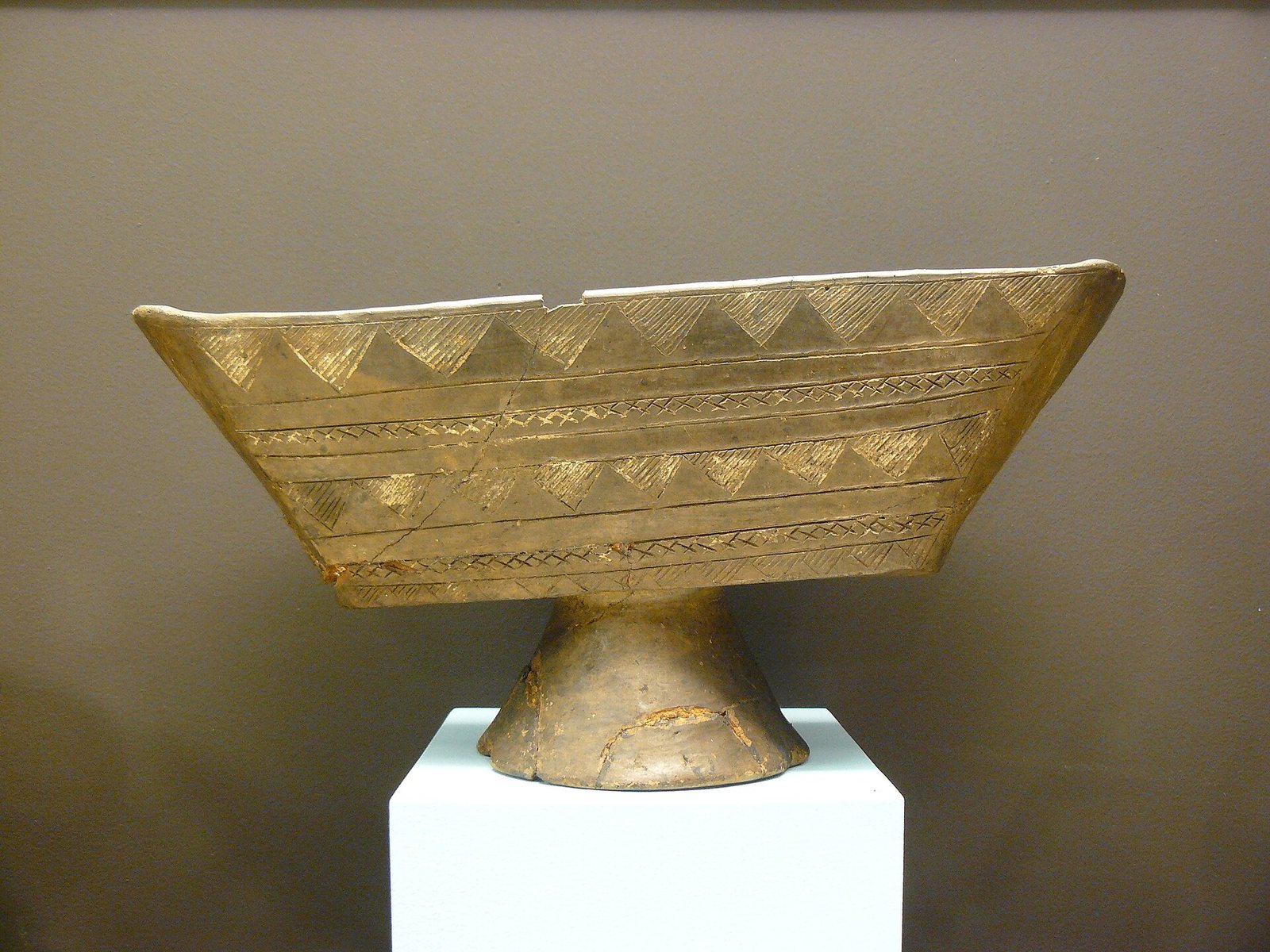
The Insubres were the mightiest Celtic people of the Po plain in today's northern Italy – part of those Celts whom Rome called "Gallia cisalpina" (Gaul on this side of the Alps).
"The Insubres were the largest tribe of the Gauls in Italy."freely after Polybius, Histories II (public domain, own translation)
The Insubres were the most powerful Celtic tribe in Cisalpine Gaul – the Celtic-settled northern Italy of the Po plain. Having crossed the Alps, they made the fertile plain their home and became a dangerous neighbour of Rome.
According to legend the Insubres founded Mediolanum, today's Milan. The ancient author Livy tells of a leader Belovesus who led the Celts into Italy. Thus at the beginning of one of the greatest cities of Europe stands a Celtic tribe.
The rise of Rome led to collision. In the battle of Telamon in 225 BC and at Clastidium in 222 BC the Celts were defeated; a Roman general slew the Insubrian leader Viridomarus in single combat and took his weapons. Rome pushed unstoppably into northern Italy.
In the Second Punic War the Insubres sided with Hannibal when he came over the Alps. For the Celts he was the enemy of their enemy – but in the end Rome won, and the independence of the Po plain was lost.
Under Rome Mediolanum became a metropolis and finally even an imperial residence. From the Celtic foundation came today's Milan – a direct thread from a Celtic tribe to a world city.
The Insubres remind us that the Celtic world reached deep into Italy. At GLANZ & GRAVUR we tell such stories from the sources, because they show how far Celtic Europe once extended.
The Insubres lead into the Celtic world of northern Italy. Continue with the Boii and Celtiberians.
The Boii · The Senones · The Celtic Warriors · Celtic Princely Graves · The Celtiberians.
All History & Finds articles →
Carved in stone over 1,000 years ago, a king proclaims the unification and baptism of Denmark – the same king whose …
Read more →Long before the Vikings they settled between the Eifel and the Danube, leaving behind gold hoards and princely graves …
Read more →