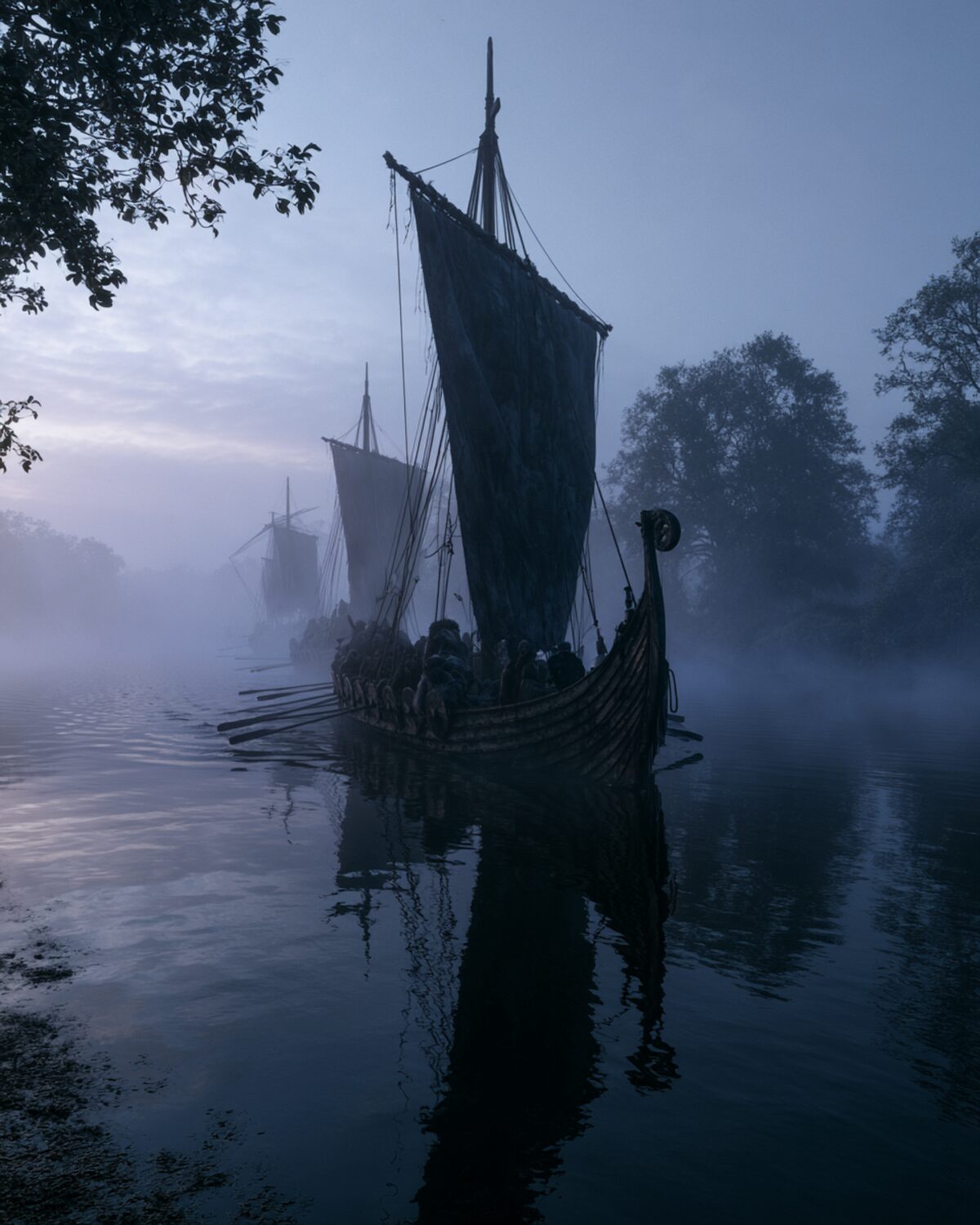
The Jutes were a Germanic tribe from the peninsula of Jutland (today Denmark). Bede names them as one of the three peoples who moved to Britain in the 5th century.
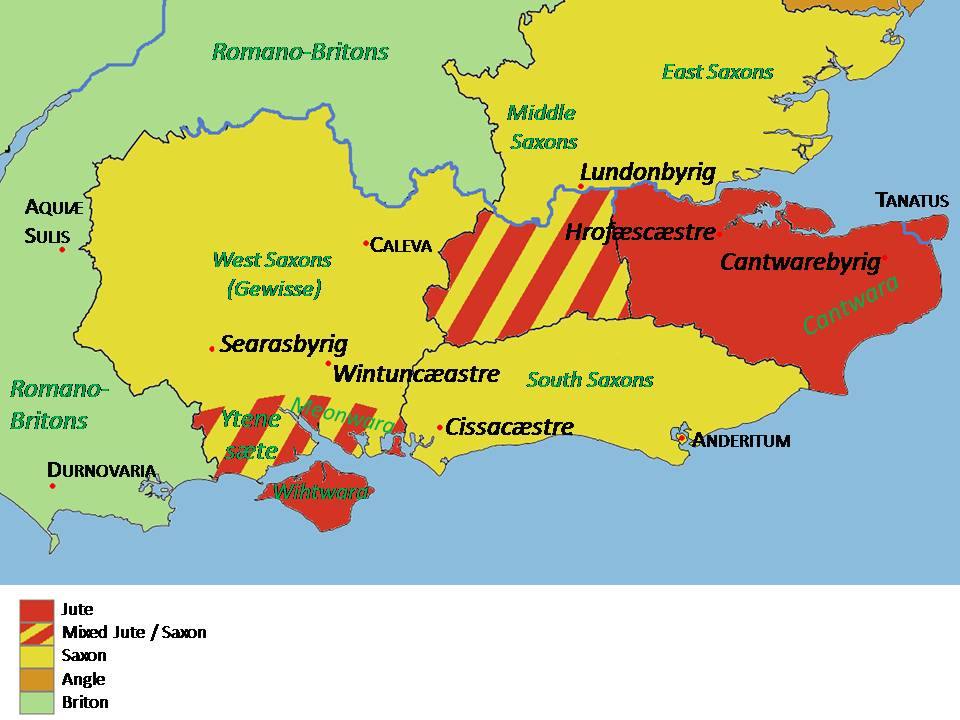
"From the Jutes are descended the people of Kent and of the Isle of Wight."after Bede, Ecclesiastical History I,15 (public domain, own translation)
The Jutes were a Germanic people whose homeland is usually located on the peninsula of Jutland in today's Denmark. In the 5th century, as Roman Britain fell apart, they were among the sea peoples who crossed the North Sea to the island and founded new kingdoms there.
The English scholar Bede names in his church history three peoples from whom the Anglo-Saxons arose: Angles, Saxons and Jutes. To the Jutes he ascribes the settlement of Kent, the Isle of Wight and parts of Hampshire – a distinct branch among the conquerors of Britain.
According to legend two brothers, Hengest and Horsa, led the first Jutes to Britain, called by the British prince Vortigern as mercenaries. Their names mean "stallion" and "horse" – a hint that here we are dealing with figures of legend rather than certain persons.
The kingdom of Kent, which the Jutes founded, went its own way: its inheritance law (partible inheritance, "gavelkind") and some legal customs long differed from those of the Anglo-Saxon neighbours. Kent also became the gate through which the Christian mission under Augustine came to England in 597.
On the Isle of Wight and in southern Hampshire too Jutish peculiarities persisted. Thus the Jutes formed, alongside Angles and Saxons, a third, unmistakable strand in the origin of the English people.
The Jutes link Denmark and England, legend and history. At GLANZ & GRAVUR we keep them cleanly apart: the migration is well attested, but Hengest and Horsa belong to the world of foundation legends – fascinating, but not to be taken as fact.
The Jutes complete the trio of the migration to Britain. Continue with the Angles and Saxons.

The Angles · The Saxons · The Frisians · The Chauci · Viking traces in Germany.
All History & Finds articles →
Long before the Vikings they settled between the Eifel and the Danube, leaving behind gold hoards and princely graves …
Read more →