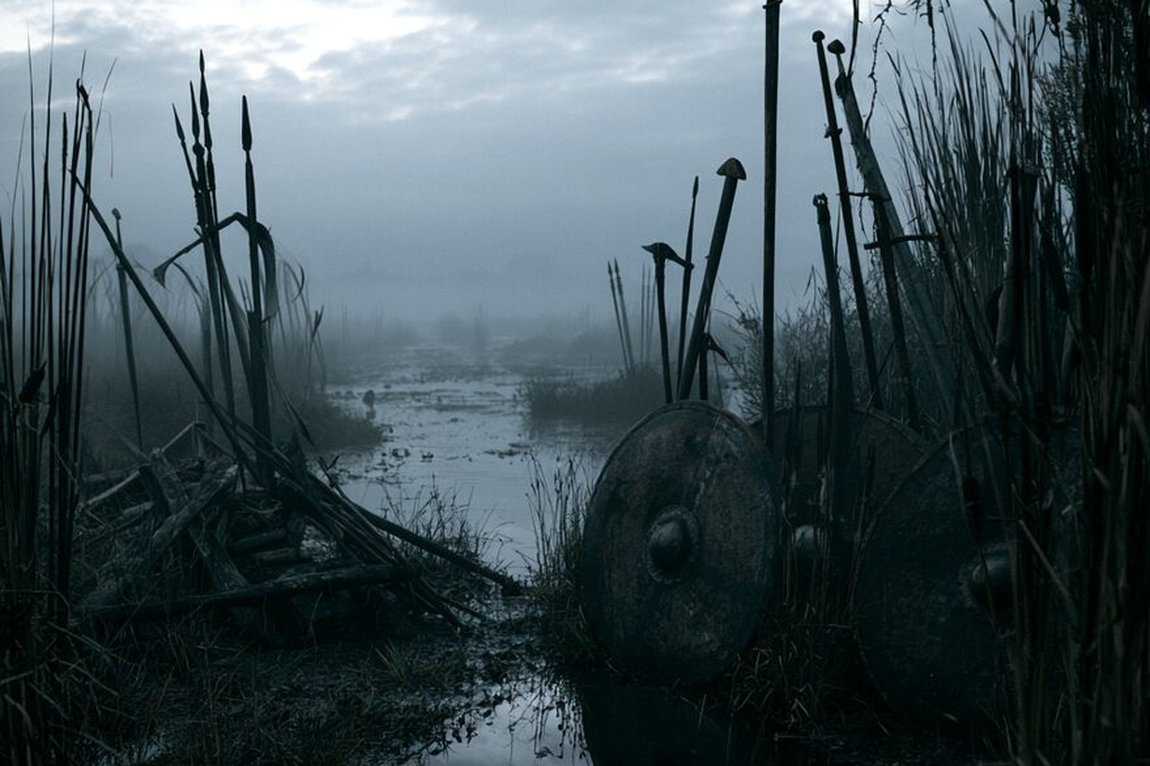
The Frisians were a Germanic coastal people between the Rhine and the Elbe, on the North Sea. Because the land often flooded, they built terpen (dwelling mounds) – artificial hills on which farms and villages defied the tide.
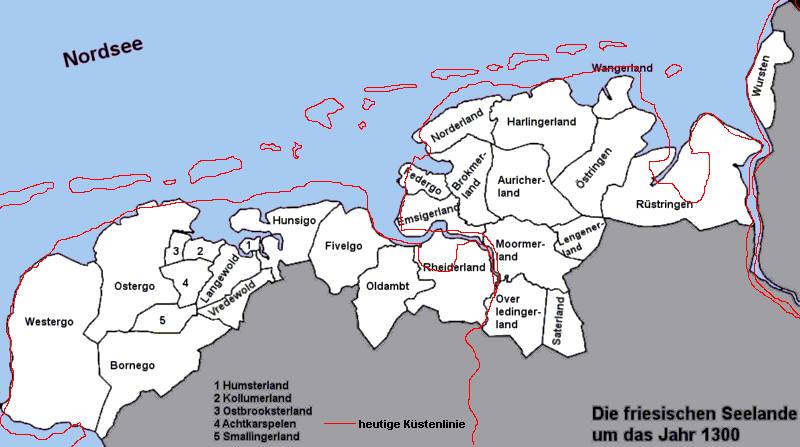
In the early Middle Ages the Frisians under kings such as Radbod long resisted Frankish rule and Christianity. From this era comes the famous "Frisian freedom": the idea of being subject to no duke, only to the king or emperor. Frisian trade later linked the North Sea as far as Hedeby and England.
"The Frisians … are called the greater and the lesser according to their strength."after Tacitus, Germania 34 (public domain, own translation)
The Frisians were a Germanic people on the North Sea coast, from today's Netherlands to Schleswig. In a land without natural heights they built artificial dwelling mounds, the terps (Warften), on which their farms defied the floods.
Already Tacitus knows the Frisians. In AD 28 they rose against oppressive Roman tribute demands and defeated a Roman army – the battle in the grove of Baduhenna. The Frisians asserted their independence more stubbornly than many neighbours.
In the early Middle Ages Radbod became the most famous Frisian king. He resisted Frankish power and Christianity. According to legend he drew his foot back out of the baptismal font when he heard that his pagan ancestors were not in heaven.
Later the Frisians prided themselves on their "Frisian freedom" – the idea of being subject to no feudal lord but only to the emperor. This consciousness of freedom shaped Frisian identity for centuries.
The Frisians belong to the world of the North Sea coast – like the Chauci and Saxons. Continue with them.
The Chauci · The Saxons · The North Frisian ring forts · Viking traces in Germany · Nehalennia.
All History & Finds articles →
Two horns of heavy gold, covered all over with puzzling figures, and on one of them a line of runes in which, for the …
Read more →The Roman Tacitus praised Germanic women as chaste, honoured and even brave at the edge of battle. But above all he was …
Read more →Somewhere a story must begin. For the kingdom of Denmark this beginning is a man named Gorm – Gorm the Old, the first …
Read more →