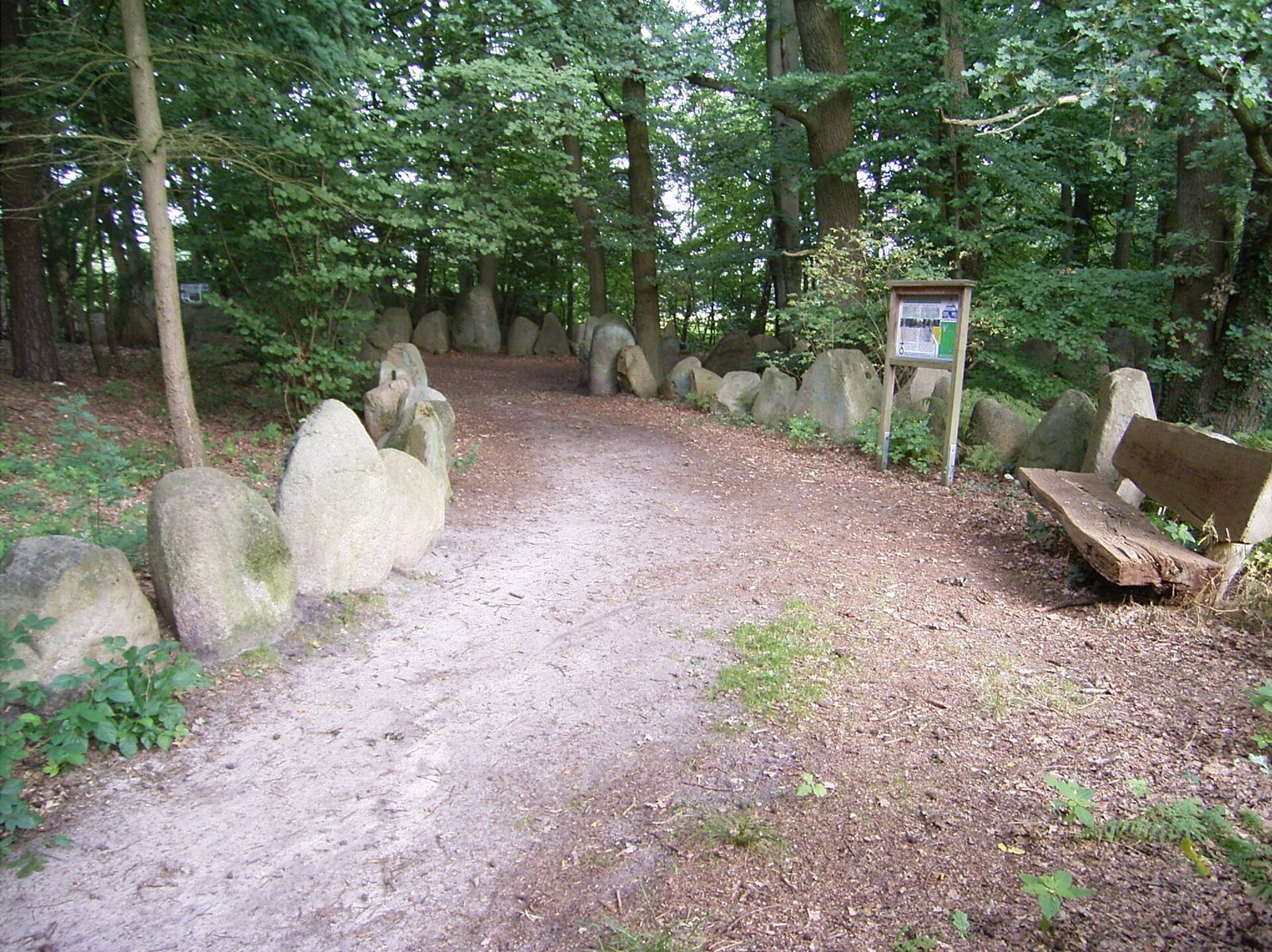
The Saxons were a Germanic tribal confederation in the north-west of today's Germany – between the North Sea, Elbe and Weser. The name (from sahs, the single-edged short sword) appears from the 2nd century. Like the Chauci, from whom they partly emerged, they were feared sea raiders.
"No war was longer or crueller … than that against the Saxons."after Einhard, Life of Charlemagne (public domain, own translation)
The Saxons first appeared as feared sea-raiders on the North Sea coast. From a union of small coastal peoples – among them Chauci and Angrivarii – a powerful great tribe grew over the centuries between Rhine, Elbe and Harz.
In the 5th century parts of the Saxons crossed the North Sea together with Angles and Jutes and became co-founders of the Anglo-Saxons. Their name lives on in "Essex", "Sussex" and "Wessex" (East, South, West Saxons).
The Saxons remaining on the mainland waged a bitter defensive struggle against Charlemagne from 772 to 804. Their leader Widukind became a symbolic figure of resistance, until he too had himself baptised.
In 772 Charlemagne had the sacred sanctuary of the Saxons, the Irminsul, destroyed and enforced Christianisation harshly – up to the disputed "blood court of Verden". Einhard called no war longer and crueller than that against the Saxons.
The Saxons are the link between Germanic antiquity and the world of the Vikings in Germany. Continue with their ancestors, the Chauci.
The Cherusci & Arminius · The Bructeri · The Chauci · Viking traces in Germany · The Christianisation of the Germanic Peoples.
All History & Finds articles →
The Viking battle was no wild scramble but a hard struggle shield to shield. A look at tactics and weapons beyond the …
Read more →Long before the Viking Age and before the Icelandic Edda there was Germanic cult – and one of the most striking stood …
Read more →Silver was the lifeblood of Viking trade – weighed, chopped up, buried. Three of the greatest hoards show how far the …
Read more →