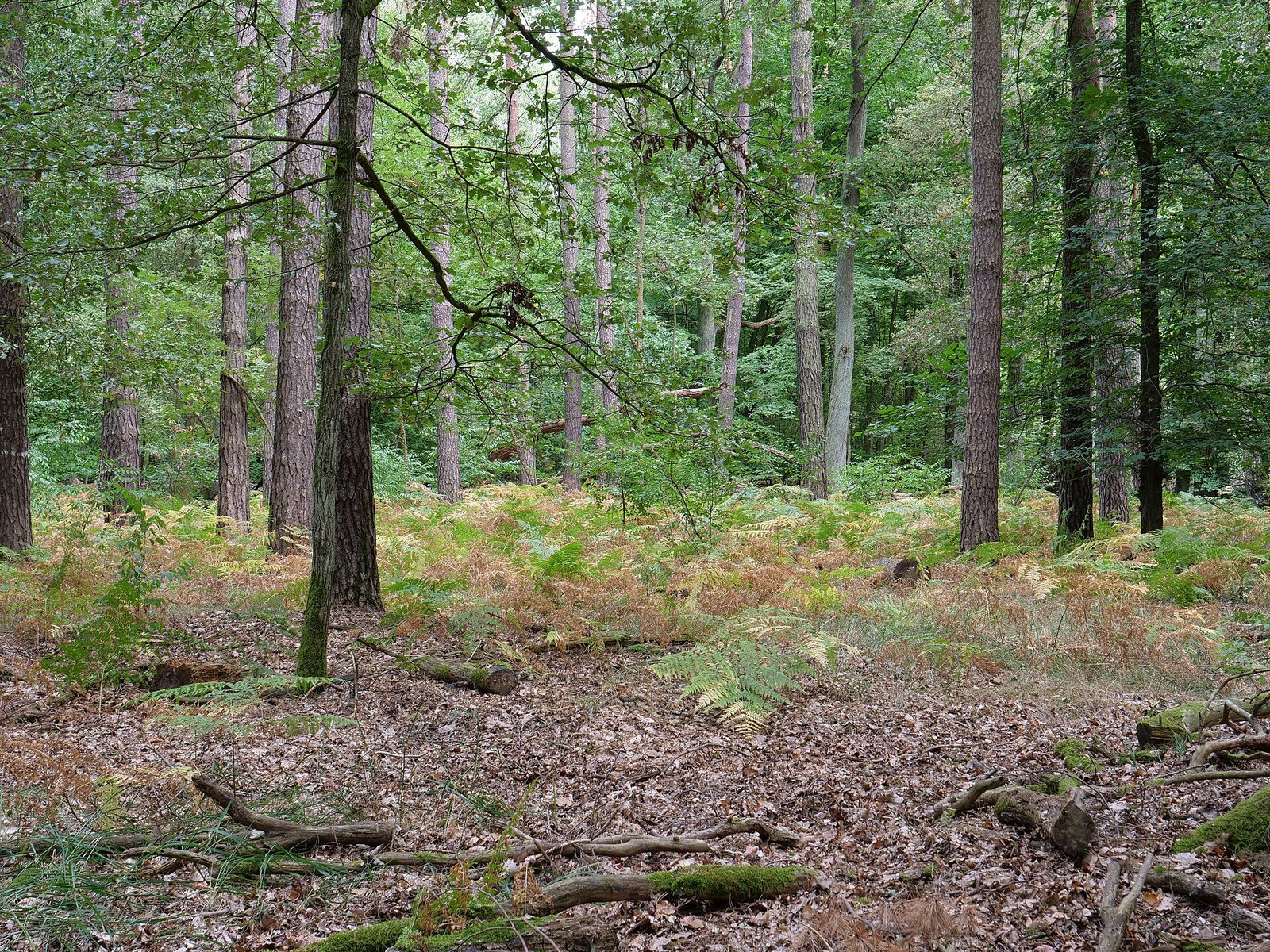
Image credit (header image): “Old acidophilous oak wood with Quercus robur on sandy plain in the Spandauer Forst in september 2018 03”, Leonhard Lenz, CC BY-SA 4.0 (Wikimedia Commons).
Long before the Viking Age and before the Icelandic Edda there was Germanic cult – and one of the most striking stood almost on our doorstep, in the Elbe-Havel region. Tacitus described it.
When we think of Germanic-Norse faith, our thoughts usually travel to Iceland, to Uppsala or into the world of the Vikings. Yet the oldest tangible cult of our ancestors lay far closer – in the Elbe-Havel region of today’s Brandenburg, almost on our doorstep. There the Semnones worshipped their god, and we know of it because an attentive Roman wrote it down: the historian Tacitus, around the year 98 AD, in his „Germania".
To Tacitus the Semnones were the oldest and noblest tribe of the great Suebian league – a mighty group of peoples that shaped wide parts of central and eastern Germany. Their self-understanding was closely bound to a holy place: a wood they revered as the origin of their whole people. This grove was no temple building but something older and stranger – a piece of untouched nature held to be the seat of the divine itself.
At a set time, Tacitus reports, envoys of all the kindred clans gathered in this ancient wood „hallowed by the auguries of the fathers and by primeval awe". The rite was no merry feast but a grave, awe-inspiring act of state. It began with a public human sacrifice – to the Roman observer a sign of the special, dreadful holiness of the place. They worshipped a regnator omnium deus, an „all-ruling god" to whom, in the belief of the Semnones, all else was subject and obedient.
This formula is remarkable. A single, all-ruling god at the centre of a Germanic tribal cult – that sounds almost like a high god, such as Odin would later embody. Yet Tacitus names no name, and that is exactly what makes the passage as fascinating as it is disputed.
The most striking thing in Tacitus’ account is the rule of entry. No one might enter the grove without being bound – tied with a cord or chain, as a visible sign of one’s own lowliness before the supremacy of the deity.
„No one enters it except bound with a cord, as a lesser being and openly confessing the power of the deity." — Tacitus, Germania 39 (public-domain translation)
Whoever fell in the grove, Tacitus continues, was not allowed to rise or be helped to his feet – he had to roll out of the sacred precinct along the ground. Hardly any ancient text makes the Germanic awe of the holy so physical, so immediate. Here is no comfortable faith but a deep, almost shattering humility before a power felt to be infinitely greater than oneself.
As vivid as the account is, honesty requires naming its limits. Tacitus wrote as a Roman about a foreign people, partly at second hand, partly with his own agenda – the „noble barbarians" also served him as a mirror for his own society. Who the regnator omnium deus was he does not say. The common identification with Wodan/Odin or the old sky-god *Tiwaz is interpretation, not established fact. The scholarly „fetter-grove" reading, too, which links the Semnones’ grove to later Norse ideas of bound gods and dangers, remains reconstruction.
Secure is only what the Roman observer himself describes: an ancient sacred wood in the central German lands, an all-ruling god, a human sacrifice and the bound worshippers. For us this regional connection is precious. The North and the Germanic faith once stood not far off in the ice but right in the middle of our own landscape. When we bind Norse-Germanic motifs into slate and wood, we also engrave a piece of this often-forgotten homeland – the old faith of our own ancestors.
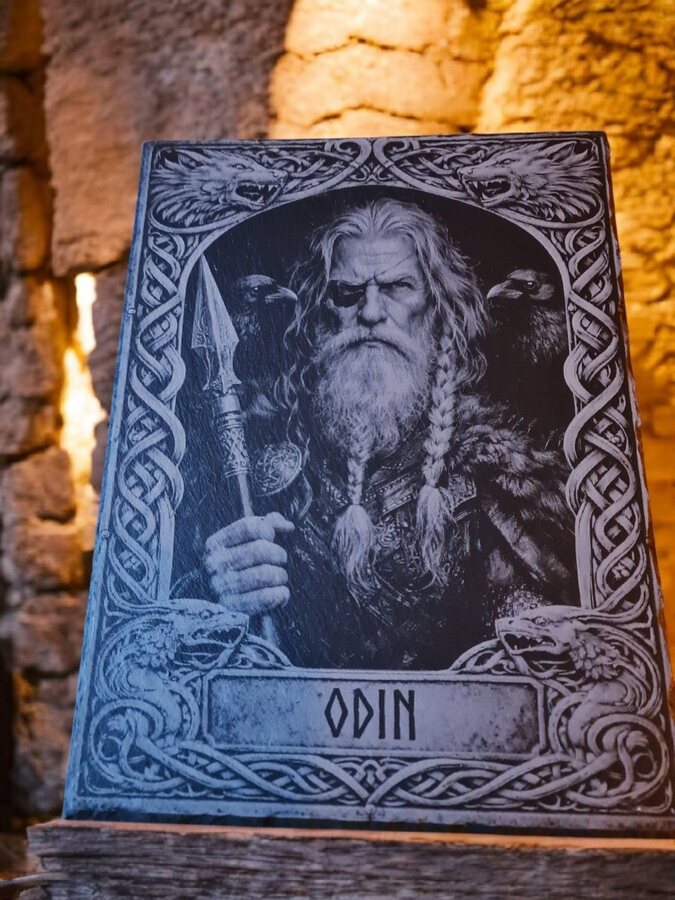
The Sacrificed Army in the Bog · Thing & Cult · Runes · Odin.
Tacitus, Germania 39. Rudolf Simek, Dictionary of Northern Mythology; Jan de Vries, Altgermanische Religionsgeschichte.
All History & Finds articles →
Silver was the lifeblood of Viking trade – weighed, chopped up, buried. Three of the greatest hoards show how far the …
Read more →A horse, a golden disc, six little spoked wheels: the Trundholm Sun Chariot is one of the most beautiful images the …
Read more →One late-summer day in 1066, a Norwegian army marched through northern England certain of victory – and a few hours …
Read more →Some lose a battle and thereby win everything. On 29 July 1030 the Norwegian king Olav Haraldsson fell at Stiklestad …
Read more →