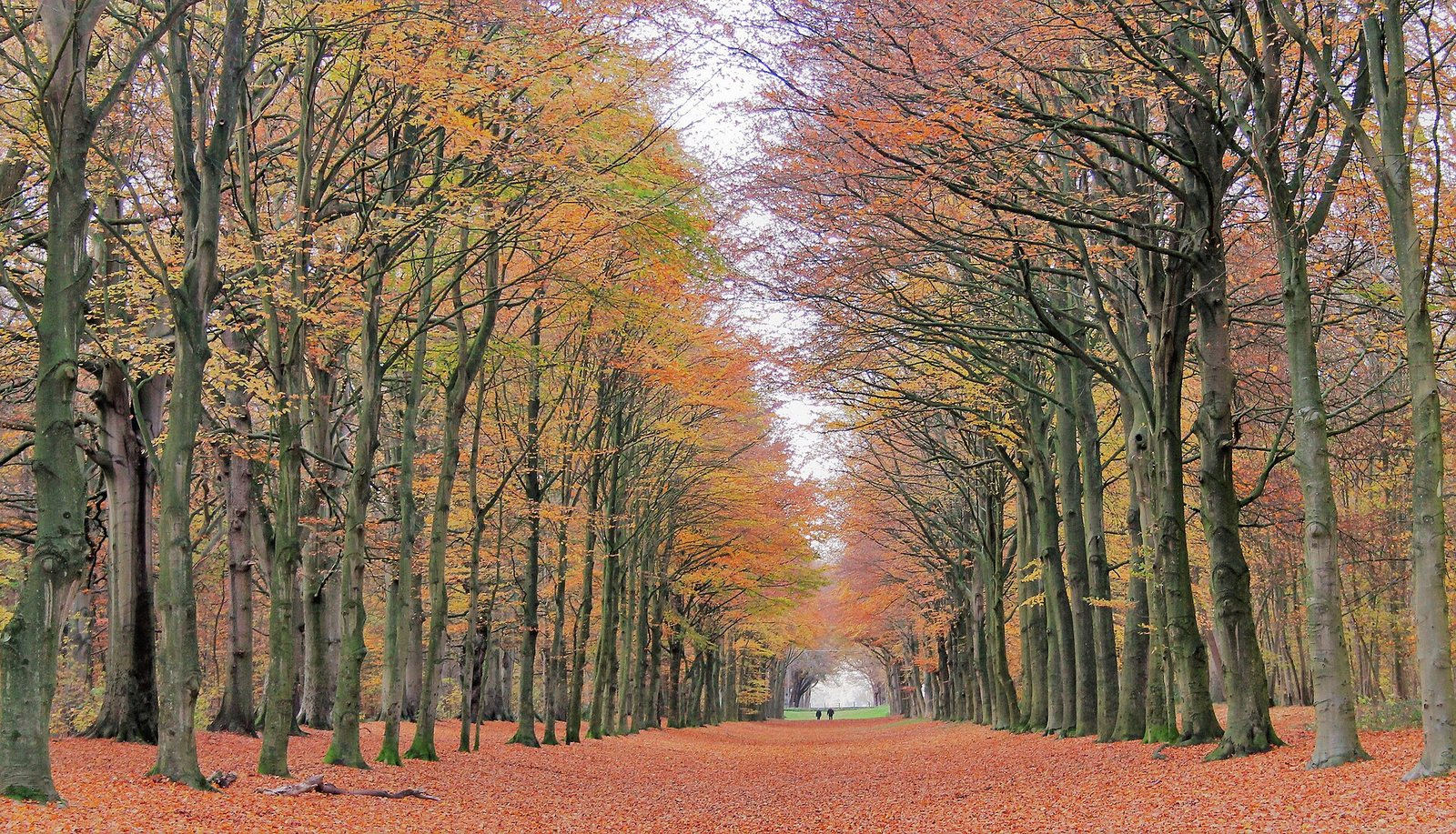
Baduhenna was a goddess of the Frisians whose sacred grove became the scene of a Roman defeat in AD 28: according to Tacitus (Annals 4.73), 900 Romans died there in a fight that dragged on into the following day. That single sentence is all we have – no inscription, no image, no myth. Here is what the source actually says, what her name might mean, where people have looked for the grove, and how a tax dispute over cowhides made it famous.
Imagine that two thousand years from now, the only trace of you is half a sentence – written by your enemies, in their account of a very bad day. That is Baduhenna's fate. Her name appears exactly once in all of ancient literature, in the Annals of the Roman historian Publius Cornelius Tacitus, book 4, chapter 73. Tacitus wrote in the early second century AD, some eighty years after the events. He is not telling us about a goddess at all; he is describing a campaign that went wrong. For him, the goddess is simply a map reference: the grove "which they call Baduhenna's".
That is not much. But it is not nothing either. From that one sentence we can infer that the Frisians of the early first century knew a female deity by this name, that a stretch of woodland was dedicated to her, and that Romans could identify the place. Everything else – her character, cult, myths, appearance – is either interpretation or simply unknown. Throughout this article we will keep those two categories strictly apart, because few figures tempt writers more to fill the gaps with imagination.
Baduhenna shares this fate with another goddess known only from Tacitus: Tanfana, whose sanctuary among the Marsi was razed to the ground by Germanicus in AD 14. We owe both names to Roman war reporting. Both point to a world in which Germanic gods did not live in stone temples but in places within the landscape – see our overview of Germanic religion.
To understand why 900 Romans died in a Frisian wood, you need to go back a few decades. The Frisians (Latin Frisii) lived on the North Sea coast of what is now the Netherlands, on terps – artificial dwelling mounds – among salt marshes, tidal creeks and bogs. In his Germania (chapter 34), Tacitus distinguishes "Greater" and "Lesser" Frisians, named after the extent of their power. Their neighbours were the Chauci to the east and the Cananefates and Batavians in the Rhine delta to the south.
Under Drusus, the stepson of Augustus, the Frisians came under Roman influence around 12 BC. Contact seems to have begun on reasonably good terms: the Frisians sided with Rome while Drusus operated his fleet along the North Sea coast. Drusus imposed a levy that Tacitus explicitly calls "modest, in keeping with their limited means". They were to deliver ox hides for military use (ut in usus militaris coria boum penderent). A Roman army devoured leather on an enormous scale – for tents, shield covers, straps and harness, footwear. For cattle farmers on the coast, a tax in hides was something they could pay out of everyday life.
One detail matters for what follows: nobody had specified how large or how thick those hides had to be. Tacitus stresses the point. As long as nobody measured, the system worked.
Then came Olennius. Tacitus introduces him as a former primipilaris – a man who had reached the rank of senior centurion of a legion, a seasoned professional soldier rather than an aristocrat. He was put in charge "to govern the Frisians". Olennius did something that made perfect sense to a quartermaster's mind: he introduced a standard. As the benchmark he chose the hides of aurochs (terga urorum) – the huge wild cattle that still roamed the forests of Central Europe at the time.
For the Frisians, this was a disaster. Tacitus explains why himself: the forests of Germania teemed with enormous wild beasts, but the herds at home were only of modest size. The coastal people's domestic cattle were small; hides on the scale of an aurochs were simply beyond them. What followed is described by Tacitus as a bitter escalation: first the Frisians handed over the cattle themselves, then their land, and finally their wives and children into slavery.
Tacitus leaves no doubt about where he places the blame. In the very first sentence of the chapter he says that the Frisians broke the peace "more because of our greed than from impatience with obedience". That is strikingly candid for a Roman senator. Don't read it as pure sympathy, though: Tacitus likes to use such episodes to portray the reign of Tiberius as an age of poor administration and hushed-up failures. In his narrative the Frisians are also a backdrop for criticism of Rome.
When complaints achieved nothing, the Frisians turned to war. In the year when Appius Iunius Silanus and Publius Silius Nerva were consuls – AD 28 – they seized the soldiers who were collecting the levy and fastened them to gallows or crosses (patibulo adfixi; the Latin word refers to a wooden frame for hanging or nailing). Olennius escaped by a whisker and took refuge in a fort called Flevum, where a substantial force of Roman citizens and allies guarded the coast.
Where was Flevum? Archaeology has produced a strong candidate: the Roman base of Velsen 1 at the former mouth of the Oer-IJ, a northern branch of the Rhine, in North Holland. The fort, complete with harbour and jetties, was built around AD 15, probably in connection with Germanicus's campaigns. Excavators found traces of a fierce assault: about 520 lead sling bullets, human remains lying on top of the refuse layer in the harbour that nobody seems to have buried, and an unusually tall man lying in a well. The dating to the second quarter of the first century fits the Frisian revolt well.
When news arrived, the governor of Lower Germany, Lucius Apronius, acted. He was no novice: he had fought in Germania under Germanicus and, as proconsul of Africa, against the rebel Tacfarinas. Apronius summoned detachments of the legions from Upper Germany along with picked auxiliary infantry and cavalry, and shipped both armies down the Rhine. By the time he arrived, the Frisians had already lifted the siege of Flevum and withdrawn to defend their own land.
What happened next Tacitus describes in unusual detail. Apronius had causeways and bridges built across the nearest estuaries to get his heavy column through the waterlogged country. Meanwhile fords were found, and he sent the ala Canninefas – a cavalry unit of Cananefates – and the Germanic infantry in Roman service to take the Frisians in the rear.
It went wrong. The Frisians were already drawn up for battle and threw back the allied cavalry, and then the legionary horsemen sent to support them. Apronius fed in three light cohorts, then two more, and after a pause some auxiliary cavalry. Tacitus's verdict is dry: together they would have been strong enough; arriving piecemeal, they steadied nobody and were swept away by the panic of those already fleeing.
Only Cethegus Labeo, legate of the Fifth Legion (legio V Alaudae, then stationed at Vetera near modern Xanten), turned things around. He was handed the remaining auxiliaries, got into difficulties himself and sent messengers begging for the full weight of the legions. The men of the Fifth burst forward, drove the enemy back in a hard fight and recovered the exhausted, wounded cohorts and cavalry.
A victory? Not really. Tacitus adds two sentences that read like an indictment: the Roman commander neither took revenge nor buried the dead, although many tribunes, prefects and distinguished centurions had fallen. To Roman readers that was a scandal. If you want to know how such fights worked from the Germanic side – ambushes, terrain, rapid withdrawals – see our piece on Germanic warfare.
And then comes the sentence to which Baduhenna owes her afterlife. Here it is in our own translation:
"Soon afterwards it was learned from deserters that nine hundred Romans had been cut down near the grove which they call Baduhenna's, in a fight drawn out into the next day, and that another band of four hundred, who had occupied the farmstead of Cruptorix, a former soldier in Roman pay, had fallen by each other's blows for fear of betrayal."Tacitus, Annals 4.73 (own translation)
The Latin core reads: nongentos Romanorum apud lucum quem Baduhennae vocant pugna in posterum extracta confectos. Three things stand out, and they correct a fair amount of what circulates about Baduhenna – including the earlier version of this article.
First: the figure of 900 is in the text. But it comes not from a Roman casualty list but from deserters' statements that reached the Romans after the event. Second: the 900 died "near" the grove (apud lucum), in a fight that lasted through the night into the following day. There is no mention of suicide here. Third: the 400 who killed one another were a different detachment in a different place – the farmstead (villa) of a man named Cruptorix, who had once served for Roman pay (quondam stipendiarius). Fearing betrayal, they chose death at their comrades' hands over capture. Together that makes 1,300 dead across two locations.
The popular phrase that the Frisians "crushed a Roman army" is also too neat. The main battle ended with the Fifth Legion pushing the Frisians back. The real humiliation lay in the scattered detachments destroyed in the woods and at the farmstead, in the unburied dead, and in the fact that Rome never mounted a punitive campaign.
Our rule is always: check the numbers. The figure stands as such in the transmitted Latin text. Whether it reflects reality is another question.
In its favour: it is unflattering to Rome. Tacitus had no interest in inflating a defeat for its own sake, but he did want to expose the failures of the Tiberian regime. That fits the next sentence, which opens chapter 74: the Frisian name became famous among the Germans, while Tiberius concealed the losses so as not to have to entrust anyone with the war.
Against too literal a reading: deserters' reports are hearsay, and round numbers like 900 and 400 are orders of magnitude rather than headcounts. So we think it is fair to say: Tacitus reports 900 dead at the grove of Baduhenna; it was a serious partial defeat, but the exact number cannot be checked. It does not compare with the Varus disaster of AD 9, which cost three legions – but it was no skirmish either.
Now to the goddess herself. Since we know nothing of her cult, everything hangs on the name. Scholars split it into two parts: Badu- and -henna.
As early as the nineteenth century, the Germanist Karl Müllenhoff connected the first element with a Germanic word *badwa-, "battle". (The asterisk marks a reconstructed form not attested in writing.) Relatives include Old English beadu, "battle, war", and the Old Norse poetic word bǫð, "battle". The element also occurs in Germanic personal names. The connection is linguistically sound, but like any etymology of a name recorded only once, it remains a proposal.
The second element, -henna, recalls the name endings of the Rhineland Matronae, the mother goddesses named on hundreds of votive stones, and of the coastal goddess Nehalennia from Zeeland. What exactly this suffix means is unresolved. The frequently quoted rendering "battle goddess" is therefore an interpretation of the whole, not a literal translation.
There is a second trail worth following. Linguists such as Peter Schrijver and Lauran Toorians have pointed out that Celtic linguistic remnants lie beneath Germanic names in the area of the modern Netherlands. Corinna Scheungraber has considered a Celtic original *Bodu(c)enna- for Baduhenna. That would place the goddess close to the Irish Badb, a war and crow figure associated with the Morrígan, and to the Gaulish Cathubodua, who appears on an inscription from Savoy. Whether Baduhenna was a "Celtic goddess in Germanic dress", or whether Germanic and Celtic simply drew on the same Indo-European root here, remains undecided.
In his dictionary of Germanic mythology, Rudolf Simek notes that the etymology suggests a connection with war. That is about as careful – and as honest – as it gets. Whether the Frisians also called on her for land, cattle or fertility, we simply do not know. That a battle took place in her grove may have been an accident of geography – or precisely the reason the Frisians fought there.
Ever since Tacitus was read again in the sixteenth century, local historians have searched for the grove. Lacking finds, they long relied on similar-sounding place names. In the province of Friesland, places such as Oldeholtpade, Beetgum and Baarderadeel were proposed – the last purely because it sounds a bit like "Badu". Such equations hardly hold up linguistically.
Since the excavations at Velsen, attention has shifted to North Holland. If Velsen 1 really was Flevum, the grove need not have been far away, since Apronius operated from there into Frisian territory. Candidates include Velserbroek, Bakkum, Castricum and above all Heiloo. Heiloo is popularly read as "holy wood": hei- as in "holy" and -lo, an old word for wood or clearing. But hei can be explained differently, and Castricum probably derives not from Latin castrum but from an early medieval personal name. W. A. Braakman summarised these ideas in 2001 in the Dutch journal Westerheem.
A sacred grove leaves little for archaeologists anyway: trees decay, boundaries may have been marked by nothing more than posts. More in our article on sacred trees and groves.
Baduhenna does not stand alone. Tacitus mentions sacred woods of the Germanic peoples several times, and only the comparison shows how typical her grove is. In the Germania (chapter 9) he writes that the Germans did not think it fitting to confine gods within walls; instead they consecrated lucos ac nemora, groves and woods to them. That is not universally true – Tanfana did have a templum.
The grove of the Semnones (Germania 39) is the most striking example: a wood that could only be entered bound with a cord, as a sign of submission to the deity, the assembly place of the Suebian peoples, with human sacrifice. More in our piece on the grove of the Semnones. Nerthus (Germania 40) had a "chaste grove" on an island in the Ocean, from which her wagon set out on its procession – see our article on Nerthus. Among the Naharnavali (Germania 43), a grove "of ancient sanctity" was shown, where a priest in women's dress served divine brothers called the Alcis.
Groves also appear in wartime in the Annals. In AD 16, the tribes fighting Germanicus gathered in a wood sacred to "Hercules" (Annals 2.12) – a Germanic god given a Roman name, probably Donar. More on the Cherusci and Arminius. And when Germanicus visited the Varus battlefield in AD 15, he found, according to Annals 1.61, altars in "nearby groves" at which tribunes and senior centurions had been sacrificed. In the Germania (chapter 7) Tacitus also says that the Germans carried images and standards taken from the groves into battle.
In the light of these passages, Baduhenna's grove takes on some shape. It was probably not just any wood but a place where community, cult and readiness for war came together. That the Frisians fought there may have had tactical reasons – or it may be that at such a place they expected the deity's support. For an overview of cult sites and offerings, see our article on Germanic sacrifice and sanctuaries.
The revolt did not end relations. A small wooden tablet from the terp of Tolsum in Friesland, now in the Fries Museum in Leeuwarden, was long read as a contract for the sale of a Frisian cow and was therefore happily linked with the hide tax. A new reading in Oxford overturned that: it is a loan note, dated to February AD 29 and witnessed by, among others, soldiers. Whether it is connected to the revolt is open – but it shows that Romans were doing business in Friesland again barely a year later.
Tacitus himself continues the story. In AD 47 the general Corbulo made the Frisians – "hostile or unreliable since the rebellion that began with the defeat of Apronius" – give hostages, assigned them land and imposed a council, magistrates and laws on the Roman model (Annals 11.19). And in AD 58 two Frisian leaders, Verritus and Malorix, travelled to Rome to ask for land on the Rhine for their people. Nero granted them citizenship – and had their people driven out anyway (Annals 13.54).
For Tacitus, the year 28 marked the start of a long, uneasy relationship. What the Frisians themselves said about that day, we do not know. Their side of the story is lost – and with it everything they sang or said about Baduhenna.
At Glanz & Gravur we work with slate, wood and glass – materials meant to last. Baduhenna is the opposite: a goddess of whom almost nothing remains. That is exactly why she matters to us. She shows how quickly a whole personality can be invented from a single name. When we put a name like hers on a plaque, we do so knowing it is one quiet testimony – half a sentence written down by an enemy, which has nevertheless outlasted two thousand years.
For courage. For remembrance. For legends that live on.

Who was Baduhenna? A goddess of the Frisians mentioned only once, by Tacitus in Annals 4.73. He names a grove sacred to her near which Roman soldiers were killed in AD 28.
What does the name Baduhenna mean? The first element is usually linked to Germanic *badwa-, "battle"; the second recalls Matronae names and Nehalennia. Hence the reading "battle goddess" – a proposal, not proof. A Celtic origin of the name is also discussed.
How many Romans died at the grove of Baduhenna? Tacitus gives 900 dead in a fight that lasted into the next day. Another 400 men killed each other at a different place, the farmstead of Cruptorix. The figures came from deserters and cannot be verified.
Where was the grove of Baduhenna? Nobody knows. Because the Roman fort at Velsen in North Holland is thought to be Flevum, nearby places such as Heiloo, Castricum or Bakkum have been suggested. None has been confirmed archaeologically.
Why did the Frisians revolt in AD 28? Because of a tribute in ox hides, which the officer Olennius made unbearable by taking aurochs hides as the standard. The Frisians had to give up cattle, land and finally family members, and rose in revolt.
Are there images or inscriptions of Baduhenna? No. Unlike Nehalennia or the Matronae, no votive stone or depiction is known. Everything we know about her is in a single Latin sentence.
Tanfana · The Frisians · Nerthus – the earth goddess · Germanic Religion · The grove of the Semnones.
All Gods & Goddesses articles →
He was the fairest, the gentlest, the purest – and yet it was he whom death struck. The legend of Balder is the most …
Read more →In the halls of the gods sits one who would rather turn a fine phrase than swing an axe: Bragi, the long-bearded lord …
Read more →Every great deity of the North has a dwelling. That of Frigg, the highest of the goddesses, is called Fensalir – „the …
Read more →