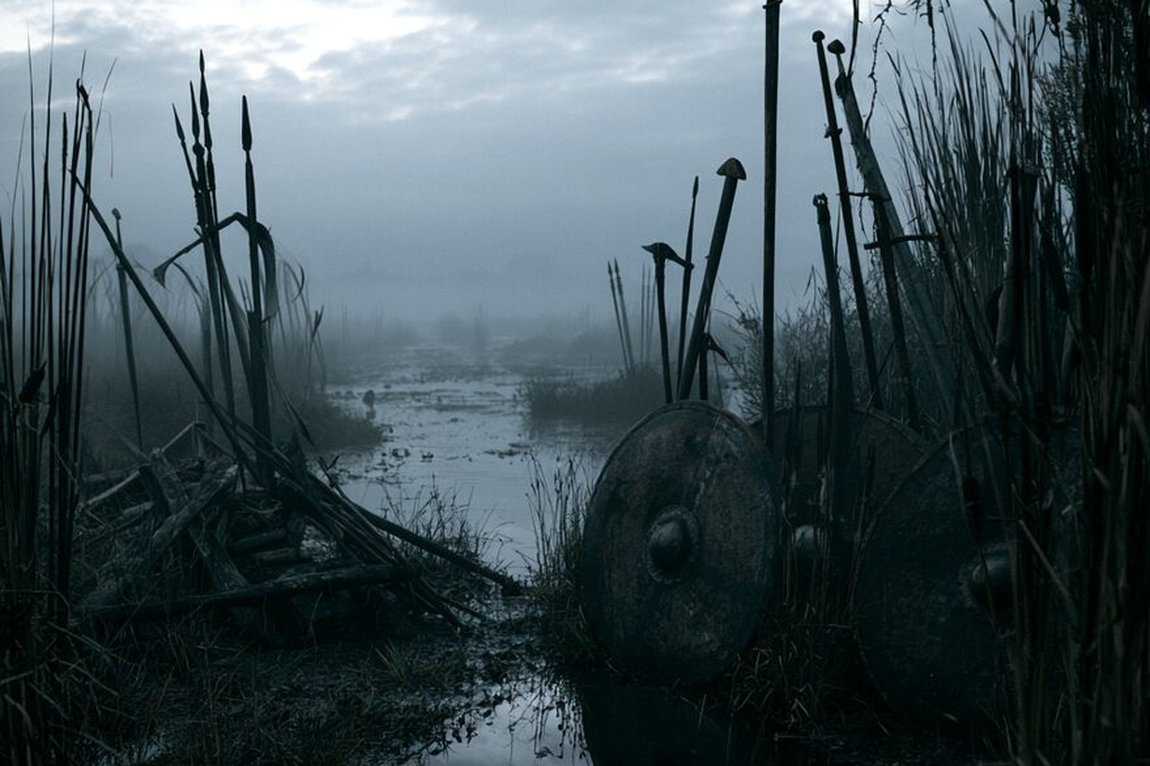
 Beside the famous Batavians, a second small, warlike tribe lived in the mouth-lands of the Rhine: the Canninefates. Rome took their horsemen – and in 69 they paid it back with a revolt.
When people think of the Germanic Rhine-delta, they name the Batavians first. Yet right beside them, in the far northwest of today's South Holland and in Kennemerland, sat a second tribe: the Canninefates (Latin Cananefates). Tacitus calls them equal to the Batavians "in origin, language and courage", only fewer in number. Their story is a model of how tightly the Rhine peoples were bound to Rome – as allies, as soldiers and finally as rebels.
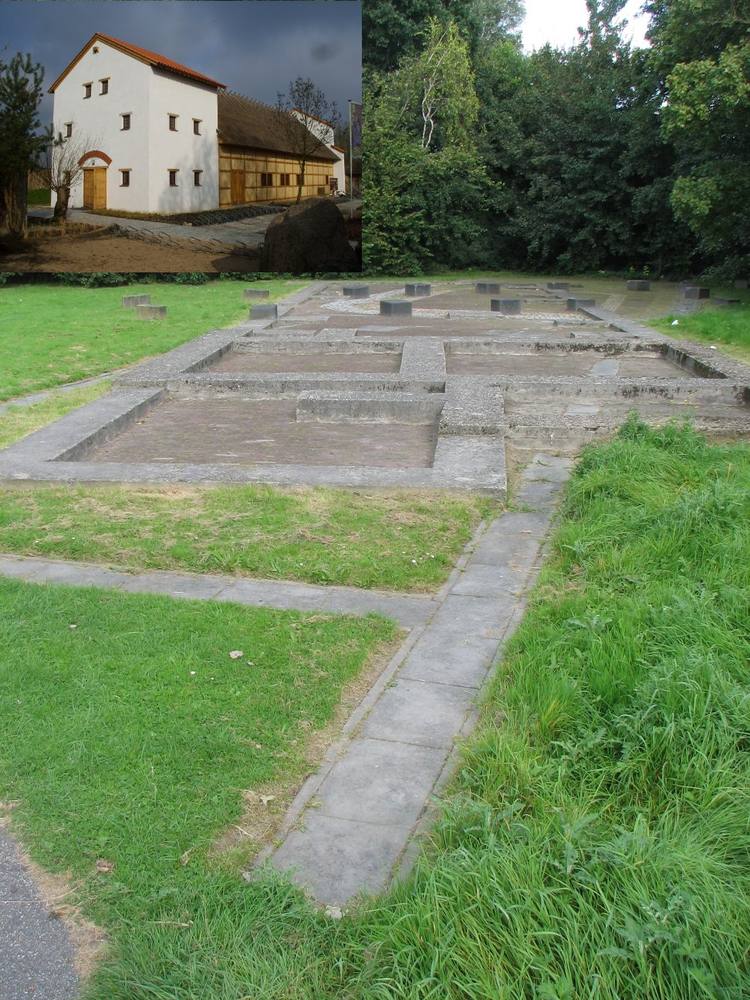
The heartland of the Canninefates lay in the flat mouth-country of creeks and dunes between the Meuse and the old Rhine branch near Katwijk. It was an amphibious world of marsh, mudflat and sand ridge – no land for large-scale farming, but ideal for stock-raising, fishing and, above all, for people at home with boats and horses in the water. The name itself is often read as "lords of the leek" or "lords of the onion" (from Germanic *kana- and *nefa-), which might point to the importance of gardening in this wet landscape – but the etymology remains uncertain.
Like their Batavian neighbours, the Canninefates supplied Rome with highly prized auxiliaries, above all cavalry. From the delta peoples the empire recruited whole mounted units (alae), famous for their ability to swim rivers in full armour. For the small coastal tribes this service was a double-edged bargain: it brought pay, Roman weapons, prestige and citizenship – but it stripped the farms of their young men and locked the tribes into a conscription system felt as oppressive. That is exactly where the great conflict ignited.
In the Year of the Four Emperors, 69, as the Roman Empire tore itself apart in civil war, the Batavian revolt broke out on the Lower Rhine. It began not among the Batavians themselves but among their smaller neighbours – and a Canninefate stood at the very front. Tacitus tells how Brinno, son of a father known for his defiance, was lifted onto a shield by his warriors and proclaimed leader – a rare, vivid image of Germanic king-raising. Brinno at once attacked a Roman fort on the coast and overran it. Only afterwards did the Batavian Iulius Civilis take command of the revolt, which soon engulfed the whole Lower Rhine and put Roman legionary camps as far as Xanten and Vetera under pressure.
The revolt of 69/70 was no blind "barbarian storm" but a political rising by tribes who knew Rome very well – many leaders had themselves served as Roman officers. The Canninefates fought alongside the Batavians, the Frisians and rebel Gaulish tribes. After early successes, however, the rising broke on the recovered central power: Emperor Vespasian sent eight legions to the Rhine, and Civilis had to negotiate. Rome restored the old order – with the concession of easing the most oppressive conscription practices. The Rhine peoples remained allies, but the lesson stuck on both sides.
After the revolt Rome organised the region as its own administrative unit, the civitas Cananefatium, with a chief town at Voorburg (Forum Hadriani, later Municipium Aelium Cananefatium) south of today's The Hague. Thus the tribe became Roman provincials. Over the centuries the Canninefates merged with other coastal Germani; their name, however, lived on: in the region of Kennemerland north of Haarlem the old tribal territory still echoes today. So the Canninefates are a quiet but real example of how Germanic tribal names have survived on the modern map of the Netherlands.
We know of the Canninefates almost only through Roman authors, above all the Histories of Tacitus, who describes the Batavian revolt at length. This source is brilliantly written, but it sees everything from a Roman point of view and with literary intent. The picture is filled out by the archaeology of the Rhine delta – forts, the settlement of Forum Hadriani, auxiliary inscriptions – and by place-name research (Kennemerland). What is secure and what remains interpretation we separate carefully here; invented detail has no place in an honest tribal history.
The reputation of the delta horsemen reached far beyond the Rhine. After the revolt, units such as the cohors Cananefatium served in the Roman army as far as Britain, where votive and funerary inscriptions attest their presence. The ability of the Rhine peoples to swim rivers in full kit was so famous that Roman authors singled it out – a military speciality of the amphibious coastal Germani. Thus the Canninefates became part of that Germanic military diaspora which stretched from the North Sea to the edges of the empire and locked the Roman and Germanic worlds inseparably together.
The Canninefates lived in a strip of land that had to negotiate constantly with the sea. Like their northern neighbours, the Frisians, the coastal dwellers often settled on artificial dwelling mounds (terps) to protect themselves against storm floods. Their economy rested on cattle, sheep, fishing and trade along the waterways. When the Roman Empire could no longer hold its Rhine frontier in the 3rd and 4th centuries, everything shifted: new confederations formed, and the old delta tribes merged into the rising Franks. So the Canninefates mark a transition – from the individually named tribes of the early imperial period recorded by Tacitus to the great tribal leagues of the Migration Period, from which medieval Europe later emerged. Anyone walking through Kennemerland or along the Dutch coast today moves over the soil of this forgotten people of horsemen.
Precisely because the Canninefates were so small, they are instructive. Their story shows that the Germanic world on the Rhine was no block of uniform barbarians but a patchwork of many self-assured tribes with their own names, leaders and interests. It also shows how Rome worked: not only through legions but through recruitment, pay and citizenship that drew young warriors into the empire, until the burden grew too great and turned into open revolt. The shield-raising of Brinno is one of the few moments in which we see Germanic politics from the inside: a leader who does not command but is carried and proclaimed by his men. For us in the Rhineland there is in this a piece of our own, often forgotten prehistory: the people who lived here before the Franks, before the Carolingians, before us, by the water, on horseback and with a pride of their own.
"Equal to the Batavians in origin, language and courage, fewer in number."after Tacitus, Histories IV,15 (public domain, own translation)
The Batavi · The Frisians · The Ubii.
