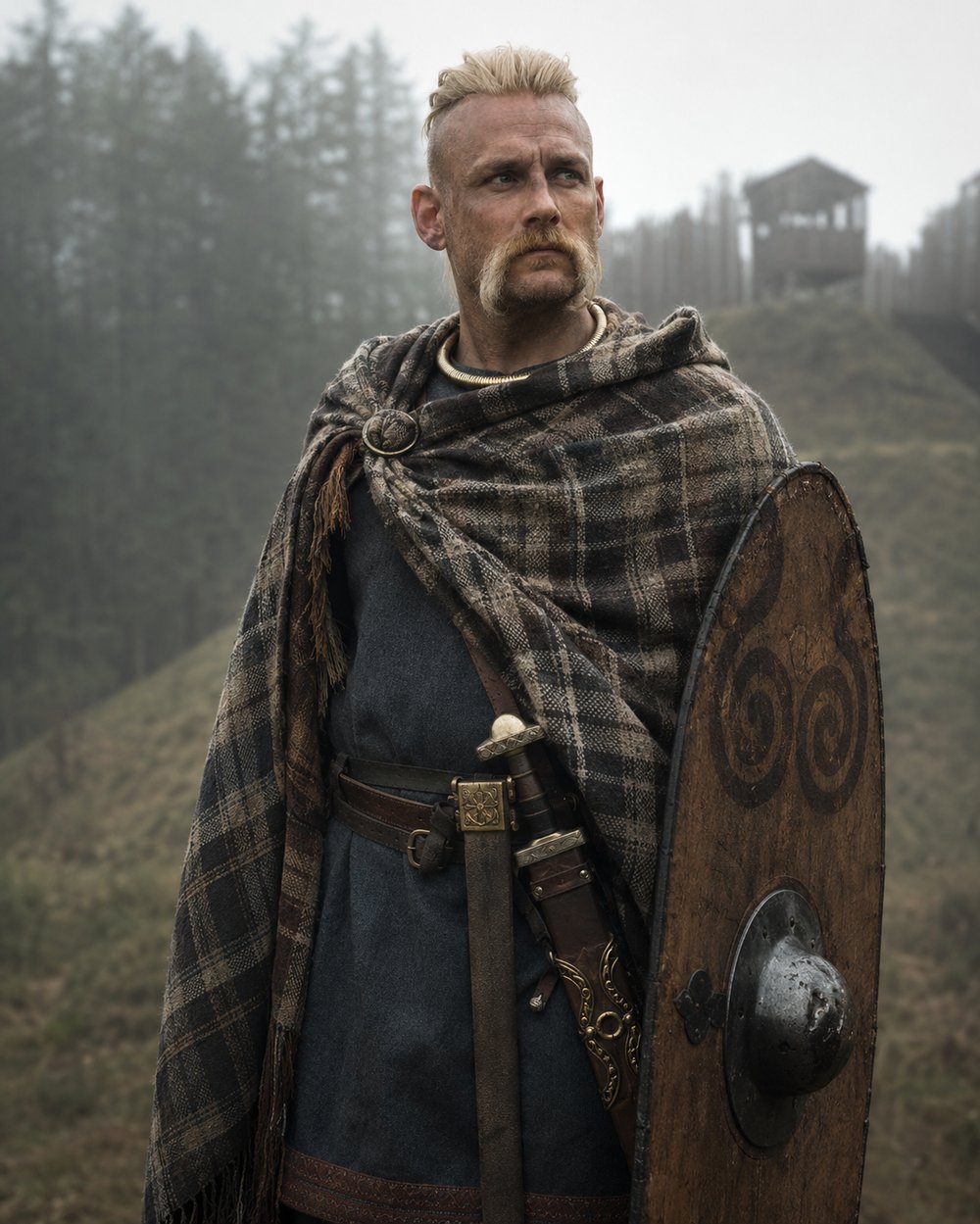
The Catuvellauni were the mightiest Celtic kingdom of southern Britain in the 1st century. Their centre lay around today's St Albans (Verlamion) and Colchester.
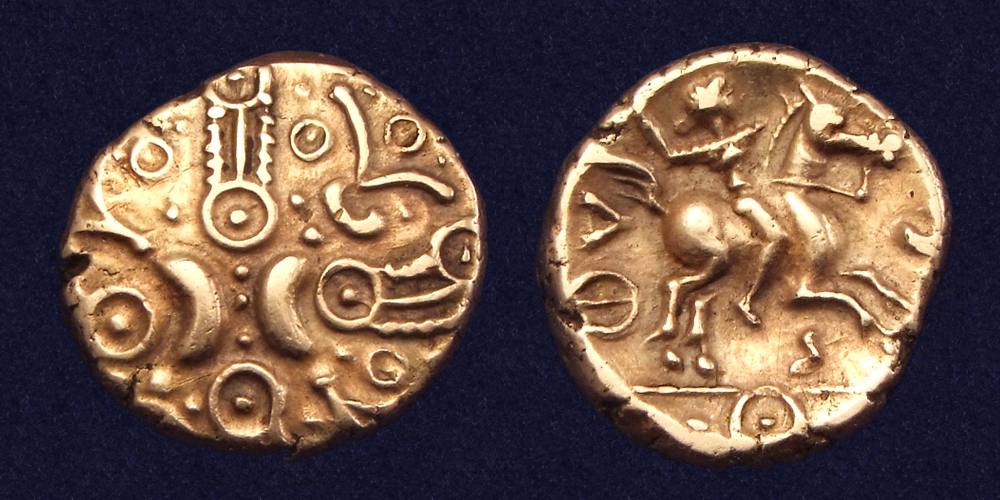
Under Cunobelinus (Shakespeare's "Cymbeline") the Catuvellauni extended their power widely and struck their own coins with Latin inscriptions. Rome even called him "king of the Britons".
His sons, above all Caratacus, led the resistance to the Roman conquest from AD 43. After defeat Caratacus fought on from Wales. The heartland of the Catuvellauni became Roman – Colchester the first colonia of Britain.
"Cunobelinus, king of the Britons."after Suetonius, Caligula 44 (public domain, own translation)
In the 1st century the Catuvellauni were the most powerful tribe in south-eastern Britain. From their capital Camulodunum (Colchester) they ruled wide territories, struck their own gold coins and traded as far as the continent. They were no "wild" fringe people but an organised power with kings and towns.
Their most famous ruler was Cunobelinus, whom the Roman author Suetonius called "Britannorum rex" – king of the Britons. Under him the realm of the Catuvellauni reached its height. Centuries later Shakespeare turned his name into the title figure of the play "Cymbeline".
After Cunobelinus's death Emperor Claudius used the quarrel of his sons as a pretext to invade. In AD 43 the legions landed, took Camulodunum, and Claudius had himself celebrated there. The capital of the Catuvellauni became the first Roman colony in Britain.
Cunobelinus's son Caratacus did not give up: he fought on in Wales alongside the Silures and Ordovices until he was betrayed and brought captive to Rome. There, according to Tacitus, he made so dignified a speech that the emperor pardoned him – a rare end for a defeated enemy.
The Catuvellauni struck elaborate gold and silver coins, often with Latin abbreviations and rulers' names like CVNOBELINVS. Such coins were more than money: they were propaganda, trade currency and proof of a power that modelled itself on Rome long before the legions came. They show a Britain more closely tied to the continent than the cliché of the "wild island folk" suggests.
The former Catuvellaunian capital Camulodunum became the first Roman colony in Britain – with temple, theatre and imperial cult. Precisely this splendour made it the first target of Boudica's wrath, who burned the town in 60/61. From the Celtic metropolis came the Roman Colchester, whose name still carries the old "Colonia" within it.
The Catuvellauni were no footnote of history but a self-confident kingdom with coins, towns and rulers whose names echo into Shakespeare's dramas. Their resistance under Caratacus shows how seriously Rome took the south of Britain. For all who love Celtic history they are a prime example: no cliché of the barbarian, but a highly organised world on the edge of the empire – told from the sources, as befits our standard at GLANZ & GRAVUR.
The Catuvellauni stand at the start of British resistance. Continue with the Iceni and Silures.

The Britons · The Iceni · The Atrebates · The Brigantes · The Silures.
