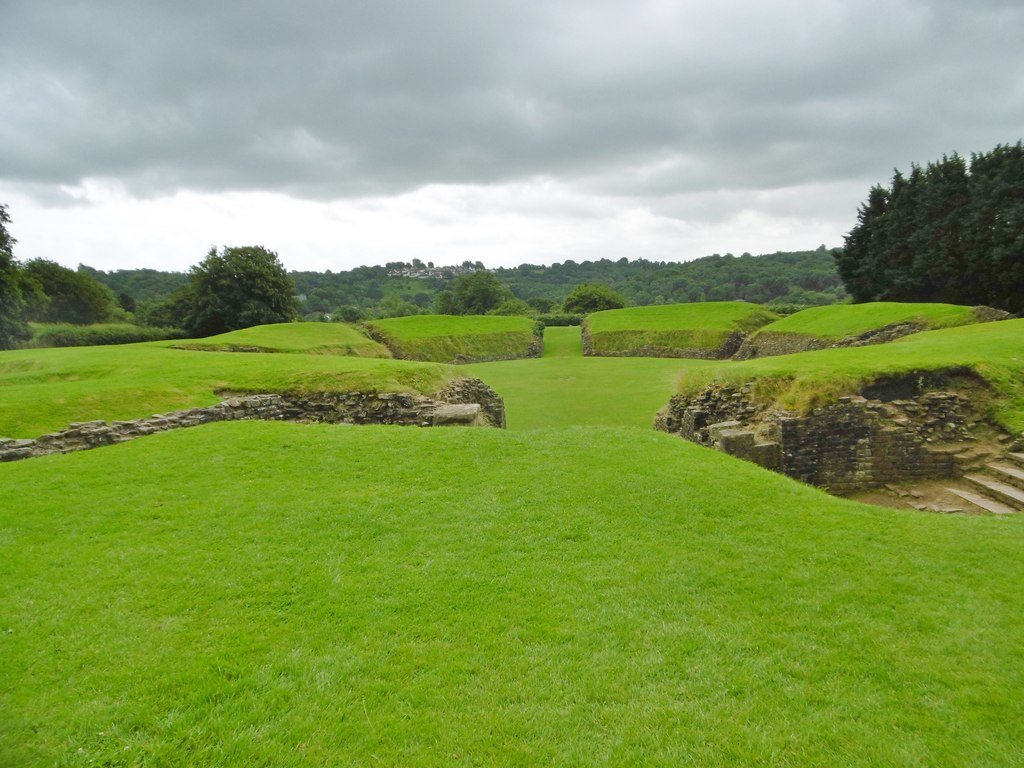
The Silures were a Celtic people in south Wales. Tacitus describes them as dark-haired and warlike – and especially hard to subdue.
After the Roman conquest of southern Britain the British leader Caratacus fled to the Silures and Ordovices and waged guerrilla war against Rome from Wales. Only after his capture (through the betrayal of the Brigantes) did the resistance break.
Even afterwards the Silures fought on; a Roman governor is said to have threatened to wipe them out entirely – which only strengthened their defiance. Only Frontinus finally subdued them. Their capital later became the Roman Venta Silurum (Caerwent).
"Neither harshness nor mercy changed the Silures."after Tacitus, Annals 12 (public domain, own translation)
The Silures were a Celtic people in the south-east of today's Wales. Ancient authors describe them as especially tough and warlike – Tacitus calls them a people that could be bent neither by cruelty nor by clemency. Their mountainous land made them one of Rome's most stubborn opponents in Britain.
When the British leader Caratacus fled from the south-east, he found refuge among the Silures and continued the resistance from here. Only after his capture in AD 51 did the Silures fight on alone – for decades.
Rome needed almost a generation to subdue the Silures. Only the governor Frontinus finally subjected them around AD 78. Their long resistance made them in ancient literature a symbol of unbroken will to freedom.
Tacitus remarks that the Silures had dark skin and curly hair, and suspects an origin from Iberia. This ancient interpretation is not scientifically proven – but it shows that even the Romans marvelled at the diversity of the British peoples.
After the submission the Roman town of Venta Silurum arose for the Silures, today's Caerwent, whose walls still stand. The tribal name lives on in this place and in Welsh history.
The Silures stand for the tough resistance of small mountain peoples against a world power. At GLANZ & GRAVUR we tell their story from the sources – and keep the ancient interpretation cleanly apart from secured knowledge.
The Silures stand for Celtic resistance in Wales. Continue with the Ordovices and Brigantes.
The Caledonians · The Ordovices · The Brigantes · The Britons · The Celtic Warriors.
All History & Finds articles →
A horse, a golden disc, six little spoked wheels: the Trundholm Sun Chariot is one of the most beautiful images the …
Read more →One late-summer day in 1066, a Norwegian army marched through northern England certain of victory – and a few hours …
Read more →