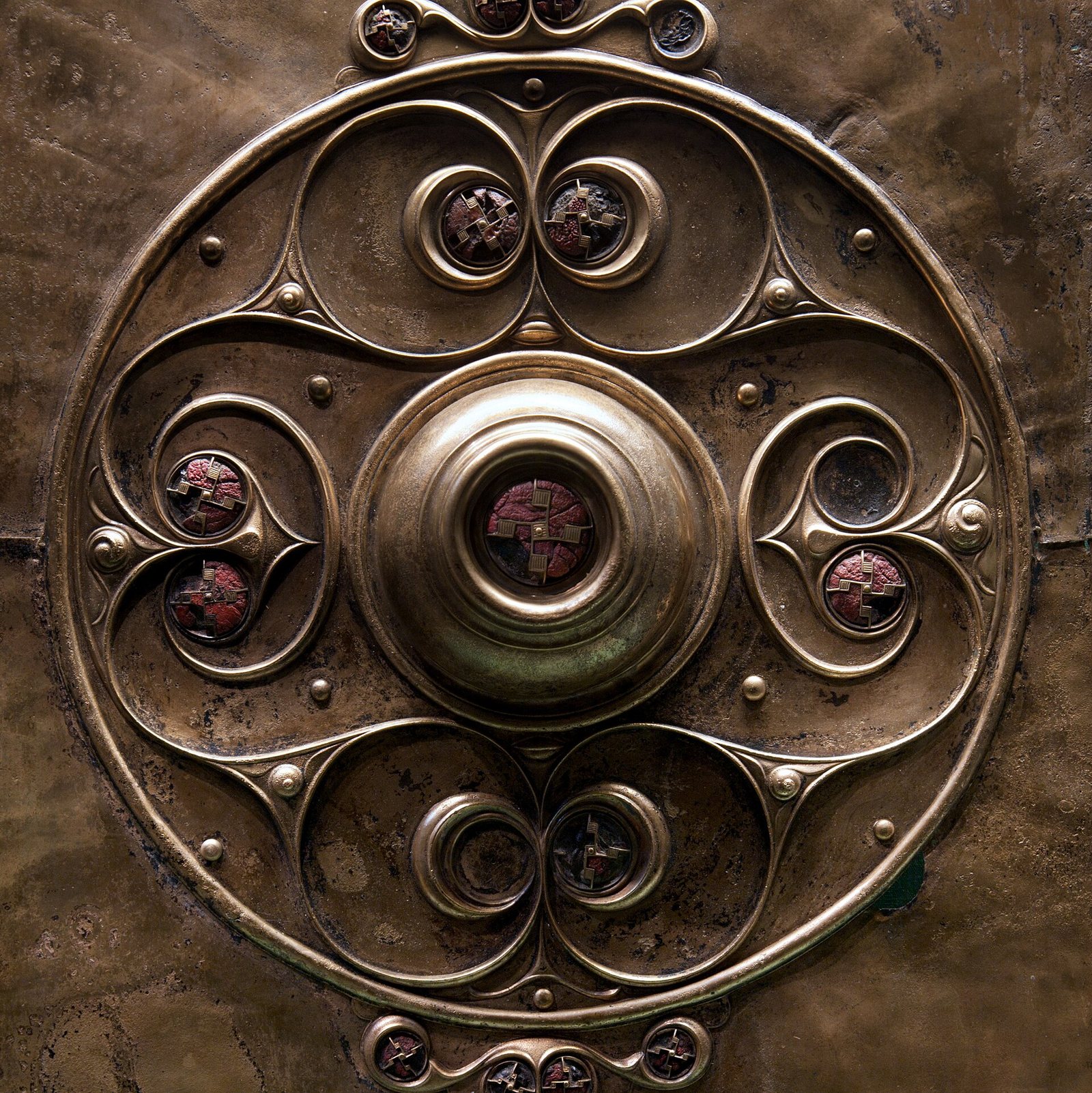
The Britons were the Celtic peoples of the island of Britain – among them the Iceni, Trinovantes, Catuvellauni and many more. From AD 43 Rome conquered the south of the island.
"She was resolved, as a woman, to conquer or to die."Boudicca, after Tacitus, Annals 14 (public domain, own translation)
By "Britons" we mean the Celtic peoples who inhabited all Britain before the Romans and Anglo-Saxons. They were not a single tribe but many – from the Iceni in the east through the Catuvellauni in the south to the Brigantes in the north – united by related British (Brythonic) languages and cultures.
The most famous moment of British resistance was the revolt of the Iceni queen Boudica in AD 60/61, who burned three Roman cities before she was defeated. It shows how fiercely the Britons fought for their freedom.
Rome conquered the south and centre, but the north remained unsubdued. Hadrian's Wall and for a short time the Antonine Wall marked the border between Roman Britain and the free peoples of the north.
When Rome gave up the island around 410, the Britons remained and founded kingdoms of their own. In this age of struggle against the immigrating Anglo-Saxons is rooted the legendary figure of King Arthur – historically he is not graspable, but the age from which the legend grew is real.
The language of the Britons lives on to this day: from British developed Welsh, Cornish and Breton. In Wales, Cornwall and Brittany the voice of the old island Celts still echoes.
The Britons show how a Celtic world outlasted conquest and change and lived on in language and legend. At GLANZ & GRAVUR we tell this from the sources – Arthur clearly marked as legend, not as fact.
The Britons show the Celtic resistance on the island. Continue with the Atrebates and the Celtic warriors.

The Atrebates · The Celtic Warriors · Celtic Religion · The Druids · The Veneti.
All History & Finds articles →
„So did they wear horned helmets or not?" The honest answer is a double no and yes: the Vikings did not. But the North …
Read more →