The Burgundians were an East Germanic people who in the early 5th century founded a kingdom on the Rhine around Worms. Their name lives on to this day in the French region of Burgundy.
In AD 436 the Burgundian kingdom on the Rhine was crushingly defeated – by an army that the Roman general Aetius led with Hunnic auxiliaries. King Gundahar (Gunther) fell with a large part of his people. The survivors were later resettled to Savoy.
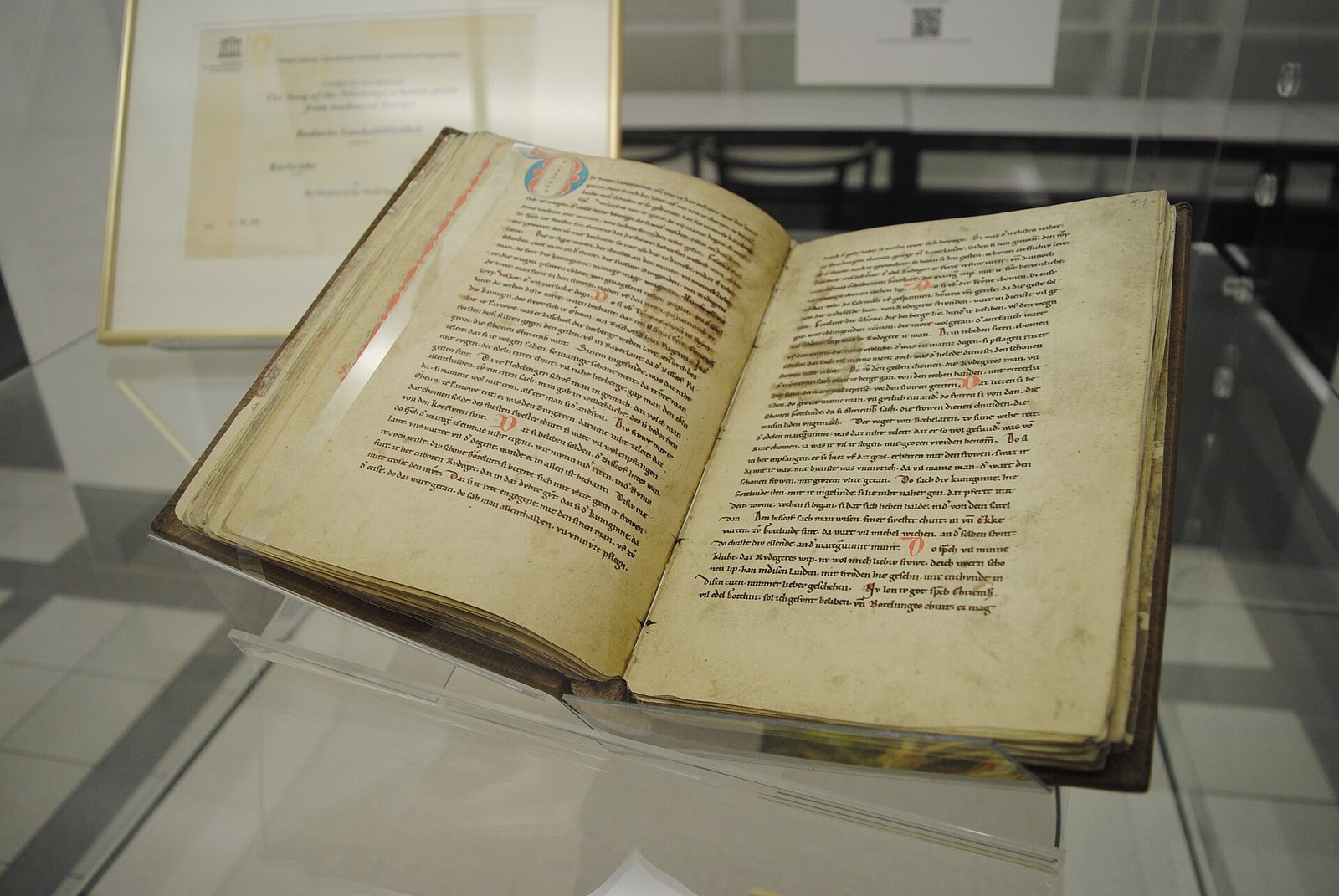
This real downfall – a Burgundian king, an army from the east, a bloodbath – became the historical core of the Nibelung saga: Gunther, Hagen and the doom at the court of the Huns. Thus history turned into myth, kin to the Norse Sigurd saga.
"To us, in olden tales, many wonders are told."Nibelungenlied, opening (Middle High German, public domain)
The Burgundians were an East Germanic people who originally sat in the Baltic region – the name of the island Bornholm (Old Norse Borgundarholmr) recalls it. Over centuries they moved south-west until they founded a kingdom of their own on the Rhine.
In the early 5th century a Burgundian kingdom arose on the middle Rhine centred on Worms. King Gundahar (Gunther) ruled here – until the clash came with the Roman general Aetius and his Hun auxiliaries.
In 436/437 the kingdom of Worms was crushingly defeated; king and retinue fell. This downfall became the historical core of the Nibelung saga: Gunther, Hagen and the fall of the Burgundians at the court of Etzel (Attila) live on in poetry.
The survivors were resettled by Rome in today's western Switzerland and Savoy. There a second Burgundian kingdom arose with its own law, the Lex Burgundionum, until it was conquered by the Franks in 534.
The name of the Burgundians lives on to this day – in the French region of Burgundy (Bourgogne), famous for its wine. From a Baltic migrating people to the namesake of a wine region: one of the longest journeys of the Migration Period.
The Burgundians link Germanic history with the great heroic saga. Continue with the Sigurd and Nibelung saga and the Goths.

The Goths · Sigurd the dragon-slayer · The Heruli · The Lombards · Germanic Religion.
