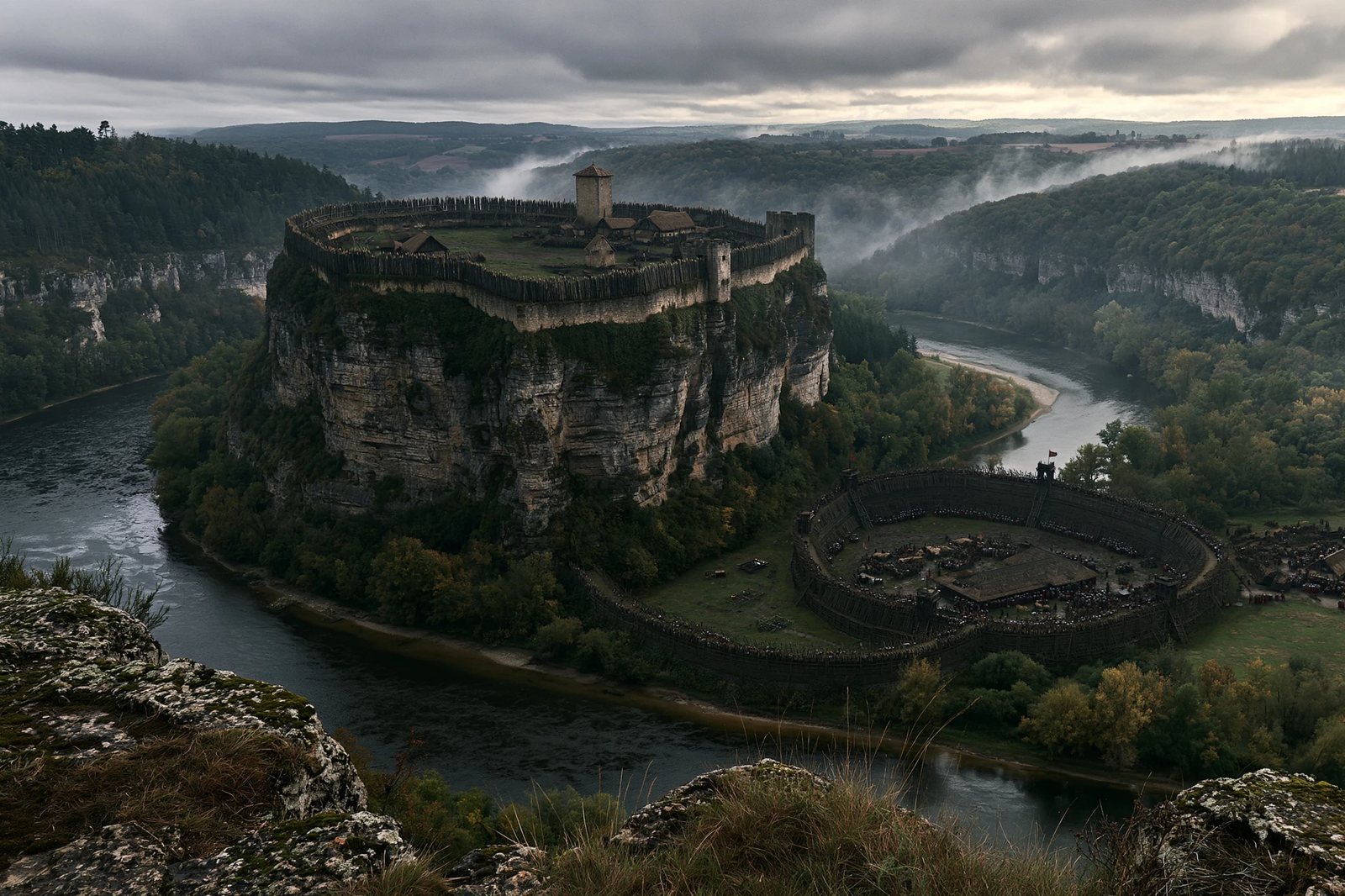
The Cadurci were a Celtic people in southern Gaul, around today's Cahors. They are famous for the last great resistance to Caesar.
"He had the hands cut off of all who had borne arms."after Hirtius, The Gallic War VIII (public domain, own translation)
The Cadurci were a Celtic people in the south of Gaul, in the region of today's Quercy around Cahors. They were regarded as skilled craftsmen – their linen weaving in particular was famous in antiquity and was traded as far as Rome.
The Cadurci became famous through Lucterius, one of their leaders in the Gallic War. Even after the defeat of Vercingetorix at Alesia in 52 BC he did not give up but continued the resistance against Caesar – one of the last to fight for the freedom of Gaul.
In 51 BC the last rebels entrenched themselves in the hilltop fortress of Uxellodunum. The position was almost impregnable – until the Romans cut off the besieged from their water source by tunnels. Without water the defenders had to surrender. It was the last great resistance of the Gallic War.
Caesar wanted to set a deterrent sign: he had the hands of the surviving fighters of Uxellodunum cut off before releasing them – marked for life as a living warning. The account of Hirtius, who continued Caesar's work, records this cruelty unvarnished.
Under Rome the chief town of the Cadurci, Divona Cadurcorum, became a flourishing city – today's Cahors. The name of the tribe lives on in the city and in the Quercy region to this day.
The Cadurci remind us how hard the price of freedom could be – and how a people of craftsmen at the same time fought for their independence. At GLANZ & GRAVUR we tell their story from the sources, with respect for the people behind the events.
The Cadurci stand for the bitter end of the Gallic fight for freedom. Continue with the Arverni and Bituriges.

The Arverni · The Aedui · The Bituriges · The Celtic Warriors · Celtic Princely Graves.
