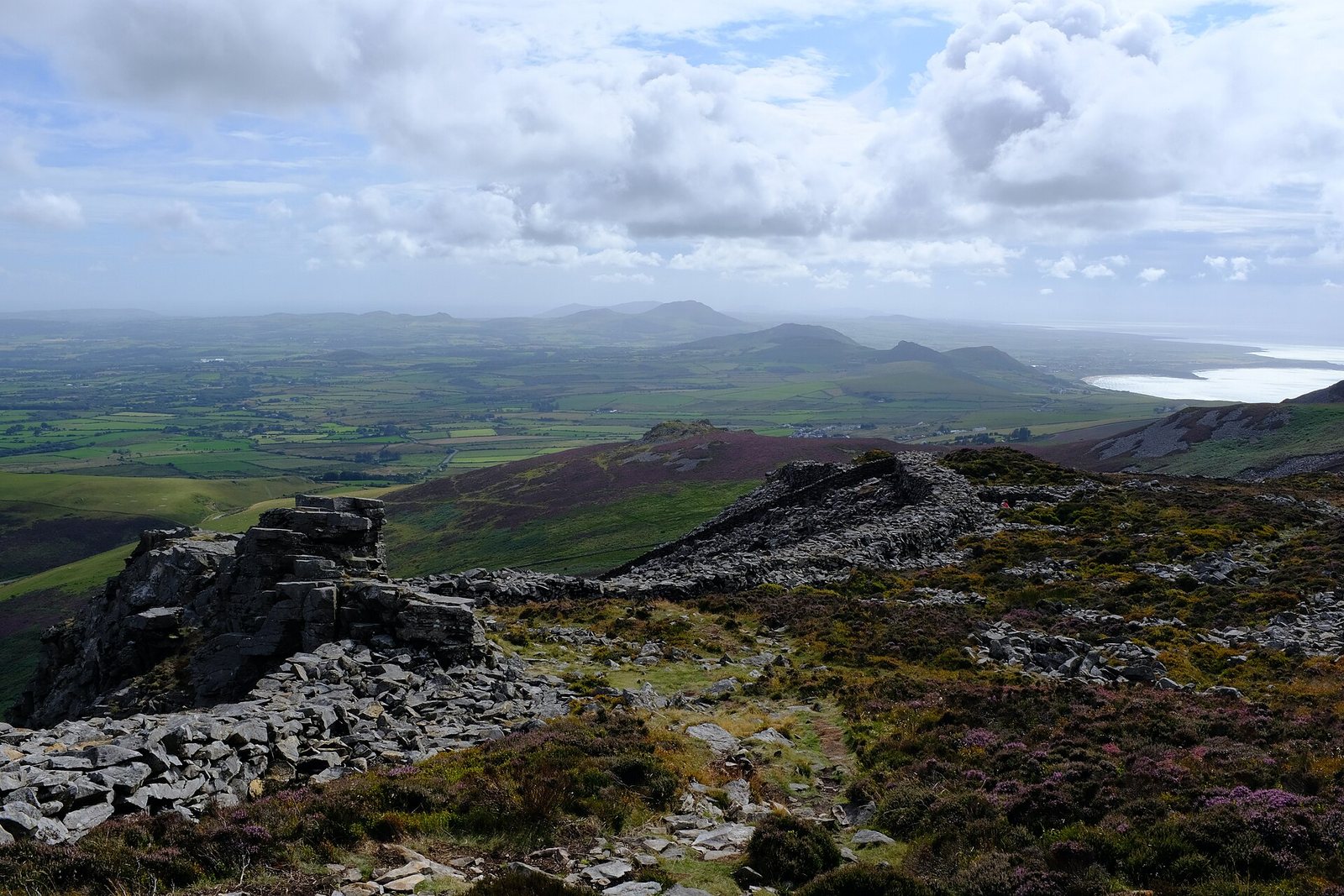
The Ordovices were a Celtic mountain people in north Wales. Together with the Silures they were among Rome's most stubborn opponents on the island.
The mountainous land made the Ordovices hard to attack. They too supported the resistance of Caratacus. Even decades later they dared revolts – until the governor Agricola punished the people harshly.
Their territory lay near Anglesey (Mona), the sacred centre of the British druids. When Rome attacked the island and burned the groves, it struck the religious heart of Celtic Britain.
"Agricola marched against the Ordovices, who had almost destroyed the whole people."after Tacitus, Agricola 18 (public domain, own translation)
The Ordovices lived in the mountainous north and west of today's Wales, in the land around Snowdonia. The rugged highlands made them one of the last peoples of Britain that Rome could subdue – every advance was dearly bought in valleys and on passes.
When the British leader Caratacus fled from the south-east, he continued the resistance from Wales – including in the territory of the Ordovices. Only around AD 51 did Rome manage to defeat him in a mountain battle; captured, he was brought to Rome.
In AD 60 the governor Suetonius Paulinus advanced against the neighbouring Druid island of Anglesey (Mona) and destroyed the sacred groves. Tacitus describes the scene vividly: black-robed women, cursing Druids, burning places of sacrifice. It was a deliberate blow against the religious heart of Celtic resistance.
Around AD 77/78 Agricola finally led a campaign that, according to Tacitus, nearly wiped out the Ordovices after they had destroyed a Roman cavalry unit. It was one of the harshest chapters of the conquest of Wales.
Curiously, a whole geological era bears their name today: in 1879 the geologist Charles Lapworth named the Ordovician after the Ordovices, because he first described the rock strata of this period in their old tribal territory. Thus a Celtic mountain people became a term of earth history.
The Ordovices stand for the stubborn resistance of small peoples against an overwhelming force – and for names living on long after their bearers have passed. At GLANZ & GRAVUR we tell such stories from the sources, because they show how deeply the Celtic world is rooted in the history of Europe.
Hardly any tribe of antiquity has so unusual an afterlife as the Ordovices: barely noticed by Caesar's contemporaries, described by Tacitus as a tough opponent – and today the namesake of a whole geological era. Their history links Celtic will to freedom with an echo reaching into natural science. A worthy example of how deeply the ancient peoples are rooted in our world.
The Ordovices stand for Celtic resistance and the druid world. Continue with the Silures and druids.
The Silures · The Caledonians · The Druids · The Britons · Celtic Religion.
All History & Finds articles →
Long before there were Germanic peoples – some 4,300 years ago – people in today’s Saxony-Anhalt raised a vast ring of …
Read more →