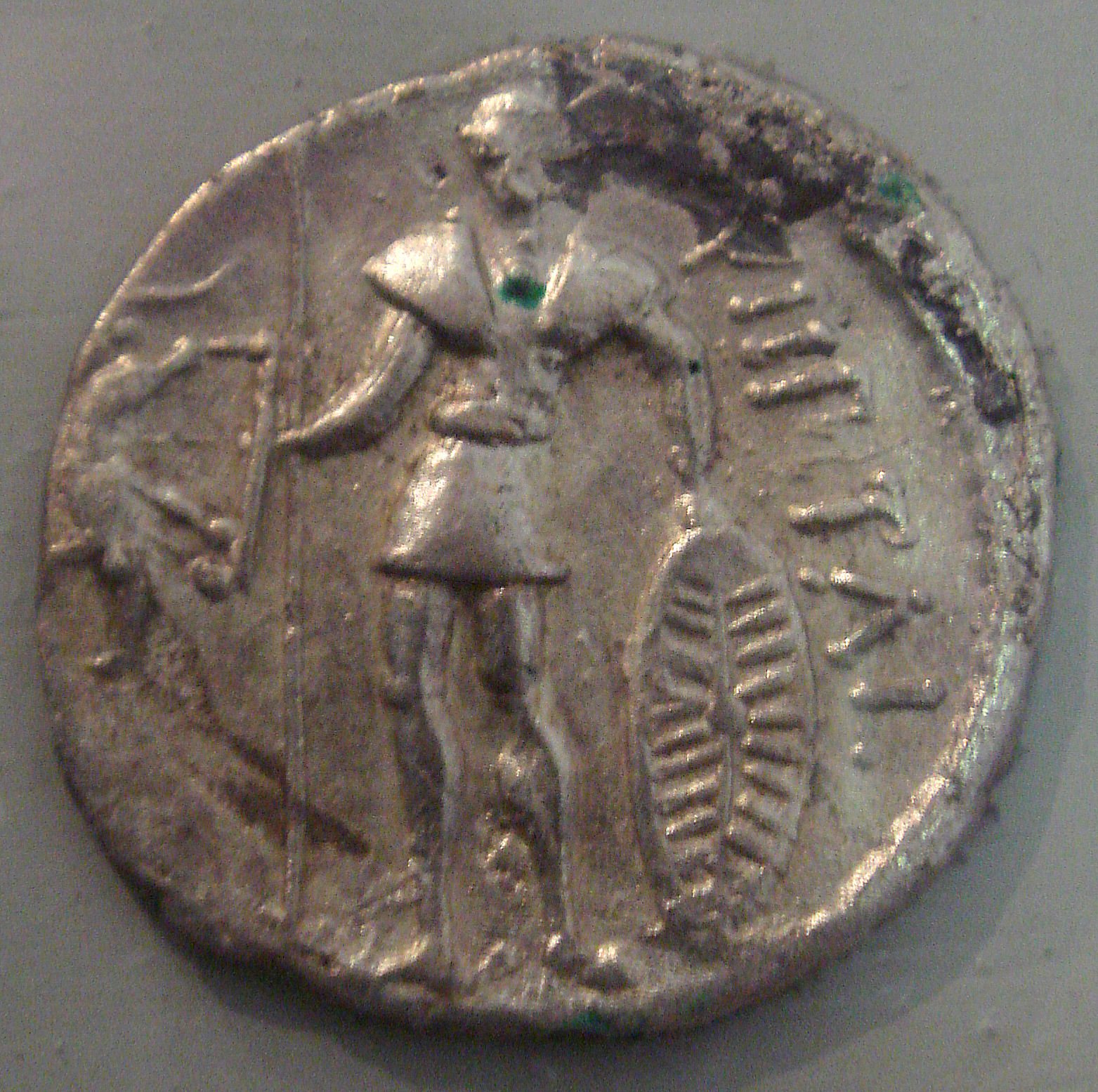
The Pictones were a Celtic people on the Gaulish Atlantic coast, around today's Poitiers. Their land is still known as Poitou.
They did not always stay quiet: after the conquest parts rose under the leader Dumnacus, but were put down. Under Rome Limonum (Poitiers) became an important city.
"The Pictones and Santones … provided ships for the war on the coast."freely after Caesar/Hirtius, The Gallic War (public domain, own translation)
The Pictones (also Pictavi) were a Celtic people in the west of Gaul, in the region of today's Poitou around Poitiers. Their land reached to the Atlantic coast – a position that made them seafarers and shipbuilders.
This ability became important for Caesar: for his campaign against the powerful Veneti in 56 BC he had ships built among the Pictones too. Thus they contributed to the Roman victory off the Breton coast.
Later the Pictones also rose against Rome, but after submission their land flourished. Their chief town Limonum became an important Roman city with one of the largest amphitheatres in Gaul – today's Poitiers.
The tribal name lives on to this day: from the Pictavi came the city of Poitiers and the region of Poitou. A Celtic coastal people whose name outlasted millennia.
Despite the similar sound, the Pictones have nothing to do with the Picts of Scotland. The resemblance of the names is coincidence: the Pictones were Gaulish Celts on the Atlantic, the Picts a people in the far north of Britain. A confusion that keeps recurring.
The Pictones stand for maritime, trading Gaul. At GLANZ & GRAVUR we keep such easily confused peoples cleanly apart – for accurate history matters more to us than the quick effect.
The Pictones belong to the Celtic Atlantic world. Continue with the Veneti and Santones.

The Santones · The Veneti · The Aedui · The Arverni · Celtic Religion.
All History & Finds articles →
Long before there were Germanic peoples – some 4,300 years ago – people in today’s Saxony-Anhalt raised a vast ring of …
Read more →King Hákon the Good, a son of Harald Fairhair, fought all his life against the sons of his brother Eric Bloodaxe. Two …
Read more →