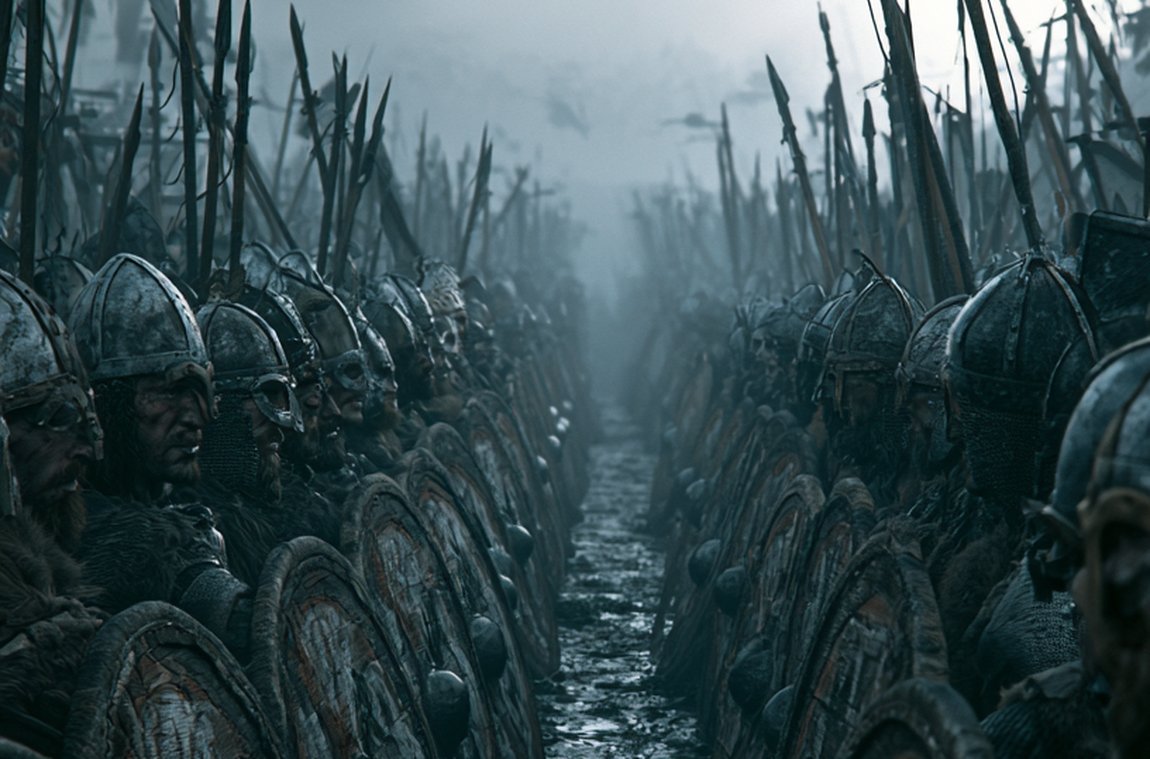
King Hákon the Good, a son of Harald Fairhair, fought all his life against the sons of his brother Eric Bloodaxe. Two battles became legendary – one through a trick, the other through his death.
Hákon the Good was a tragic figure between the worlds. As the youngest son of Harald Fairhair he was raised a Christian at the court of the English king Æthelstan – hence his byname „Æthelstan’s foster-son". When he returned to Norway and took the throne, he ruled a thoroughly heathen people who did not share his new faith. All his life Hákon also had to fight the sons of his brother Eric Bloodaxe, who contested the crown. Two battles of this long struggle became legendary – one through a brilliant trick, the other through his death.
On the island of Frei in 955 Hákon faced a numerically far superior foe. A cooler head would have fled; Hákon instead resorted to a stratagem still remembered today. He had ten standards set up far apart along a low ridge, each placed so that a whole hidden army seemed to lurk behind it. To the advancing enemy it looked as if they were encircled by a vast, unseen force.
The effect was devastating – for the enemy. Convinced they were hopelessly hemmed in, they fell into confusion and panic, and Hákon seized the moment for a decisive attack. He won a brilliant victory in which Eric’s son Gamli fell. Rastarkalv became a model of how, in the warfare of the North, not only strength but cunning and nerve decided victory and defeat.
Six years later, at Fitjar on the island of Stord, Hákon and the sons of Eric met again. Once more the king fought with great courage, once more his army won. But in the midst of triumph an arrow struck him in the arm. The wound seemed harmless at first, yet the bleeding could not be staunched, and on the way back the king’s strength failed him. Hákon died of this seemingly small injury – a victor who did not survive his victory.
His death moved people deeply. Although Hákon was a Christian, his heathen countrymen esteemed him so much that the skald Eyvindr skáldaspillir composed for him the Hákonarmál – a lay in which Odin sends the valkyries to fetch the good king to Valhalla despite his foreign faith.
„Göndul and Skögul Odin sent, to choose among the kings." — Hákonarmál, after the Heimskringla
Hardly any image captures the passage between two ages more beautifully: a Christian king is fetched home by the old gods because he was a good ruler. In the memory of the North, Hákon belonged to both worlds.
As with most events of the Viking Age, caution is due: the sagas were written down only some 250 years later, and details such as the exact number of standards, the leaders’ speeches or the dramatic course of events are literary embellishment. The hard core, though – two victories of Hákon over the sons of Eric and his death from an arrow-wound at Fitjar – counts as historical, for it is supported by the near-contemporary skaldic poetry that arose only a little later.
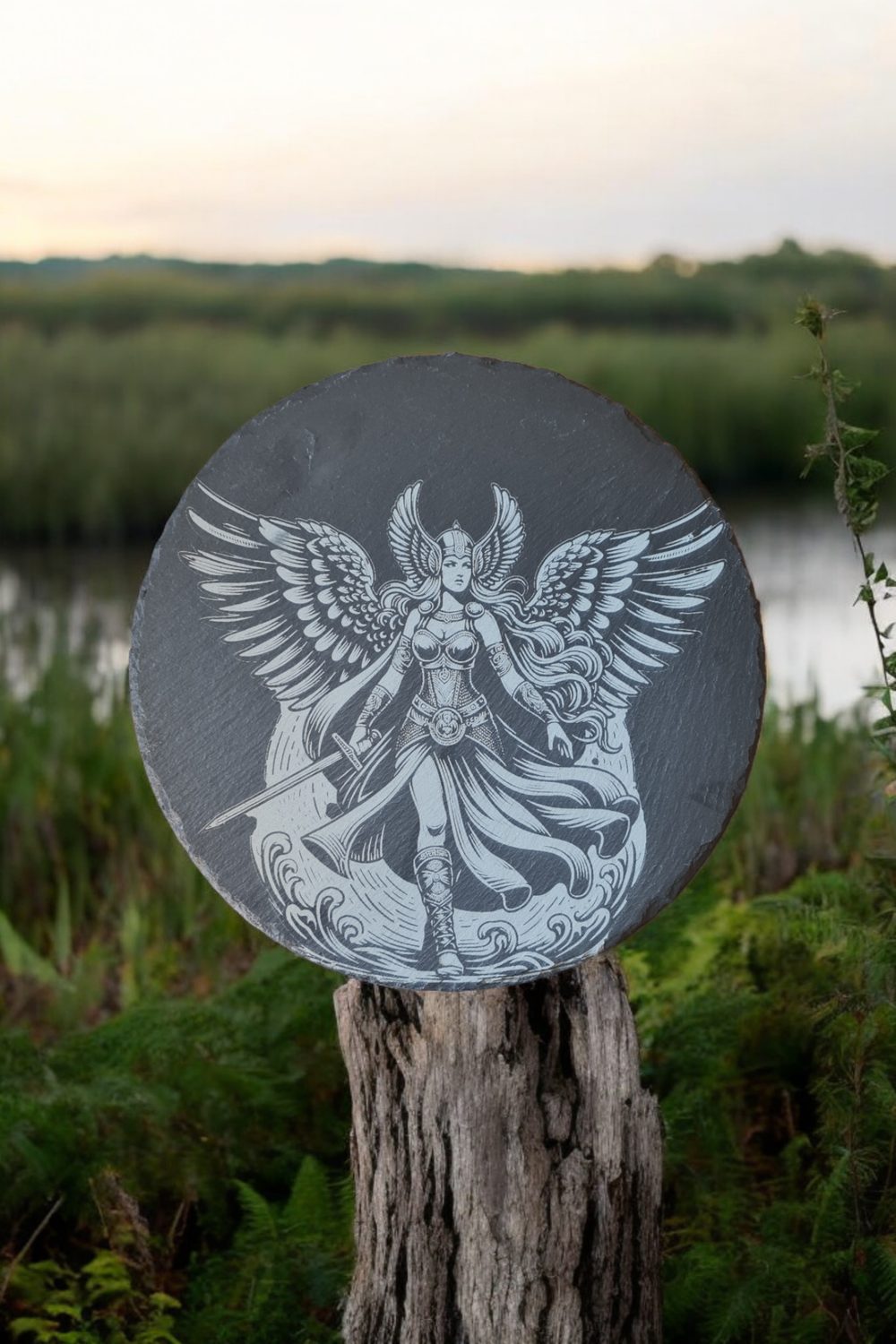
For us such stories are more than battle reports. They tell of cleverness under pressure, of courage, of a good ruler whose memory outlasted even the border between old and new faith. When we bind a valkyrie or a king into slate, we think of exactly such figures – of people whose fame the skalds carried down to us across a thousand years.
Eyvindr skáldaspillir · Harald Bluetooth · The Shield-Wall · Valhalla.
Snorri Sturluson, Heimskringla (Hákonar saga góða); Eyvindr, Hákonarmál. Rudolf Simek, Dictionary of Northern Mythology; skaldic.org.
All History & Finds articles →
Long before there were Vikings in the sense of the sagas, there was already a town in south-west Jutland: Ribe, founded …
Read more →The Viking battle was no wild scramble but a hard struggle shield to shield. A look at tactics and weapons beyond the …
Read more →Long before the Viking Age and before the Icelandic Edda there was Germanic cult – and one of the most striking stood …
Read more →Silver was the lifeblood of Viking trade – weighed, chopped up, buried. Three of the greatest hoards show how far the …
Read more →