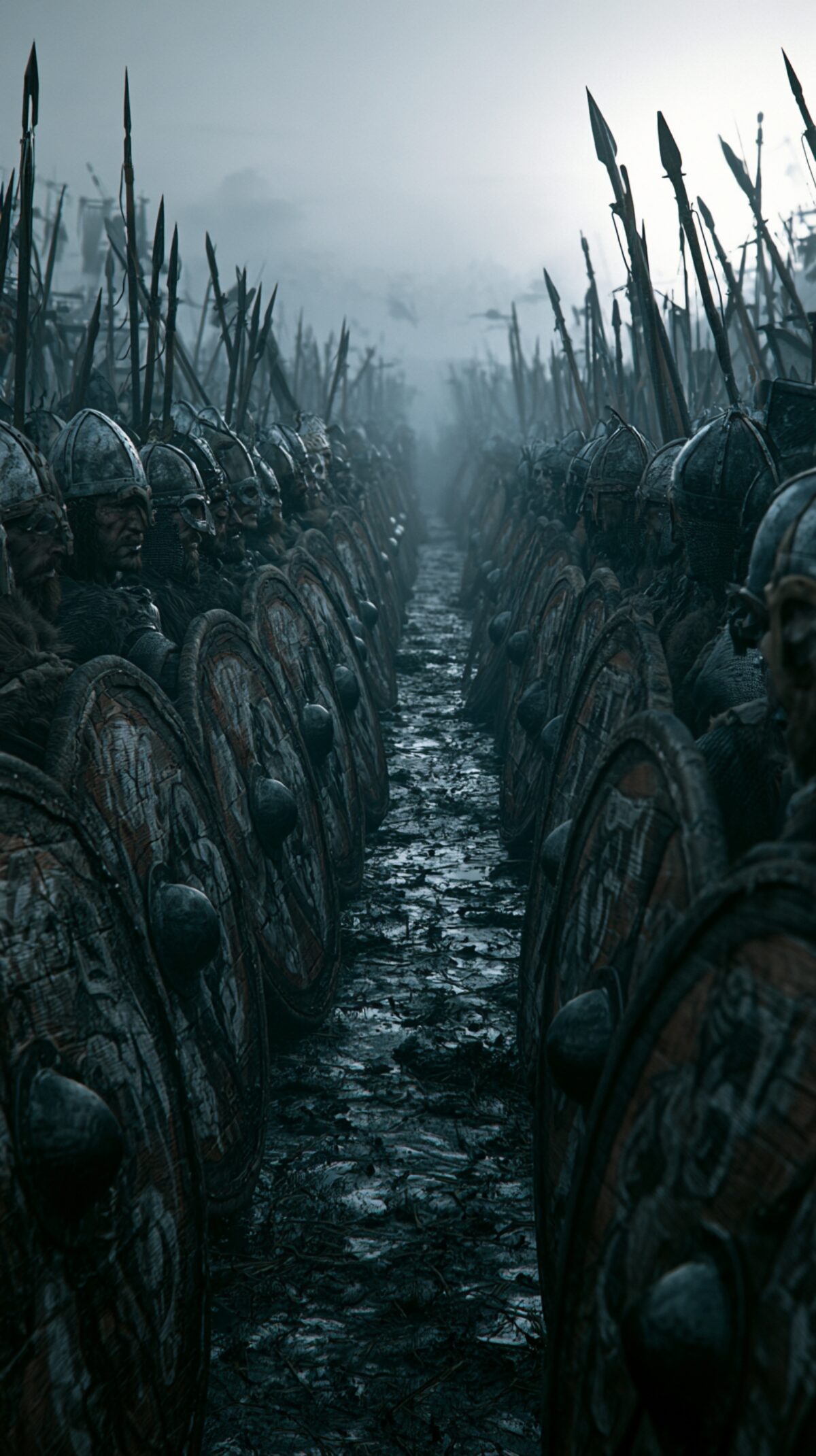
The Caledonians were Celtic peoples in the north of Britain, in today's Scotland. Rome called the whole land north of the frontier Caledonia.
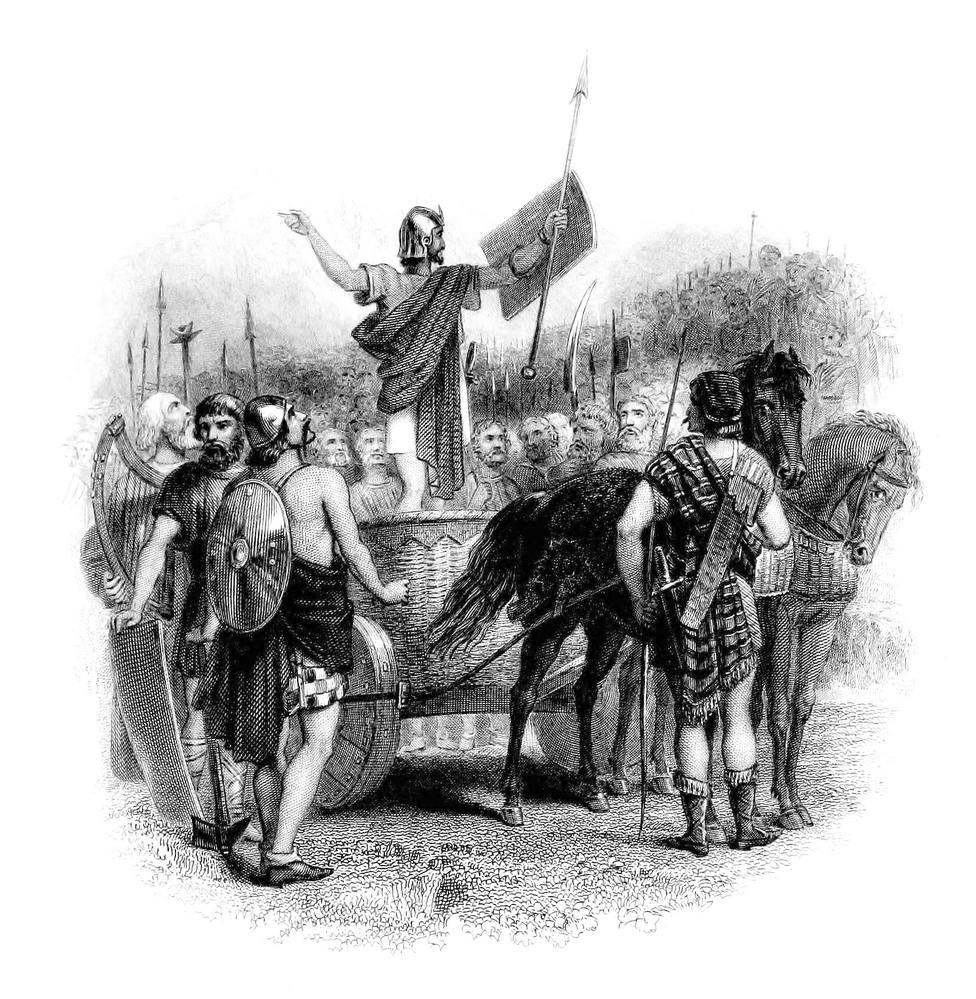
In AD 83/84 the Caledonians under Calgacus faced the Roman general Agricola at Mons Graupius. They lost to the Roman battle order, yet the north stayed free – Rome could never hold it for long.
Tacitus puts into Calgacus's mouth, before the battle, a famous speech that describes Roman conquest without mercy. Soon afterwards Rome withdrew behind Hadrian's Wall; the free north became proverbial.
"They make a desert and call it peace."Calgacus, after Tacitus, Agricola 30 (public domain, own translation)
The Caledonians were a confederation of tribes in the far north of Britain, beyond the Roman province – in the highlands of today's Scotland. Rome called the whole land north of the firths Caledonia. Unlike the tribes of the south, these peoples were never permanently subdued: forests, mountains and a harsh climate made the land a fortress in which Roman legions could win but not stay.
Around AD 83 the Roman governor Agricola faced the Caledonians at Mons Graupius. In his account the historian Tacitus puts a famous speech into the mouth of the Caledonian leader Calgacus – one of the sharpest ancient indictments of imperialism. Whether Calgacus really spoke thus no one knows; but the words became immortal.
Rome won the battle, but it did not win the land. The legions soon withdrew, and the conquest of the north was never completed. Instead of rule Rome built frontiers: first the chain of Gask Ridge forts, later Hadrian's Wall and for a short time the Antonine Wall. The north of Britain stayed free – a rare case in which a "barbarian" confederation withstood the world empire.
The Caledonians did not vanish, they transformed. In later centuries Rome grouped the northern tribes under the name Picts. Place names like Dunkeld (Dún Chailleann, "fortress of the Caledonians") and the mountain Schiehallion carry their memory to this day. Thus a line runs from the resistance at Mons Graupius to the kingdoms of early medieval Scotland.
Why did the mightiest empire of antiquity fail here of all places? The north offered no rich cities to conquer, no granaries to exploit – only mountains, moors and scattered farms. A permanent occupation would have cost more than it yielded. So Caledonia remained for Rome a borderland to be sealed off with walls rather than administered. The Caledonians went on living by their own rules, in small groups under local leaders.
Their life is attested by roundhouses, hillforts and the typical souterrains – underground storage chambers. They kept cattle and sheep, tilled small fields and traded goods across the wall with the Roman world. Hadrian's Wall was never a solid barrier but a controlled frontier where people traded, negotiated and occasionally fought.
The Caledonians are a symbol that freedom can defy even the greatest empire. Their history lives on in the speech of Calgacus, in the silent walls of the Romans and in the Pictish stones of Scotland. For all who are drawn to the ancient peoples of Europe they are a piece of the untamed north – a heritage we at GLANZ & GRAVUR tell with respect for the real sources rather than romanticising it. For the strongest story is the true one.
The Caledonians stand for the free Celtic north. Continue with the Britons and Silures.

The Britons · The Silures · The Brigantes · The Ordovices · The Celtic Warriors.
