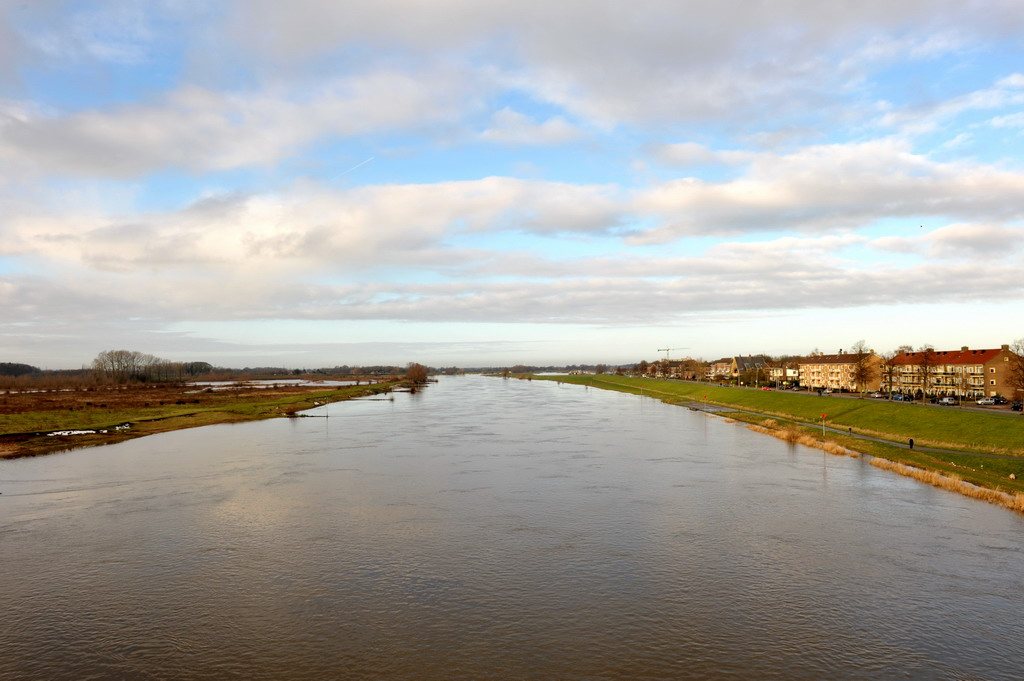
The Chamavi were a Germanic tribe on the Lower Rhine and the IJssel, in the border area of today's Germany and the Netherlands – near our region.
Tacitus reports how the tribes here pushed one another out: the Chamavi and Angrivarii drove the Bructeri from their land. Such shifts marked the restless Lower Rhine.
In the 3rd/4th century the Chamavi merged into the Frankish league. From Frankish times a Lex Chamavorum survives – a sign that their name and law lived on for a long time.
"The Chamavi and Angrivarii occupied the land of the expelled Bructeri."after Tacitus, Germania 33 (public domain, own translation)
The Chamavi were a Germanic tribe on the right bank of the Lower Rhine and on the IJssel – directly opposite the landscape that is our home today. Their territory lay on the border between free Germania and the Roman Empire, a zone of constant movement and friction.
Tacitus reports in his "Germania" of a dramatic event: together with the Angrivarii the Chamavi drove the powerful neighbouring tribe of the Bructeri from their land. Some 60,000 Germani are said to have perished – a spectacle that the Romans, according to Tacitus, watched with satisfaction.
Like many Rhine Germani the Chamavi led raids into the Roman provinces. As late as the 4th century they were so active that Emperor Julian campaigned against them specifically, to secure the Rhine frontier and the grain supply to Britain.
In the end the Chamavi merged into the great confederation of the Franks, which formed from many small Rhine tribes. From this time comes the "Lex Francorum Chamavorum" (Ewa ad Amorem), an early medieval law book that preserved their name.
Their name lived on in the landscape: the district of Hamaland around Deventer and the IJssel recalls the Chamavi to this day. Thus a part of their name remained on the map, long after the tribe itself was history.
The Lower Rhine and the IJssel lie right next to us – the Chamavi were literally neighbours of the region where GLANZ & GRAVUR works today. Their history belongs to the Germanic-Frankish heritage that makes our home so rich.
The Chamavi are among the peoples that shaped our own region: on the Lower Rhine and the IJssel, in the making of the Frankish kingdom, with a name that lives on in the Hamaland. For us at GLANZ & GRAVUR this is no distant chapter but part of the Germanic-Frankish roots from which our home grew – and which we tell with joy and care.
The Chamavi show the birth of the Franks in miniature. Continue with the Franks and Bructeri.

The Franks · The Sugambri · The Batavi · The Bructeri · Tencteri & Usipetes.
All History & Finds articles →
Sometimes a war is won not with the sword but with the purse. In 991 the English ealdorman Byrhtnoth faced a Viking …
Read more →