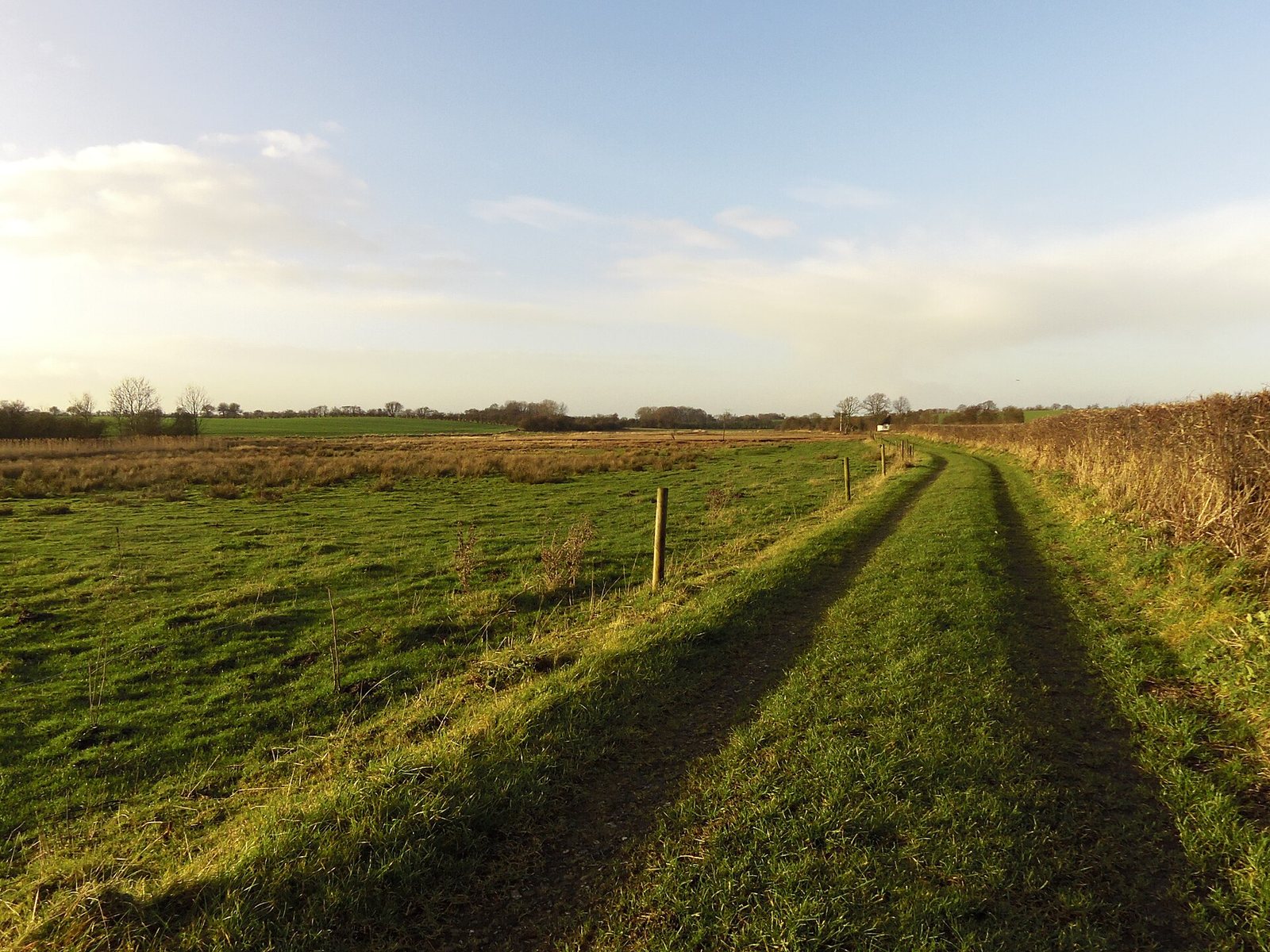
The Angles were a Germanic tribe from the region of Angeln in today's Schleswig-Holstein, between the Schlei and the Flensburg Fjord. Tacitus counts them among the tribes who worshipped the earth goddess Nerthus.
In the 5th century Angles moved together with Saxons and Jutes to Britain, as Roman rule there collapsed. Bede reports that the land of Angeln lay deserted afterwards – a hint at how many left.
In Britain the Angles founded kingdoms such as Mercia, East Anglia and Northumbria. From Angla-land – "land of the Angles" – came England, and from their tongue the English language. Thus a small Baltic tribe lives on in the name of a world language.
"… the Angles, that is the country which is called Angulus."after Bede, Ecclesiastical History I,15 (public domain, own translation)
The Angles were a Germanic people from the region of Angeln in today's Schleswig, on the Baltic coast between the Flensburg Fjord and the Schlei. Their name probably denotes a "corner" or "angle" – a narrow peninsula between the seas.
Already Tacitus mentions the Angles (as Anglii) among the tribes that together worshipped the earth goddess Nerthus. They thus belonged to an old cult league of the coastal peoples in the north of Germania.
In the 5th century, as Roman Britain fell apart, the Angles crossed the North Sea to the island together with Saxons and Jutes. The scholar Bede names them as one of the three founding peoples of the Anglo-Saxons.
The Angles shaped the north and centre of the island – kingdoms like Mercia and Northumbria go back to them. And from Angeln came the name of the whole land: England ("land of the Angles") and the English language.
A small people from Schleswig gave a world language and a whole country their name. At GLANZ & GRAVUR we tell this from the sources, because it shows how far the roots of the English world reach into the Germanic north.
The Angles link the Baltic with the Anglo-Saxon world. Continue with the Saxons and Chauci.

The Saxons · The Chauci · The Frisians · Viking traces in Germany · The North Frisian ring forts.
All History & Finds articles →
High above the world of humans, beyond the burning rainbow bridge, lies Asgard – the fortified home of the Æsir. It is …
Read more →Almost 1,500 years before the first Germanic peoples entered Roman history books, a highly developed Early Bronze Age …
Read more →