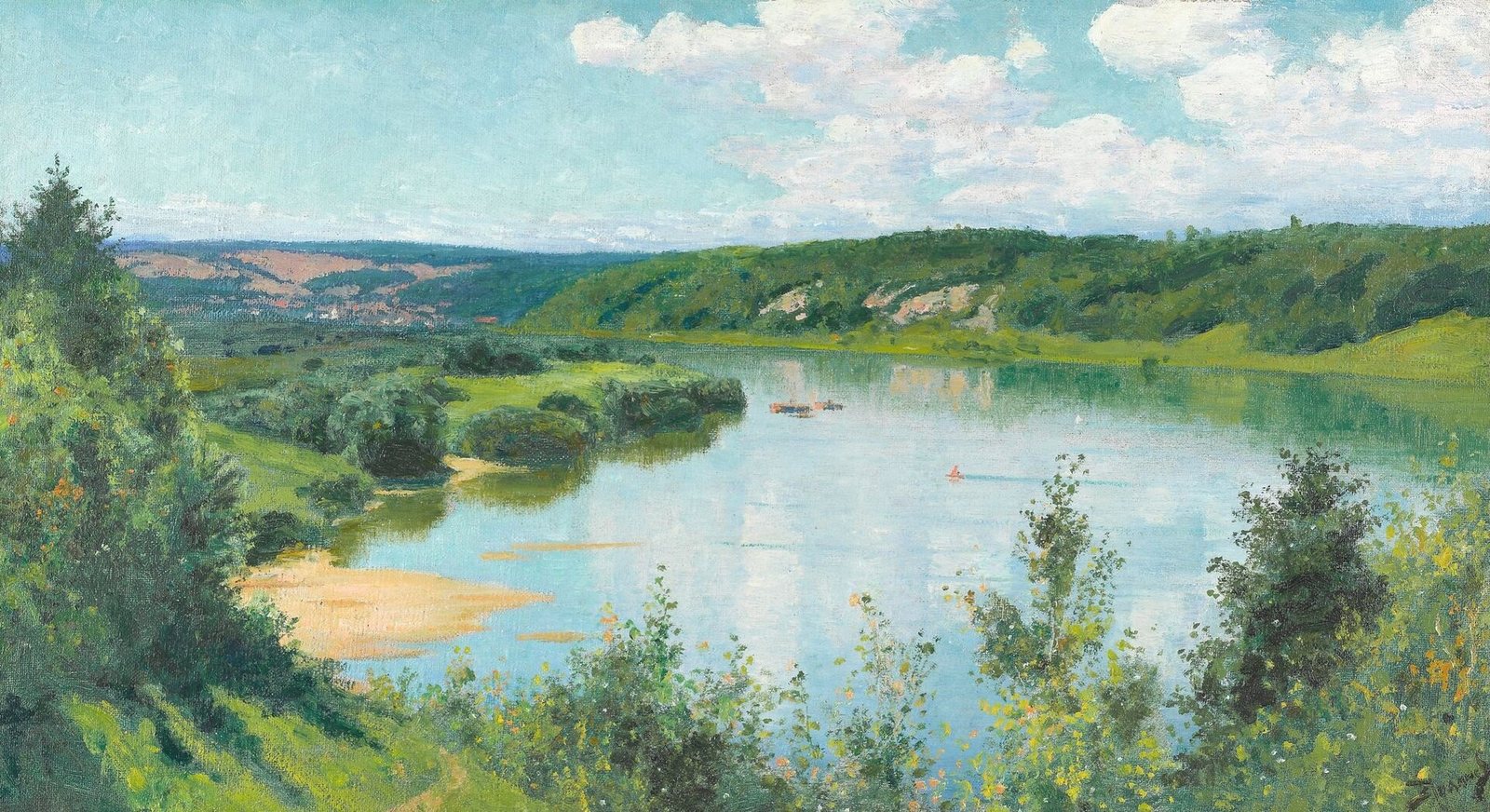
 Deep in the forests on the Oka River lived an East Slavic tribe that resisted the power of Kiev and the new faith longer than all others: the Vyatichi.
The Vyatichi (Old Russian Vjatichi) were an East Slavic tribal confederation in the basin of the Oka, in the heart of today's European Russia – in the area of the later cities of Moscow, Ryazan and Tula. They belong to the East Slavic tribes integrated into the Kievan Rus – but they did so later and more unwillingly than all others. The Vyatichi are regarded as the last pagans among the East Slavs.
The land of the Vyatichi lay off the great river road "from the Varangians to the Greeks", in dense forests far from the centres of Novgorod and Kiev. This secluded position shaped their character: they lived from farming, hunting, beekeeping and the fur trade and preserved their independence longer than the tribes on the main routes. The Primary Chronicle traces their name to an ancestor Vyatko, who is said to have immigrated with his brother Radim from the west (the land of the Lyakhs/Poles) – a typical origin legend.
Like the Severians, the Vyatichi too first paid tribute to the Khazar Khaganate, the steppe power in the south. The Primary Chronicle reports that they gave the Khazars "a shilling from the plough". This dependence bound them to the steppe world and its trade but at the same time kept them away from the rising power of the Rus in the north. Only when Kiev shattered the Khazars did the land of the Vyatichi come into the view of the Kievan princes.
The Kievan prince Sviatoslav subdued the Vyatichi around 964–966 and then shattered the Khazar Khaganate. But the subjugation was fragile: again and again the Vyatichi rose against Kiev. Prince Vladimir the Great had to subdue them anew in the 980s. No other East Slavic tribe offered the Kievan central power such stubborn resistance – a sign of the deeply rooted independence of this forest people.
Most remarkable is the tenacity of their old faith. While the Rus under Vladimir adopted Christianity in 988, the Vyatichi remained pagan for generations. As late as the early 12th century the monk Kuksha of Kiev worked as a missionary among the Vyatichi – and was killed by them. Thus the Vyatichi are regarded as the last East Slavs to preserve their pre-Christian faith. Archaeologically this is confirmed by their pagan burial customs (burial mounds with cremations), attestable into the 12th century.
Politically too the Vyatichi long remained independent. As late as the 11th and early 12th centuries the Kievan princes had to lead campaigns against them; the famous prince Vladimir Monomakh proudly reports in his "Instruction" of his marches through the land of the Vyatichi. Only in the course of the 12th century were they definitively integrated into the Russian principalities. Their long independence makes them a special case among the East Slavs.
A remarkable legacy: the heartland of the Vyatichi around the Oka and its tributaries later became the heartland of the Grand Duchy of Moscow. The city of Moscow itself arose in the 12th century in an area that had previously been Vyatichi-settled; archaeological finds attest Vyatichi villages and burial mounds in today's Moscow urban area. So at the beginning of the history of the later Russian capital stands a pagan forest tribe that long held its own against Kiev.
The Vyatichi are the most self-willed of the East Slavic tribes: longest independent, longest pagan, deeply rooted in the forests. Their history shows that the Christianisation and unification of the Rus was no swift, uniform process but lasted centuries and met tenacious resistance. For our picture of the East Slavs they are indispensable – and strong proof that the old faith did not vanish everywhere at a stroke of the pen.
The main source is the Primary Chronicle (Povest vremennykh let) with the origin legend, the Khazar tribute and the campaigns, supplemented by Vladimir Monomakh's "Instruction" and the Life of the martyr Kuksha. As always, the chronicle was written later and must be read with caution. The counterweight is provided by archaeology: Vyatichi burial mounds, jewellery (characteristic temple-rings) and settlements that attest the long survival of pagan customs. We keep evidence and interpretation apart: the long independence and the late paganism are well attested; the origin legend of Vyatko is legend.
The Oka region lay at the transition between forest and steppe – and thus in the field of tension between the Slavic farmers of the north and the horse peoples of the south. The tribute to the Khazars bound the Vyatichi to the steppe world and its long-distance trade; through this connection oriental silver and goods reached their forests. At the same time the remote, forested position protected them from swift subjugation. So the Vyatichi could preserve their independence while the tribes on the great river roads had long stood under Kievan rule.
Archaeologically the Vyatichi are especially well graspable – above all through their jewellery. Characteristic are their seven-lobed temple-rings, which women wore on their headdress and which count as a veritable "identifying mark" of the tribe. Added to these are their burial mounds with cremations, which attest the long survival of pagan customs: while elsewhere Christian inhumation graves had long been usual, the Vyatichi held to the old burial. These finds confirm, independently of the chronicles, what the texts report about their tenacious paganism.
Perhaps the most surprising legacy of the Vyatichi is their late role in Russian history. Their heartland around the Oka and the Moskva became in the 12th century the starting point of rising Moscow. Beneath today's urban area of the Russian capital lie Vyatichi villages and burial mounds; the first inhabitants of the Moscow area were this pagan forest tribe. So at the beginning of the history of one of the greatest cities of the world stands a people that once resisted Kiev and Christianity longer than all other East Slavs – a quiet but immense echo.
"But the Vyatichi sat on the Oka … and gave the Khazars a shilling from the plough."after the Primary Chronicle (Povest vremennykh let), public domain, own translation

The Rus (Kiev) · The Severians · The Drevlians.
All History & Finds articles →
Many call the Varus battle the „big bang of Germany". Yet another battle shaped our lands far more deeply – one in …
Read more →