 No East Slavic tribe left a more dramatic story than the Drevlians. Their revolt against the Rus and Princess Olga's terrible revenge are among the most vivid scenes of early Eastern history.
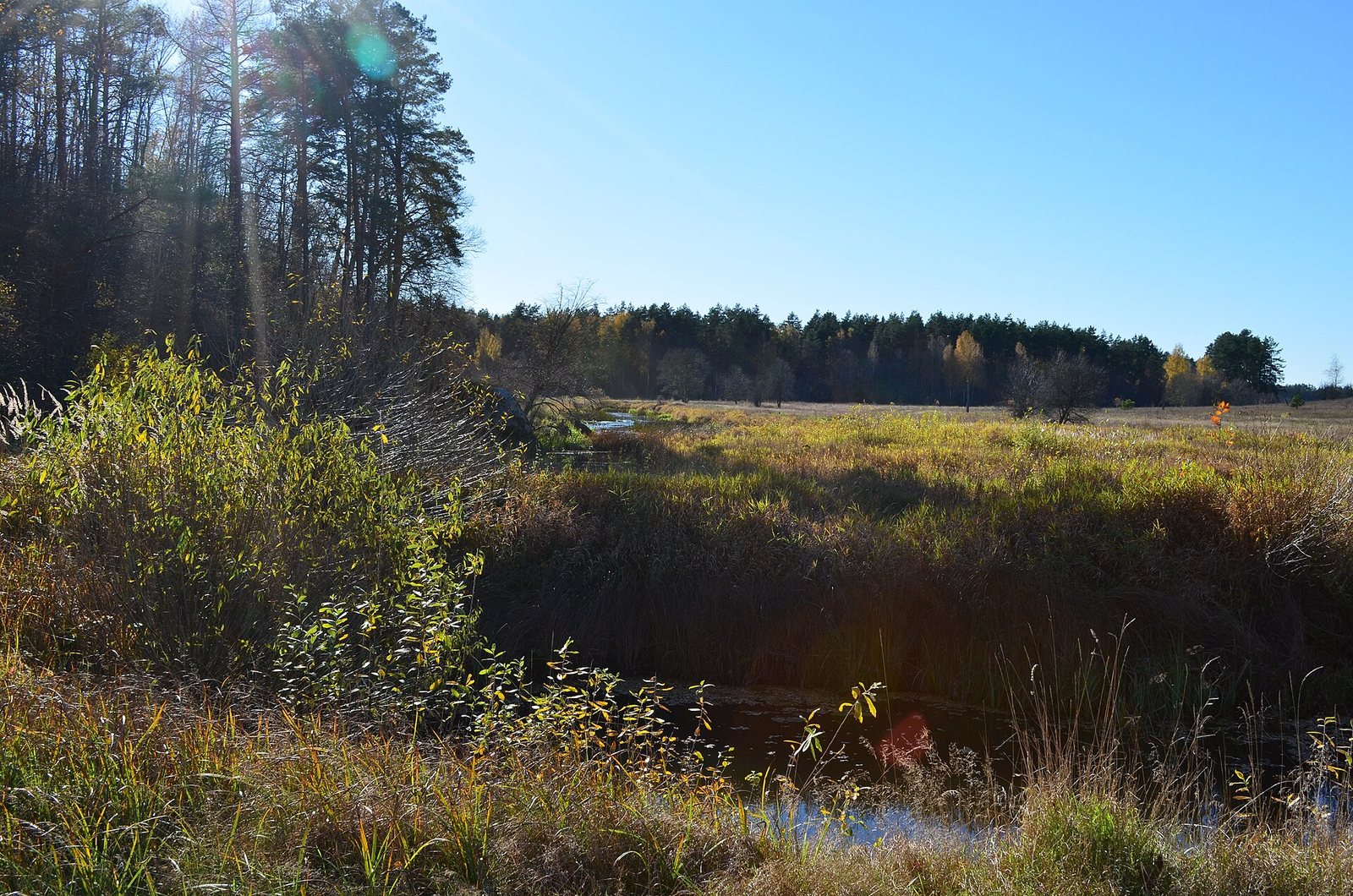
The Drevlians (Old Russian Drevljane, "the forest people") were an East Slavic tribe west of the Dnieper, in the dense woodland of today's north-western Ukraine around their capital Iskorosten (today Korosten). Their name says it all: they were the people of the forests – and they had the reputation of being wilder and more independent than their neighbours, the Polans of Kiev. Their story is inseparably bound to one of the most famous tales of the Primary Chronicle: the death of Prince Igor and the revenge of his widow Olga.
As their name betrays, the Drevlians lived in the extensive forests between the rivers Teteriv and Uzh. They practised farming, hunting and beekeeping (honey and wax were prized trade goods) and lived in fortified strongholds. Politically they had their own princes. In the early Rus they counted among the tribes that had to pay tribute to the Kievan prince – and it was exactly this tribute that became the undoing of both them and the Kievan prince.
In the year 945 the Kievan prince Igor went into the land of the Drevlians to collect tribute. Having received the tribute, he turned back once more with a small retinue because he wanted to demand more. That broke the camel's back. The Drevlians under their prince Mal decided to resist. The chronicle puts a famous saying in their mouths: "If a wolf gets used to the sheep, he carries off the whole flock unless he is killed." They ambushed Igor and killed him. According to later tradition they bound him between two bent-down trees and let him be torn apart – a scene the Byzantine author Leo the Deacon recorded with horror.
Igor's widow Olga took the regency for her under-age son Sviatoslav – and took a revenge that the chronicle tells in four artfully escalating episodes. When the Drevlians sent envoys wooing Olga's hand for their prince Mal, she had the first embassy buried alive, the second burned in a bathhouse. Then she herself went into the Drevlian land, held a massacre among the drunken guests at the funeral feast at Igor's grave, and finally besieged Iskorosten. At last, in the most famous episode, she asked the town for a seemingly small tribute: three doves and three sparrows from each household. To the birds she tied burning tinder – and when they flew back to their nests under the roofs, all of Iskorosten went up in flames.
The revenge tale is magnificently composed – and precisely therein lies its problem as a historical source. The four revenges are artfully graded (buried alive, burned, slain, burned out), and the motif of the arson birds appears in several cultures as a migratory legend. Scholarship therefore sees in it less a factual report than a literarily shaped tale that dramatically embellishes a real core – the revolt of the Drevlians, Igor's death, the subjugation by Olga. What is historically secure is: after 945 the Drevlians lost their independence and were firmly integrated into the Kievan realm.
The revolt had a remarkable consequence. Olga realised that the arbitrary tribute system which had cost Igor his life was dangerous. She reorganised the levy: fixed tribute amounts, fixed collection points (pogosty) and regulated dates. Out of the bloody conflict with the Drevlians came one of the first steps toward an ordered administration of the Rus. Olga herself was baptised in Constantinople around 957 and was later venerated as a saint – the avenger of Iskorosten became the first Christian among the rulers of the Rus.
The main source is the Primary Chronicle, supplemented by the Byzantine author Leo the Deacon for the manner of Igor's death. Both must be read with caution: the chronicle was written down some 150 years after the events and shapes history into a moral tale. But archaeological finds also speak for the Drevlians as a real tribe – ramparts and cemeteries in the region around Korosten. The secure core (tribe, tribute obligation, revolt of 945, integration by Olga) we separate here from the embellished revenge legend.
Behind the revolt lay a political plan. After Igor's death the Drevlian prince Mal wanted not only freedom but power itself: he sought the hand of the widow Olga in order to unite Kiev and the Drevlian land under one crown. It was exactly this wooing that became the undoing of the Drevlians, for Olga used the embassies for her revenge. The chronicle draws Mal not as a crude barbarian but as a ruler with ambitious calculation – which the cooler, cleverer Olga saw through and turned mercilessly against him.
The centre of the Drevlians was Iskorosten, today's Korosten on the river Uzh. The fortified stronghold lay protected in the woodland and was strong enough to resist Olga's army for a long time – the chronicle has the siege last a whole year before the trick with the birds overcame the walls. Archaeologically the region is rich in Slavic ramparts and cemeteries, attesting a dense settlement and a defiant, self-assured society. Iskorosten stands for what defined the Drevlians: a people who defended their forests and their independence.
With the fall of Iskorosten the independence of the Drevlians ended. Their land was firmly integrated into the Kievan realm, their princes vanished, and the tribute flowed to Kiev in orderly fashion thereafter. The revolt of the Drevlians was thus the last great attempt of an East Slavic tribe to escape the rule of the Rus – and its failure marks the transition from a loose tribute confederation to a real state. What began as revenge became the birth-hour of an ordered administration.
The wealth of the Drevlians came from the forest. Honey and beeswax were prized long-distance trade goods – wax for candles, honey as a sweetener and preservative and for mead. Added to these were furs, hides and timber. It was exactly this wealth that made the tribe a worthwhile object of tribute for the Kievan princes and explains why Igor turned back a second time in 945 to demand more. The forests that gave the Drevlians their name were thus both their strength and the reason for their downfall: they made the tribe prosperous – and awoke the greed of the rulers on the Dnieper.
"If a wolf gets used to the sheep, he carries off the whole flock unless he is killed."after the Primary Chronicle (Povest vremennykh let), public domain, own translation
The Rus (Kiev) · The Krivichs · Ibn Fadlan & the Rus.
