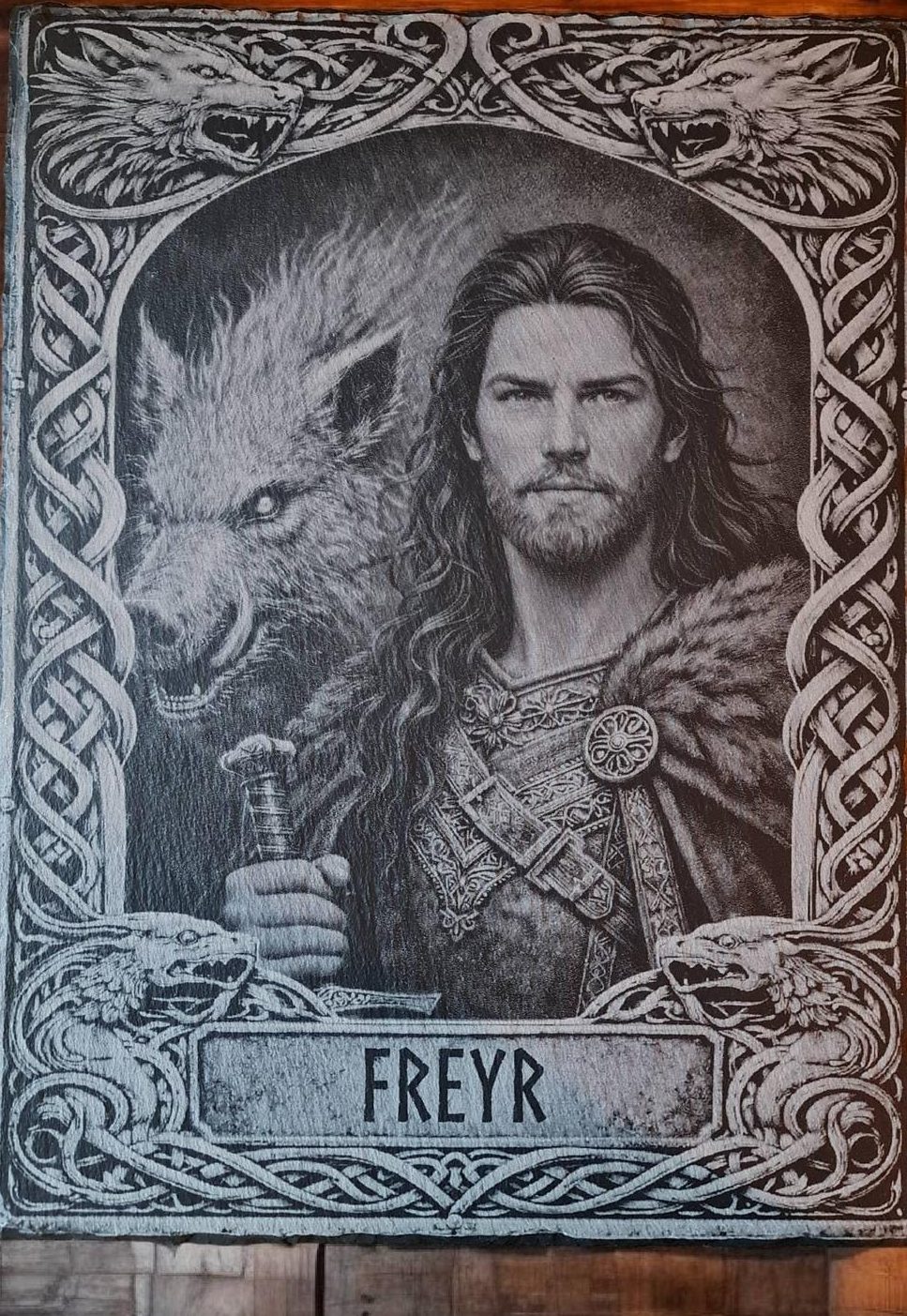
The god Freyr stood for fertility, harvest and peace. Two very different sources show what his cult could look like in daily life – and how stubbornly the old faith lived on.
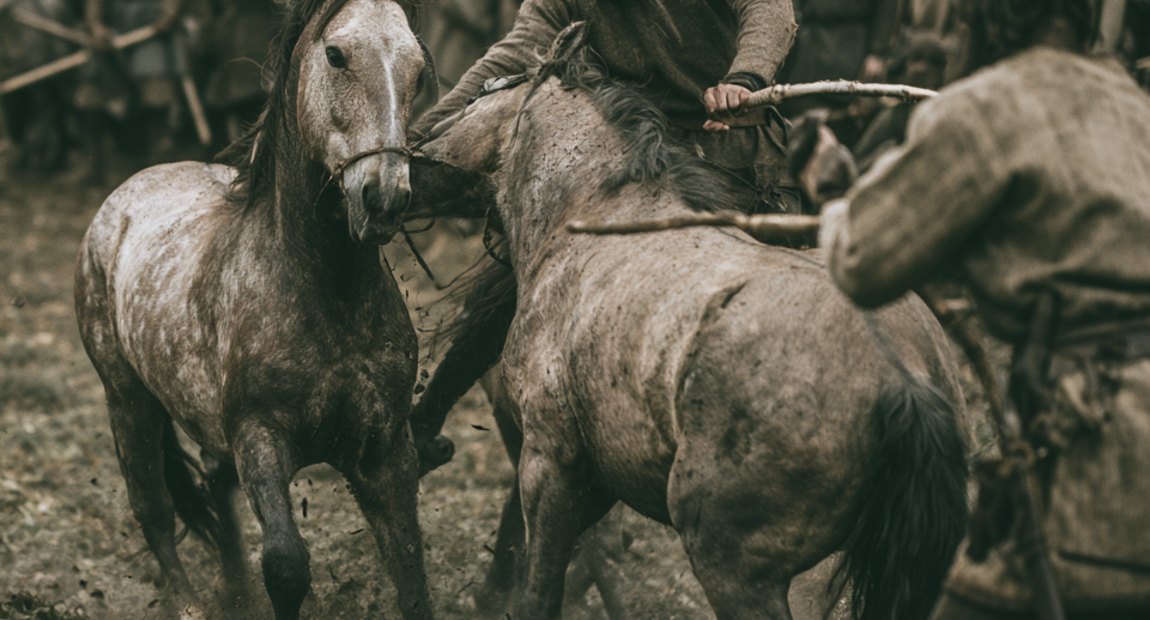
Hardly any animal was as close to the Germanic and Norse peoples as the horse. It carried the warrior, pulled the plough, was wealth and a mark of status – and it was holy. The Roman historian Tacitus already reports that the Germanic peoples kept white horses in sacred groves that did no work, and read the will of the gods from their neighing and snorting. The horse was held to be privy to higher powers, closer to the divine than man himself.
„They (the priests) regard the horses as privy to the counsel of the gods." — Tacitus, Germania 10 (public-domain translation)
This ancient belief in the holy horse runs across many centuries. Horse sacrifices are attested archaeologically many times in Scandinavia and the Germanic lands, horse bones are found in cult places and graves, and even the Icelandic laws of the conversion era expressly forbid the eating of horse meat – a clear sign of how closely the animal was bound to the old cult. Against this background two very different sources tell how the cult of the fertility god Freyr may have looked in daily life.
The first source is Hrafnkels saga. Its hero Hrafnkell is a Freysgoði, a priest and chieftain especially devoted to the god Freyr. He dedicates his splendid favourite stallion Freyfaxi to the god and swears a heavy oath: whoever rides the horse without leave, he will kill. The stallion is thus taboo – a living sanctuary set beyond human reach.
When the young herdsman Einarr breaks the ban and mounts Freyfaxi anyway, Hrafnkell falls into a bitter dilemma. He has sworn an oath, and an oath in the god’s name cannot be broken without consequence. So he keeps his word and slays Einarr – a deed that draws a long chain of revenge, lawsuit and downfall behind it. In the end Freyfaxi too is killed: Hrafnkell’s enemies cast the horse „that belongs to the god" off a cliff into the water and burn down the Freyr temple at the same time. The holy animal shares the fate of the cult to which it was dedicated.
More drastic still, almost grotesque, is the Völsa þáttr, preserved in the great Flateyjarbók. It depicts a remote farm in the north of Norway keeping a strange cult object: a preserved horse phallus called Völsi, wrapped in linen and herbs. Each evening the Völsi is solemnly passed around the household, and each person – from the master of the house to the maid – speaks a stanza invoking a mysterious power named „Mörnir" and asking for blessing, fertility and thriving.
Into the scene steps King Óláfr, disguised as a plain guest – the Christian missionary king. He exposes the cult, throws the Völsi to the farm dog and ends the heathen household rite. The tale is thus clearly framed as a conversion story: the old fertility cult, unmasked and overcome by the new faith.
And here the great question begins. Does the Völsa þáttr preserve the memory of a real heathen fertility rite – a rare window into the folk piety of remote farms? Or is it a deliberate Christian caricature meant to make heathendom look as offensive as possible? Both are possible, and scholarship is divided. The historical value of Hrafnkels saga, too, is disputed: long held to be a faithful picture of old eastern tradition, it is now seen by many as an artful literary construction of the 13th century.
In the end only the core is certain, the one both texts and Tacitus attest together: the horse was holy to the Germanic peoples, and the fertility faith was stubborn. We tell such stories with respect and without false sensation – they show how deeply the old faith was rooted in everyday life and how slowly it gave way. It is exactly this grounding in the real lives of our ancestors that fascinates us so much about the Norse-Germanic tradition.
Freyr · Nerthus & Fertility · Cult & Law · Svipdagsmál.
Hrafnkels saga (sagadb.org); Völsa þáttr (Flateyjarbók). Tacitus, Germania 10; Rudolf Simek, Dictionary of Northern Mythology.
Two curved horns, a fierce beard, a mead horn in the fist – that is the Viking of nearly every film, every carnival …
Read more →A heavy grey slab covered in a long line of runes, dug out from under the roots of an aspen tree in Minnesota. The …
Read more →Two short stanzas, scribbled onto a blank page of a church book – and yet the most precious record we have of the …
Read more →The market is full of "Norse" symbols: on pendants, T-shirts, tattoos and wall art. Many are sold as ancient and …
Read more →