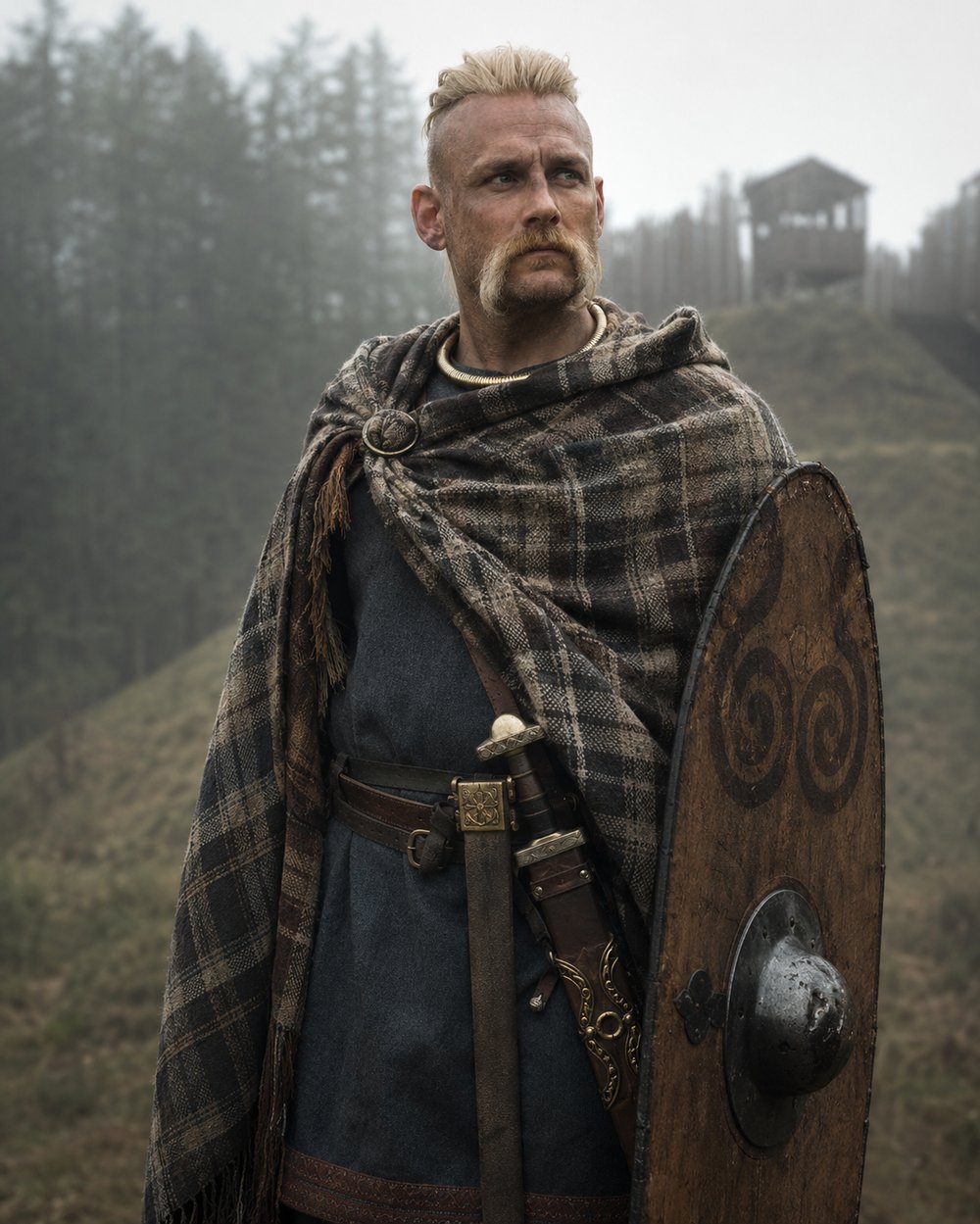
 Where Gaul ends in the Atlantic, on the jagged western tip of Brittany, lived a Celtic people whom the ancients placed at the "end of the world": the Osismii. Seafarers and farmers between cliffs and fog, allied with the mighty Veneti in the great sea-war against Caesar – and heirs of an age-old tin trade reaching into the Mediterranean.
To the ancient world Brittany was the utmost end of the known mainland. Beyond it lay only the grey ocean, which the Mediterranean peoples regarded with dread. On this edge of Europe, on the wind-lashed peninsula of today's Finistère – the name literally means "end of the earth" – lived a Celtic tribe the Romans called Osismii, the Osismii. They belonged to the peoples of Aremorica, the "lands by the sea" on the Atlantic, and their history is the history of people who lived with the sea.
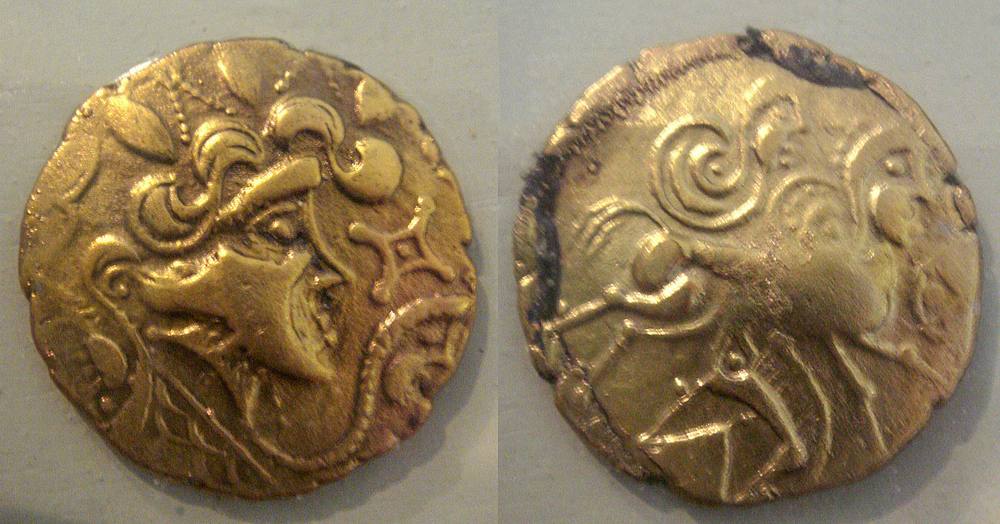
The Osismii sat in the west of today's Brittany, around the jagged coast of Finistère. It is a harsh stretch of land: rocky capes, deeply cutting bays, meagre soils, a climate of wind and rain. Such landscapes make hardy, seaworthy people. Unlike the rich farming peoples of inner Gaul, the coastal Celts of Aremorica depended on the sea – for fishing, for trade and for defence.
The Greek geographer Ptolemy names the Osismii and places them at the utmost north-western tip of Gaul. Even the ancient view thus made them a people of the border, where the inhabited world ended. To Rome it was a distant, barely imaginable region.
Atlantic Brittany lay on one of the oldest trade routes of Europe: the tin road. Tin, needed to make bronze, was a rare and coveted raw material, and the north-west – Cornwall and Brittany – was among its most important sources. For centuries traders travelled these coasts, and the tin passed from hand to hand into the Mediterranean. The Greek historian Diodorus describes how the metal was shipped on the Atlantic coast and carried far to the south.
The Osismii sat at a node of this network. Their land was a gateway between the tin of the north and the markets of the south. Caution is needed with the famous question of the "Cassiterides", the legendary "tin islands" of the ancient authors: their exact location is disputed to this day, and one should not hastily identify them with a particular place. Certain is only this: the Atlantic north-west was a tin country, and the coastal Celts lived partly from this trade.
The Osismii were not alone. They belonged to a ring of Celtic coastal peoples of Brittany and Normandy – alongside them the Veneti, the Redones, the Namnetes and others. Caesar sums them up as the "Aremorican states", the "sea-dwellers". These peoples were linked by the sea: by trade, by a kindred way of life and, when it mattered, by a common alliance against Rome.
In 56 BC the coastal peoples of Aremorica rose against the Roman occupation. The soul of the revolt were the mighty Veneti, the strongest sea-power of the coast. And the Osismii stood at their side: Caesar names them expressly among the peoples who joined the Venetic alliance and provided ships and warriors.
The Veneti called the other coastal states to their aid … there came the Osismii, the Lexovii, the Namnetes, the Ambiliati, the Morini, the Diablintes and the Menapii.Caesar, De bello Gallico III (paraphrased)
The war was decided on the water. The Veneti had tall, sturdy oak ships with leather sails, which at first seemed superior to the Roman galleys. But the Romans found a means: with sickles on long poles they cut the rigging of the Celtic ships, which then drifted helpless. Rome's victory in this sea-battle sealed the fate of Aremorica – and thus of the Osismii too. Caesar punished the leaders harshly, and the coastal peoples lost their freedom.
After the conquest the Osismii, like all Gaulish tribes, were incorporated into the Roman order. From their territory came the civitas Osismorum, an administrative unit with a chief town. This lay at Vorgium, today's Carhaix in the heart of Brittany, which in Roman times rose to a road hub and regional centre – with an aqueduct, roads and urban life, far from its former reputation as a place at the edge of the world.
So with the Osismii happened what happened across Gaul: the tribe lost its political independence, but its name lived on in the Roman administration and shaped the landscape. Brittany kept its Celtic character longer than many other parts of Gaul – to this day it is one of the last homes of a Celtic language on the mainland.
The Osismii belong to the many Celtic peoples whose name lives on in the map – more quietly than the Parisii in Paris, but still perceptible in the region. Above all they stand for a whole world: the Atlantic Celtic culture that lived from the sea, was woven into long-distance trade and seafaring, and was part of a Europe-wide network of exchange long before Rome.
These coastal Celts are no fantasy image of wild barbarians, but a real people with ships, trade links and a way of life of their own at the edge of the ocean. For us at GLANZ & GRAVUR precisely such stories are precious: they remind us that the old European peoples had names, landscapes and a firm place in history – and that one honours them best by telling their world accurately and with respect.
The life of the Osismii was governed by the Atlantic. Fishing, gathering shellfish and seaweed, winning salt on shallow coasts and above all coastal trade shaped daily life. Their boats had to withstand the rough tides and storms of the Iroise Sea – no accident that the neighbouring Veneti in particular were famed for their sea-going oak ships. The Osismii too will have known and used such vessels, for without them neither trade nor defence was possible on this coast.
At the same time they were farmers: on the meagre, windy soils of the peninsula they grew grain and kept livestock. The Celtic culture of Brittany was thus no pure seafarer world but a mixture of fieldwork and sea – hardy, frugal and networked far across the ocean. This double character, land and sea, makes the coastal Celts of Aremorica so distinctive.
The Veneti · The Redones · The Namnetes.
