 In the east of Brittany, where two rivers meet, sat the Redones. Out of their chief town grew today's Breton capital Rennes – their name lives on to this day.
The Redones were a Celtic tribe in the east of Armorica, today's Brittany. Their chief town lay at the confluence of the Ille and the Vilaine and bore the Celtic name Condate ("confluence") – from it grew today's city of Rennes, the capital of Brittany. Like so many Gaulish tribes, the Redones live on above all in their city and their name.
The Redones belonged to the tribes of Armorica – the name for the peninsula in the northwest of Gaul, "the land by the sea". Their territory lay in the east of this region, in the fertile hinterland, while their neighbours, the seafaring Veneti, controlled the coast. The Redones lived from farming, stock-raising and trade along the rivers. Their chief town Condate was a natural traffic hub at the confluence of two rivers – an ideal site for a later city.
The Redones appear in Caesar among the Armorican tribes. In 56 BC, when the coastal peoples rose against Rome under the leadership of the Veneti, the Redones were among the tribes involved. And in the great revolt of 52 BC they supplied – like almost all of Gaul – troops for the relief army that was to free besieged Alesia. After the defeat the Redones too had to acknowledge Roman rule; their land became part of the Roman province.
Under Rome, Condate developed into a Gallo-Roman city and became the chief town of the civitas Redonum. Over the centuries, as with so many Gaulish cities, the tribal name prevailed over the old place name: "civitas Redonum" became Rennes. The Celtic name Condate vanished, the people's name of the Redones remained – and became the name of one of the most important cities of western France.
The history of the Redones is also the prehistory of Brittany. After the end of Rome, in the 5th and 6th centuries, Britons migrated from the British Isle to Armorica and gave the peninsula its new name: Brittany, "Little Britain". The land of the Redones in the east became a border region (the "marches") between the Celtic-Breton and the Frankish-French worlds. Rennes later became the capital of the Duchy of Brittany – a heritage that reaches into the present.
The name of the Redones is omnipresent in Brittany. The city of Rennes, its inhabitants (the "Rennais") and the surrounding area bear it. As with the Turones (Tours), the Parisii (Paris) and the Namnetes (Nantes), the great pattern of Gaulish name-inheritance shows itself here: the ancient tribal name survived Rome, the Middle Ages and the modern era and shapes the French map to this day.
The Redones sat on an important frontier of Brittany: their eastern neighbours already led into the interior of Gaul, their western (the Veneti) and southern (the Namnetes at the Loire mouth) controlled coast and river. Rennes and Nantes, the two great cities that grew from the Redones and Namnetes, would compete for centuries for the rank of Breton capital – a rivalry ultimately rooted in the Celtic tribal landscape.
The Redones link Celtic early history, Roman city-founding and the emergence of Brittany into a continuous history of place. Out of a tribe at the confluence of two rivers grew a Roman civitas, then the capital of a duchy and finally a modern city. For a complete picture of the Celtic world they belong: as an example of how deeply the Celtic layer lies beneath today's France – and how alive it is in names to this day.
The Redones are reported above all by Caesar (De bello Gallico); their afterlife is well documented by the archaeology of Condate/Rennes and the history of Brittany. Where the sources on the Celtic tribe are brief, the city is all the better attested. We keep evidence and interpretation apart: tribe, participation in the revolt and name-survival are well attested; details of the early tribal structure and the exact borders remain uncertain.
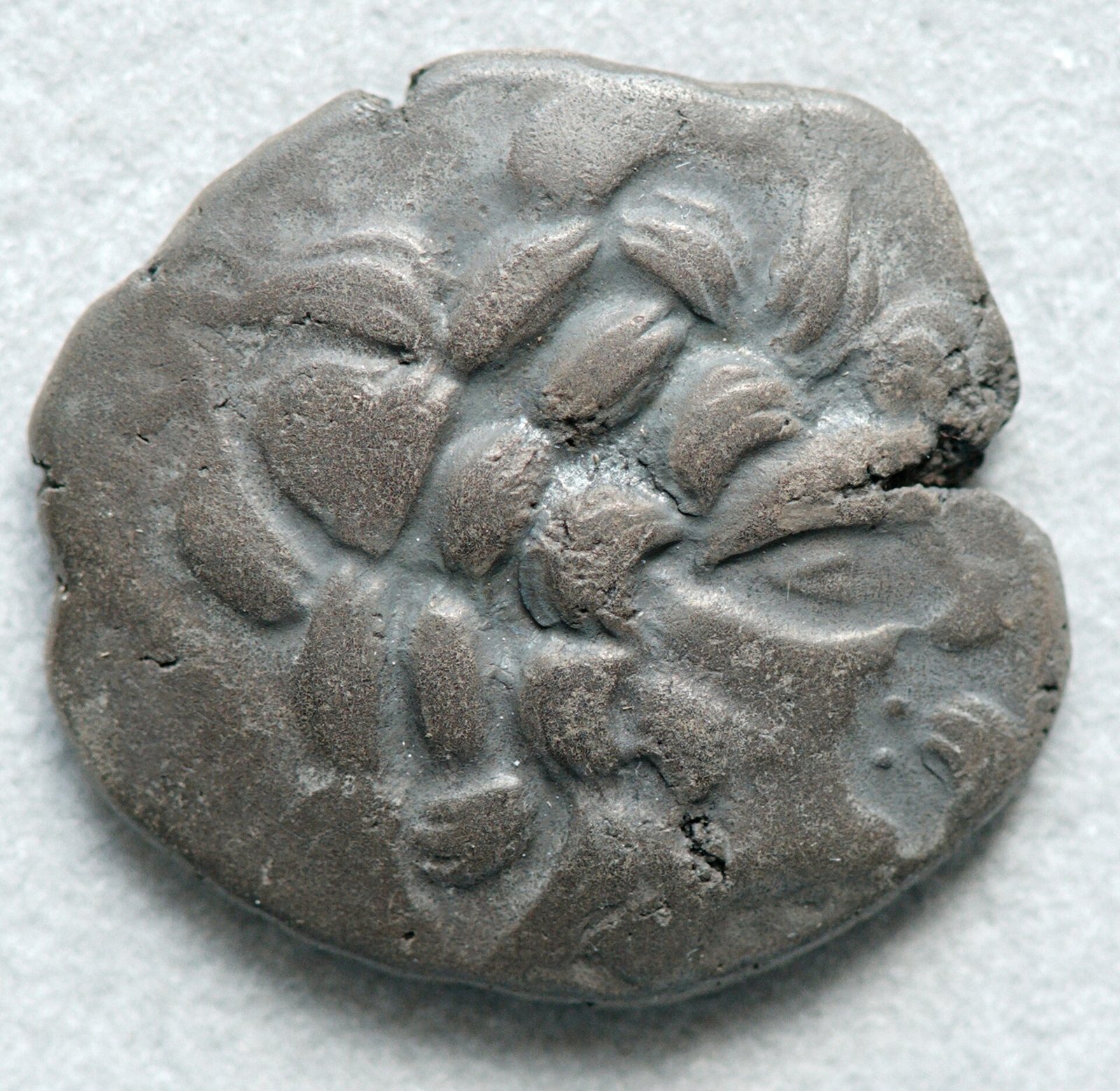
Like many Gaulish tribes, the Redones too minted their own coins – artful gold and bronze pieces with stylised horses and heads, typical of Celtic art. Such coins served trade, pay and prestige and show a developed economy. Their chief town Condate and other fortified places were centres of this life. The finds prove: the Redones were no poor fringe people but part of the prosperous, connected Celtic world of Gaul, in contact with the Mediterranean and Britain.
As everywhere in Gaul, among the Redones too the Celto-Roman religion was replaced by Christianity in late antiquity. Rennes became an episcopal see; saints such as Saint Melaine (Melanius) in the 6th century shaped the Christian city. Out of the Gallo-Roman civitas grew an ecclesiastical and secular centre that survived the transitions from antiquity into the Middle Ages. The religious change mirrors the great transformation of Gaul: from the gods of the Celts through the Roman interpretatio to the Christian bishopric – a thread running through many Gaulish tribal histories.
The two great cities of eastern Brittany, Rennes and Nantes, go back to two Celtic tribes: the Redones and the Namnetes. This double structure shaped the history of Brittany for centuries: both cities competed for the rank of capital of the duchy. To this day the question whether Rennes or Nantes is "the" Breton metropolis is a theme of regional identity. The roots of this rivalry lie in the Celtic tribal landscape – a fine example of how deeply the ancient division echoes into the present.
Rennes became the eastern gateway of Brittany – where the Celtic-Breton world borders the French heartland. For centuries the city was capital and seat of parliament of the duchy and later the province of Brittany. In its streets and its name the heritage of the Redones lives on, that Celtic tribe which sat at the confluence of two rivers. Whoever walks through Rennes today moves on the soil of Condate – a Celtic settlement out of which grew one of the liveliest cities of western France.
"Among the Armorican states are the Curiosolitae, the Redones, the Ambibarii and others that lie by the ocean."after Caesar, De bello Gallico VII (public domain, own translation)
The Veneti · The Namnetes · The Turones.
All History & Finds articles →
Long before there were Vikings in the sense of the sagas, there was already a town in south-west Jutland: Ribe, founded …
Read more →