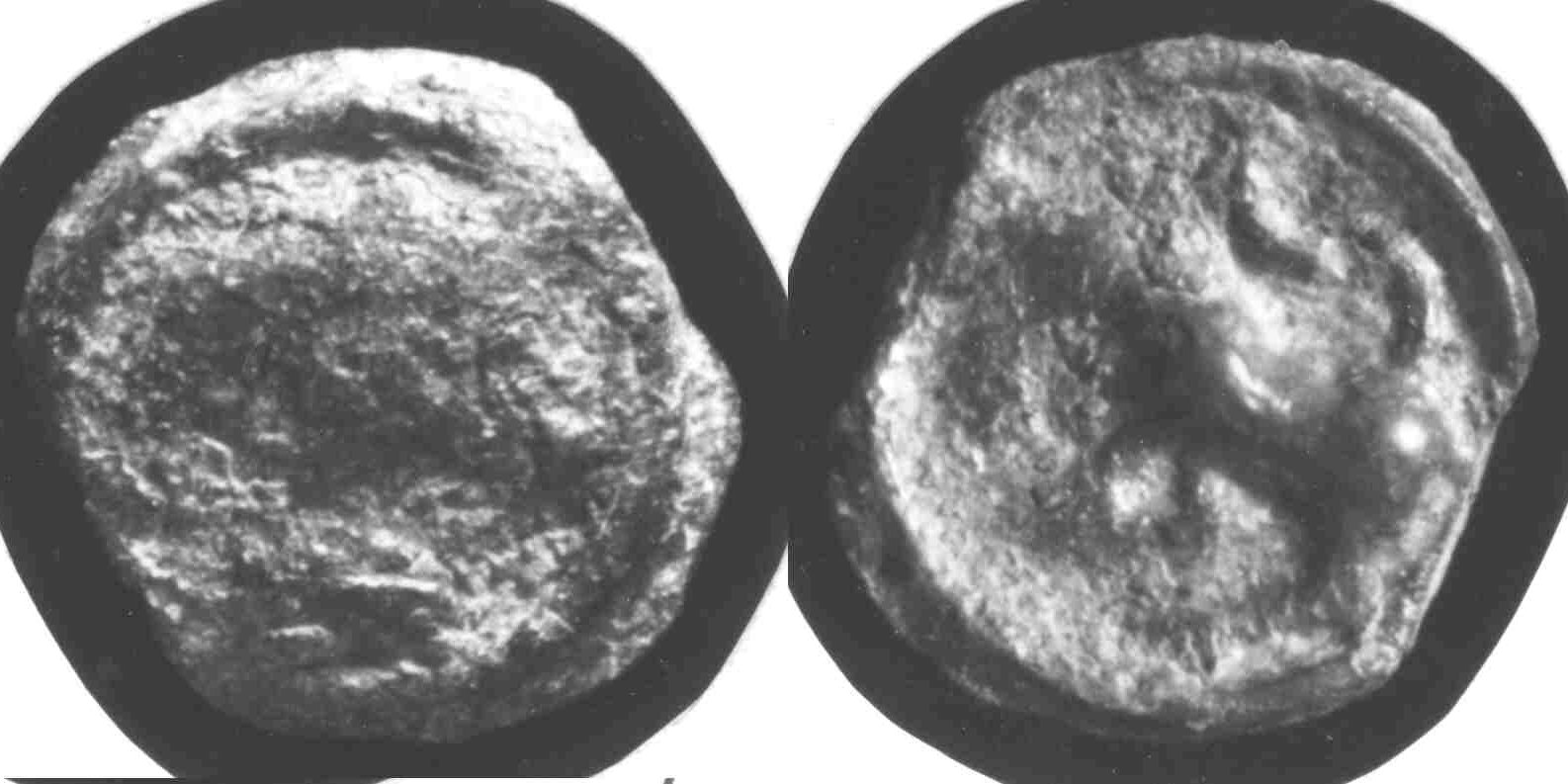
 On the middle Loire, in the fertile "garden of France", sat the Turones. Out of their land grew one of the most important cities of medieval Europe: Tours.
The Turones (Latin) were a Celtic tribe in the heart of Gaul, on the middle Loire – in the area of today's Touraine, often called the "garden of France". Like many Gaulish tribes they are known less for single battles than for the great city that grew from their chief town and whose name still recalls them today: Tours.
The land of the Turones lay on one of the most important waterways of Gaul. The Loire linked the interior with the Atlantic and made the territory of the Turones a hub for trade and traffic. The fertile soils of the Touraine offered rich harvests; the mild climate and the river position made the region prosperous even in antiquity. The Turones lived in farmsteads and fortified settlements and belonged to the Celtic core world of Gaul.
The Turones appear several times in Caesar. In the great revolt of 52 BC they joined the freedom struggle of Vercingetorix and supplied troops for the relief army that was to free besieged Alesia. Like almost all of Gaul they too had to acknowledge Roman rule after the defeat. Their land was integrated into the Roman province – and afterwards experienced a remarkable rise.
Under Rome the chief town of the Turones arose anew: Caesarodunum ("fort of Caesar"), a planned Gallo-Roman city on the Loire with amphitheatre, baths and aqueduct. Over the centuries, as with so many Gaulish cities, the tribal name prevailed over the Roman town name: "civitas Turonorum" became Tours. The Roman name Caesarodunum vanished, the Celtic people's name remained.
Tours became a spiritual centre of the first rank in late antiquity and the Middle Ages. Here, in the 4th century, worked Saint Martin of Tours, one of the most important saints of the West; his grave made the city a great pilgrimage destination. Later Alcuin, the scholar at Charlemagne's court, taught here. So the land of a Celtic tribe became a heart of Christian-Frankish culture – a long way from the warriors who went to Vercingetorix.
With the name of the city is linked one of the most famous battles of the Middle Ages: in 732 Charles Martel defeated an Arab army between Tours and Poitiers – an event often regarded as a turning point of European history. Even though this battle took place many centuries after the Celtic Turones, it shows what importance the place retained to which a small Gaulish tribe once gave its name.
The tribal name of the Turones lives on twice over: in the city of Tours and in the region of Touraine. Both belong to the best-known names of France, associated with the châteaux of the Loire, good wine and a rich history. As with the Ruteni (Rodez) and the Petrocorii (Périgueux), the pattern shows itself here: the Celtic tribal name outlasted Rome, the Middle Ages and the modern era and shapes the French map to this day.
The Turones sat between powerful neighbours – the Carnutes to the north (with the sacred druid centre) and the Pictones and Andecavi to the south and west. This position in the heart of Gaul bound them closely into the network of the Gaulish tribes. They were no fringe people but part of the Celtic core land, whose cohesion and discord decided the fate of all Gaul in the war against Caesar.
The Turones are a model of how a Celtic tribe became a European cultural landscape over two millennia. Their land bore a Celtic revolt, a Roman city, the grave of a saint, a world-historic battle and finally the châteaux of the Loire. For a complete picture of the Celtic world they belong: not as warriors of a single battle, but as name-givers of a place where European history took its course again and again.
The Turones are reported above all by Caesar (De bello Gallico); their later afterlife is richly documented by Gregory of Tours (who was himself bishop of the city), the Martin tradition and the archaeology of Caesarodunum/Tours. Where the sources on the Celtic tribe are brief, the city is all the better attested. We keep evidence and interpretation apart: tribe, participation in the revolt and name-survival are well attested; details of the early tribal structure remain uncertain.
The position on the Loire made the Turones intermediaries. Over the river and the roads later built by Rome ran wine, pottery, grain and craft goods; Caesarodunum became a regional market and administrative centre. The Touraine was among the most fertile and densely settled regions of Gaul. This economic wealth explains why the chief town of the Turones could become an important city – long before saints and kings made its name famous.
As everywhere in Gaul, the Turones too worshipped native deities that merged with Roman names under Rome. This Celto-Roman religion was replaced by Christianity in late antiquity – and nowhere more impressively than in Tours. Saint Martin, originally a soldier, then a bishop, made the city the greatest pilgrimage place of Gaul; his cloak (cappa) even gave rise to the word "chapel". So the history of the Turones mirrors the great religious change of Europe: from the gods of the Celts through the Roman interpretatio to the Christian cult of saints.
The Turones fit into a clear pattern: all over France, Celtic tribes passed their name to the cities grown from their chief towns. The Parisii became Paris, the Remi became Reims, the Ruteni became Rodez, the Petrocorii became Périgueux – and the Turones became Tours. This pattern is unique: nowhere else in Europe have so many ancient tribal names survived so completely as modern city names. The Celtic map of Gaul lies beneath the French one to this day.
"From the Turones too Vercingetorix demanded their share of warriors for the common army."after Caesar, De bello Gallico VII (public domain, own translation)
The Arverni · The Carnutes · The Petrocorii.
All History & Finds articles →
On a field south of Lund, where today only a small church stands, lay for almost a thousand years one of the largest …
Read more →No place stands more for the pagan cult of the North than Gamla Uppsala: the golden temple, the great sacrifice every …
Read more →