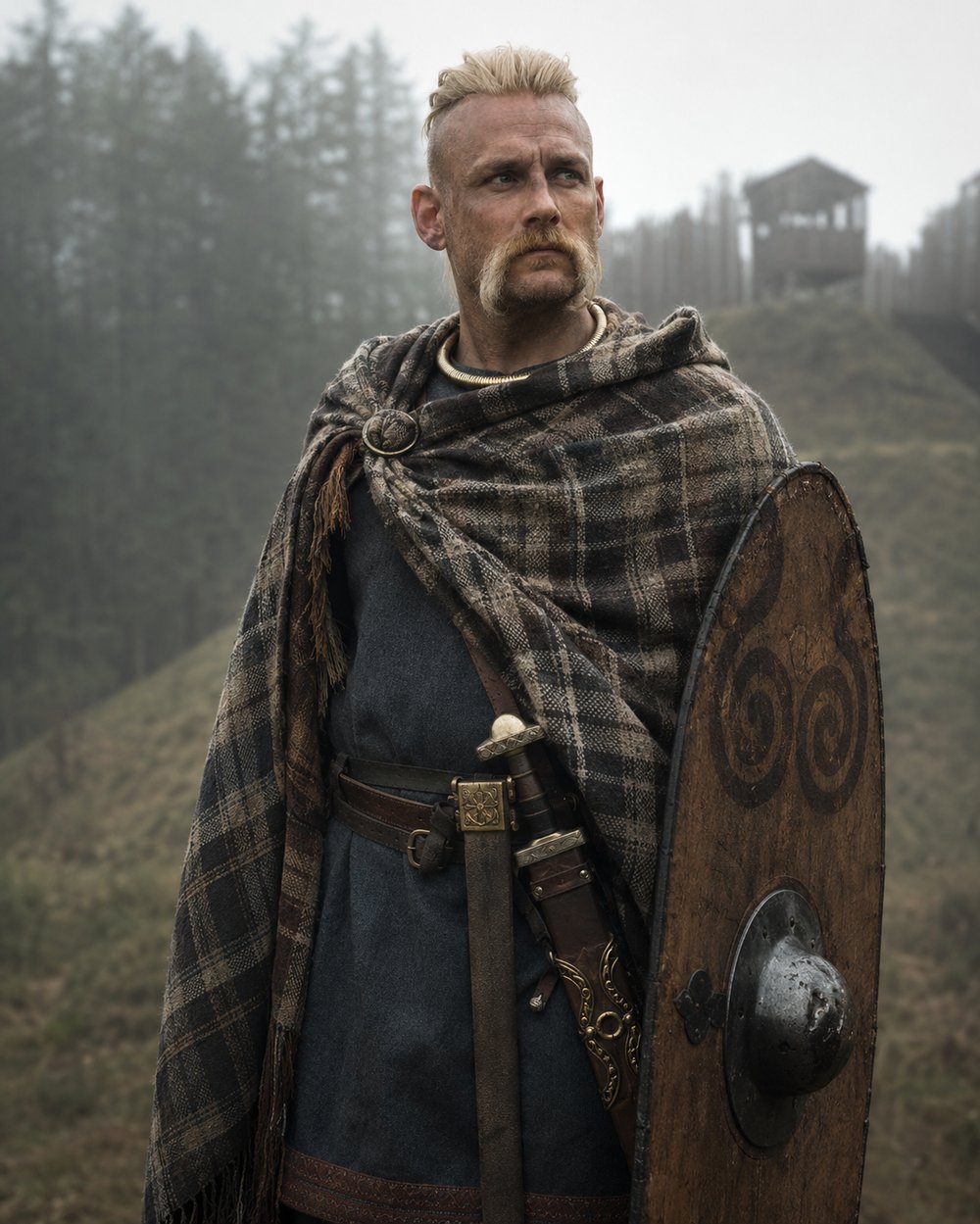
 In the land of caves and rivers of south-western France sat the Petrocorii. Out of their chief town grew one of the loveliest Gallo-Roman cities – and their name lives on to this day in the Périgord.
The Petrocorii were a Celtic tribe in the south-west of Gaul, in the hilly land between the Dordogne and the Isle – in the area of today's Périgord. Their name probably means "the four armies" or "the four tribes" (from Celtic petru- "four" and corio- "army/host"), which might point to a union of several groups. They are known less for battles than for the splendid city that grew from their chief town.
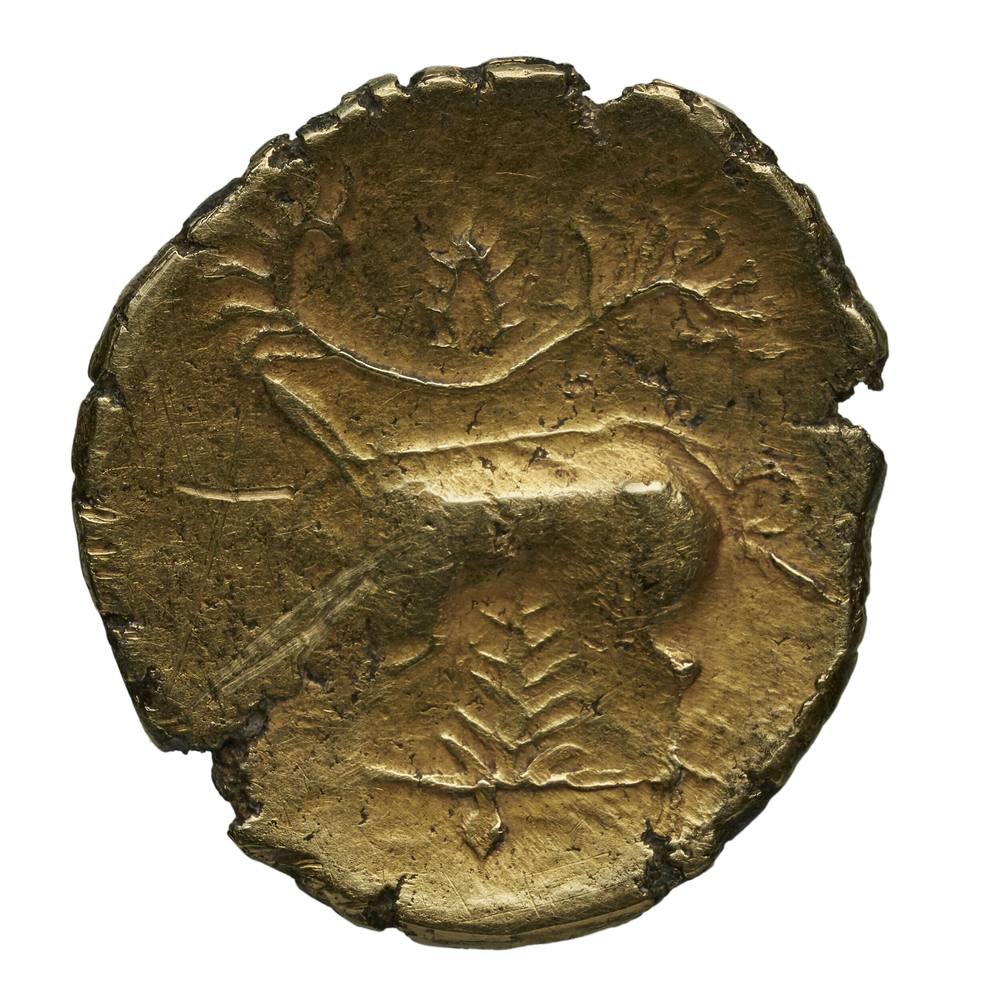
The land of the Petrocorii was rich in forests, rivers and the famous limestone caves of the region. They lived from farming, stock-raising and trade along the river routes that linked the south-west with the Atlantic and the Mediterranean. Like most Gaulish tribes they lived in farmsteads and fortified hilltop settlements. Their territory lay in the transitional zone between core Celtic Gaul and the Aquitanian south-west.
The Petrocorii appear in Caesar among the peoples who in 52 BC supplied troops to the great revolt of Vercingetorix for the relief army for Alesia. Like almost all of Gaul they too had to acknowledge Roman rule after the defeat. But unlike with the Atuatuci, their history did not end in catastrophe: their land was peacefully integrated into the Roman province of Aquitania and experienced a remarkable flowering.
The chief town of the Petrocorii became a brilliant city under Rome: Vesunna, today's Périgueux. It was named after the Celtic city and spring goddess Vesunna. The Gallo-Roman city had an amphitheatre, baths, houses with mosaics and – its most famous building – the Tour de Vésone, the mighty round tower of a temple of Vesunna. This tower, over 20 metres high, survives to this day and is one of the most impressive Gallo-Roman monuments in France.
The Tour de Vésone was the round cella of a great temple, once surrounded by colonnades and a sacred precinct. That the temple of the native goddess of all things became the landmark of the city shows the typical Gallo-Roman fusion: a Celtic deity received a temple in Roman building form. Vesunna remained the protective goddess of her city, even when it had long become Roman. The tower stands today beside a modern museum that impressively presents the Gallo-Roman city.
As with so many Gaulish tribes, in the course of late antiquity the tribal name displaced the old town name: "civitas Petrocoriorum" became Périgueux, and the whole region is still called Périgord – both derived directly from the name of the Petrocorii. The tribe that once sent warriors to Vercingetorix thus lives on in one of the best-known regions of France, famed for truffles, cave paintings and medieval castles.
The reading of the name as "the four armies/tribes" is linguistically well founded (petru-corii), but what exactly the "four" were we do not know. A league of four subgroups is possible – a pattern common among the Celts. This is not securely attested; we keep it honest here: the etymology is likely, but the concrete "fourfold division" remains a plausible but unproven interpretation.
The Petrocorii sat on a cultural frontier. To their south lived the Aquitanians, a people Caesar expressly distinguished from the Gauls and whose language was probably related to later Basque. The Petrocorii themselves were Celtic but belonged to the province of Aquitania. This position in the transitional zone makes them interesting: they show that the borders between the great population groups of Gaul were fluid and that "Celtic" was only one of several layers in old south-western France.
The Petrocorii are a model of the peaceful road into the Gallo-Roman world. Instead of downfall and slavery they experienced town-building, prosperity and a fusion in which their own goddess became the landmark of the city. Their name outlasted the millennia in Périgueux and Périgord. For a complete picture of the Celtic world such tribes belong: not only the warriors of Alesia, but also the citizens, farmers and temple-builders whose heritage lives on in the French map.
The Petrocorii are reported by Caesar (De bello Gallico) and later geographical sources; but their real wealth is the archaeology of Vesunna/Périgueux – the Tour de Vésone, the excavations of the Gallo-Roman city and the modern Vesunna museum. Where the texts are brief, the ground speaks. We keep evidence and interpretation apart: city, temple and name-survival are well attested; the "four armies" reading and the exact tribal structure remain a guess.
How rich Gallo-Roman Vesunna was is shown by the modern Vesunna museum, built over the remains of a large Roman town villa ("Domus of Vesunna"). On view are mosaic floors, painted walls, underfloor heating and everyday objects of a prosperous citizenry. Such finds tell of a society that no longer lived in round huts but in town houses with Roman comfort. The Petrocorii of the imperial era were educated provincials – a long way from the Celtic warriors who once went to Vercingetorix.
The Périgord is one of the oldest cultural landscapes of Europe – long before the Celts. In the limestone caves of the region, such as Lascaux, are found world-famous Ice Age paintings, tens of thousands of years older than the Petrocorii. When the Celts settled here, the land was thus already anciently inhabited. This depth of settlement makes the Périgord special: the Petrocorii are only one layer in a landscape whose human history reaches back into the Old Stone Age – and whose Celtic name survives to this day.
The Petrocorii show that "Romanisation" often proceeded quietly. No massacre, no deportation – instead roads, towns, trade and a gradual fusion of cultures. The native goddess Vesunna kept her temple, the language slowly shifted from Gaulish to Latin, tribal warriors became town citizens. This unspectacular path was the normal case for most Gauls – even if the dramatic stories of Alesia and the Atuatuci shape the memory. For an honest picture both sides belong together.
"From the Petrocorii Vercingetorix demanded their share of warriors for the army that was to relieve Alesia."after Caesar, De bello Gallico VII (public domain, own translation)
The Arverni · The Vocontii · The Ruteni.
All History & Finds articles →
Long before there were Germanic peoples – some 4,300 years ago – people in today’s Saxony-Anhalt raised a vast ring of …
Read more →